





What is Risk Analysis in the Context of Critical Infrastructure Events
Critical infrastructure risk analysis assesses incidents that disrupt essential services, transport links, and public safety systems. Chemical spills fall within this category due to their potential to affect roads, utilities, environmental systems, and population safety. In Western Australia, past suburban HAZMAT incidents have demonstrated how localized spills can escalate into wider infrastructure and regulatory challenges if not rapidly contained.
Executive Summary
- Date of Event: 29 January
- Location: Kardinya, Weatherburn Way, Western Australia, Australia
- Risk Category: Critical Infrastructure
- Severity Score: 3 / 5
- Confidence Level: 75 %
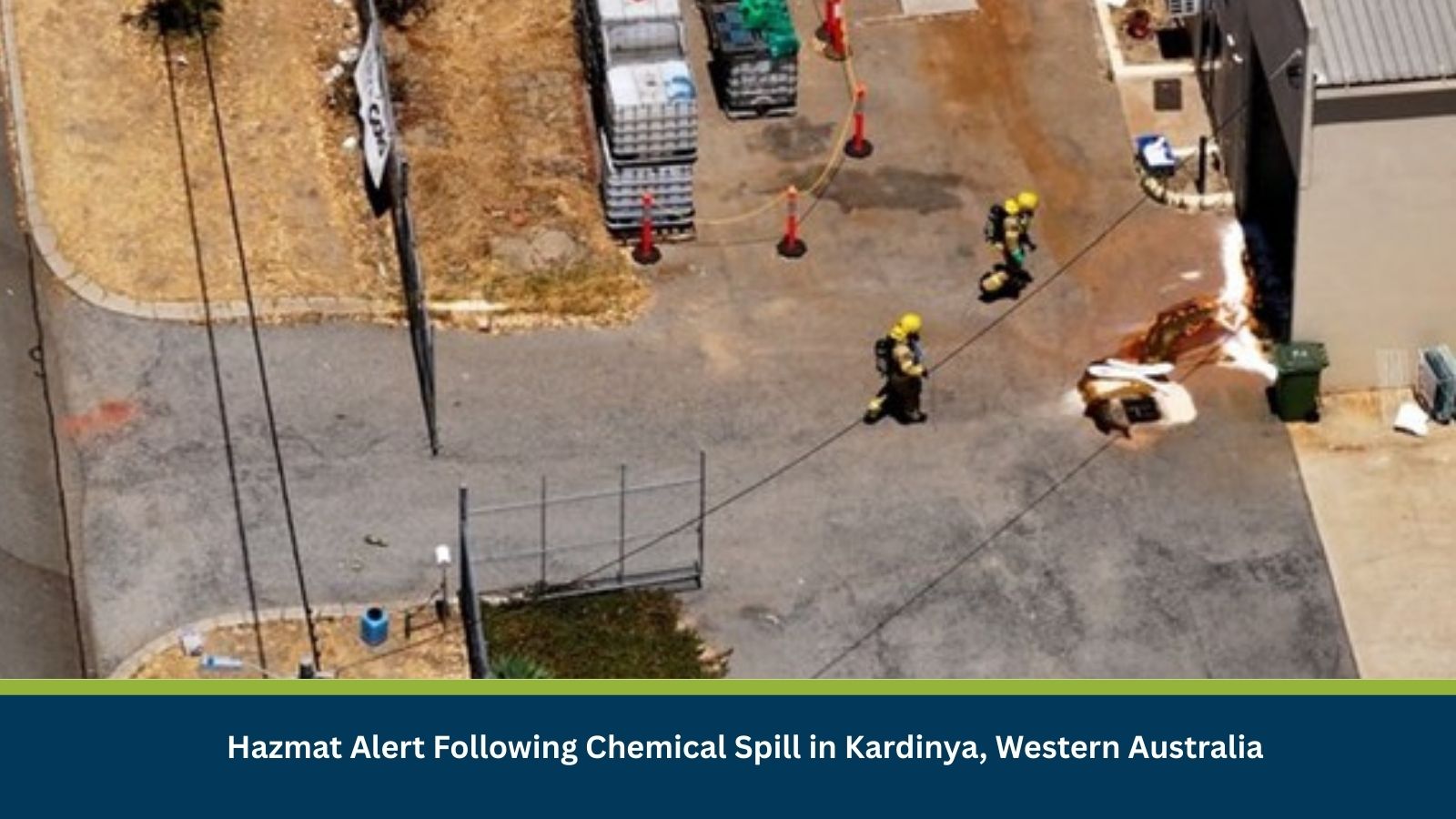
On 29 January, a chemical spill in Kardinya prompted authorities to issue a HAZMAT alert and close nearby roads as a precaution. Emergency services-initiated containment and hazard assessment, advising residents and businesses to avoid the affected area. Historical response patterns in Western Australia indicate that initial containment is likely within 24–72 hours, followed by site remediation and monitoring over several days. The overall severity is moderate, reflecting localized exposure risks, temporary transport disruption, and potential environmental contamination.
Current Updates
Emergency services responded to the spill on 29 January, securing the immediate area and restricting access to surrounding roads. Environmental and specialist HAZMAT teams are assessing the chemical involved, air quality, and stormwater exposure risks. No fatalities or large-scale evacuations have been reported at the time of the alert, and authorities continue to provide public guidance.
Known Hotspots and Sensitive Areas
High Impact:
- Immediate spill site along Weatherburn Way
- Adjacent local roads and commercial premises
Medium Impact:
- Immediate spill site along Weatherburn Way
- Adjacent local roads and commercial premises
Low Impact:
- Broader Perth southern suburbs beyond the established cordon
Past Perth-area chemical incidents show recurrence risks near mixed residential–commercial zones, particularly where drainage systems are present.
Impact on Transportation and Services
Local road closures and traffic diversions have disrupted commuter and delivery routes within Kardinya. Public transport services passing through the area may experience delays or temporary rerouting. Businesses within the exclusion zone face restricted access to premises, staff displacement, and short-term operational interruptions. Communications infrastructure remains functional, though emergency alerts and social media channels are heavily used.
Recommended Actions
Immediate Measures:
- Comply with all emergency service instructions, including shelter-in-place or evacuation guidance.
- Suspend non-essential operations within the affected footprint and account for all personnel.
- Secure assets and prevent unauthorized entry into contaminated areas.
Strategic Measures:
- Comply with all emergency service instructions, including shelter-in-place or evacuation guidance.
- Suspend non-essential operations within the affected footprint and account for all personnel.
- Secure assets and prevent unauthorized entry into contaminated areas.
Multidimensional Impact
While the incident is localized, increased emergency activity may temporarily strain response capacity for unrelated events. Community anxiety and reputational pressure on responsible entities are possible if remediation is prolonged.
Emergency Contacts
- Emergency Number: 000
- Western Australia Department of Fire and Emergency Services (DFES): dfes.wa.gov.au/
- Western Australia Environmental Protection Authority (EPA): epa.wa.gov.au/
Final Thoughts
The Kardinya chemical spill represents a contained but evolving critical infrastructure risk. The primary watchpoints remain chemical identification, environmental testing outcomes, and the duration of access restrictions. For businesses and policymakers, the incident reinforces the importance of early-warning systems, coordinated emergency response, and preparedness platforms such as MitKat’s Datasurfr to manage localized infrastructure disruptions effectively.
Stay ahead of operational risks with real-time alerts, scenario modeling, and expert advisories with datasurfr’s Predict. Start your 14-day free trial of Datasurfr’s Risk Intelligence Platform today.