





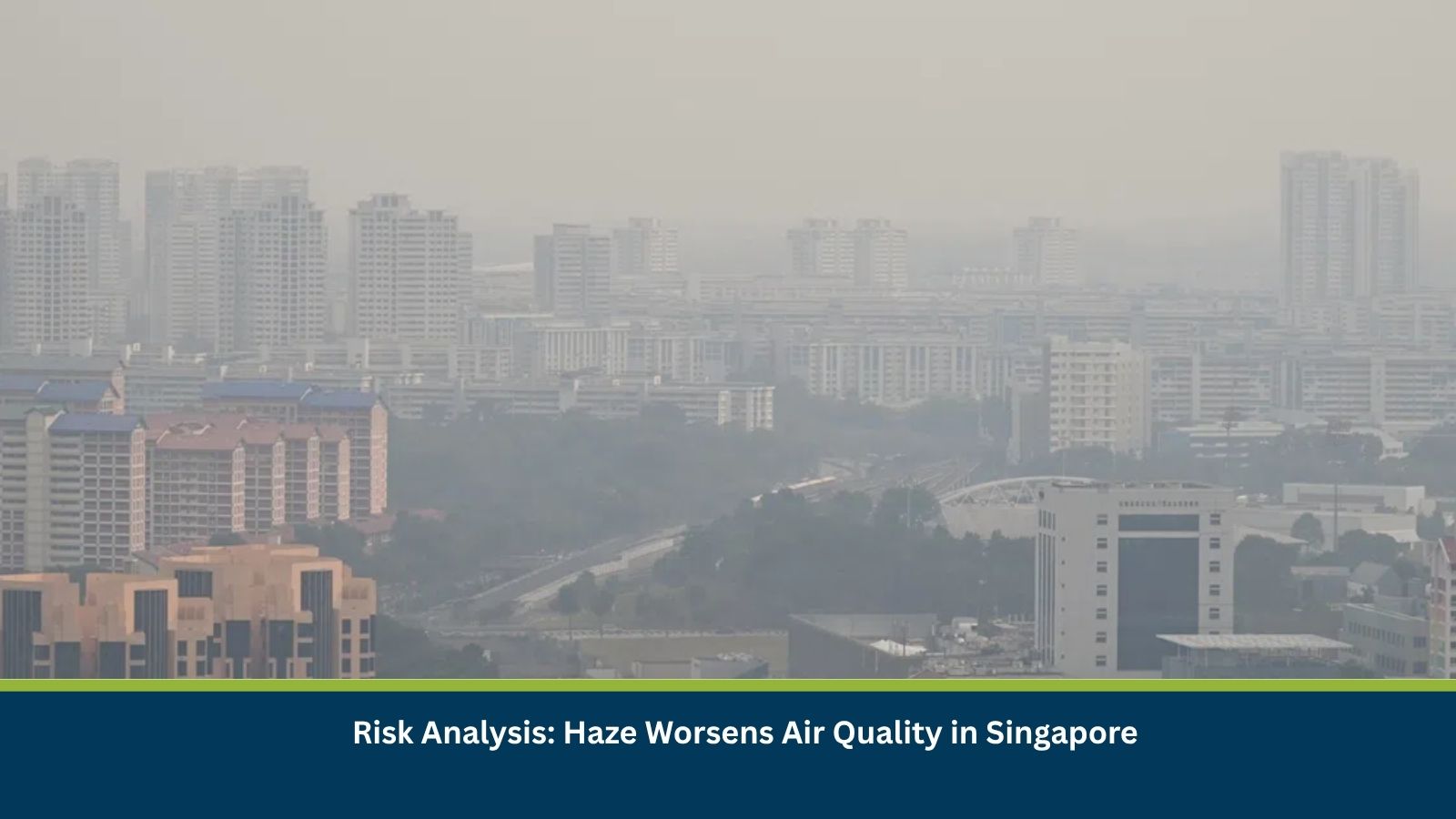
Executive Summary for Haze and Unhealthy Air Quality in Singapore
Singapore’s air quality has deteriorated into the unhealthy range in early September 2026, with the 24-hour Pollutant Standards Index (PSI) crossing 101 in the Central region, according to the National Environment Agency (NEA). The deterioration follows weeks of heightened haze risk driven by hot, dry conditions linked to an intensifying El Nino, which has fuelled forest and peatland fires in Indonesia’s Sumatra and Kalimantan. Singapore’s interagency haze task force is monitoring the situation closely as the region enters what forecasters flagged as the peak period for transboundary haze.
- Date of Event: 04 September 2026
- Location: Singapore
- Risk Category: Environment
- Severity Score: 3/5
- Confidence Level: 72%
What is Risk Analysis in the Context of Environment Events
Environmental risk analysis assesses the impact of transboundary haze and deteriorating air quality on public health, outdoor activity and daily life. When PSI readings cross into the unhealthy range, authorities must weigh advisories for vulnerable groups against wider disruption to schools, outdoor events and daily commutes, while tracking the hotspot and wind conditions driving the haze.
Known Hotspots and Sensitive Areas
High Impact
- Central region of Singapore, where the 24-hour PSI first crossed 101
- Areas directly downwind of smoke plumes from southern Sumatra and Kalimantan
- Outdoor venues and event spaces across the island
Medium Impact
- Other NEA-monitored regions (North, South, East, West) as haze spreads
- Schools and pre-schools required to activate haze management measures
- Healthcare facilities preparing for a possible rise in respiratory complaints
Low Impact
- Indoor, air-conditioned premises with filtered air systems
- Areas currently unaffected pending prevailing wind direction
Impact on Transportation and Services
Scheduled transport services have not been disrupted so far, but NEA’s daily haze advisories are being used by schools, workplaces and event organisers to plan activities for the following day. Should the PSI climb further into the unhealthy range, authorities may curtail outdoor school events and activities, and reduced visibility from denser haze could affect maritime traffic in the Singapore Strait.
Recommended Actions
- Check NEA’s daily haze advisory and 24-hour PSI readings before planning outdoor activities.
- Elderly people, pregnant women, children and those with chronic heart or lung conditions are advised to reduce or avoid prolonged outdoor exertion.
- Keep N95 masks and indoor air purifiers ready in case conditions worsen.
- Monitor updates from schools and workplaces on any haze management measures.
Emergency Contacts
- NEA General Enquiries: +65 6225 5632
- Emergency Services (Police/Fire/Ambulance): 999 / 995
Final Thoughts
The PSI crossing 101 in Singapore’s Central region marks a fresh escalation in what forecasters had already flagged as a high-risk haze season, driven by dry El Nino conditions fuelling fires in Sumatra and Kalimantan. With the dry season potentially extending into October, continued monitoring of NEA advisories will be key for residents and vulnerable groups through the coming weeks. Leveraging MitKat’s Datasurfr enables businesses to receive real-time intelligence, monitor evolving threats and make informed decisions to protect people, assets and operations.