





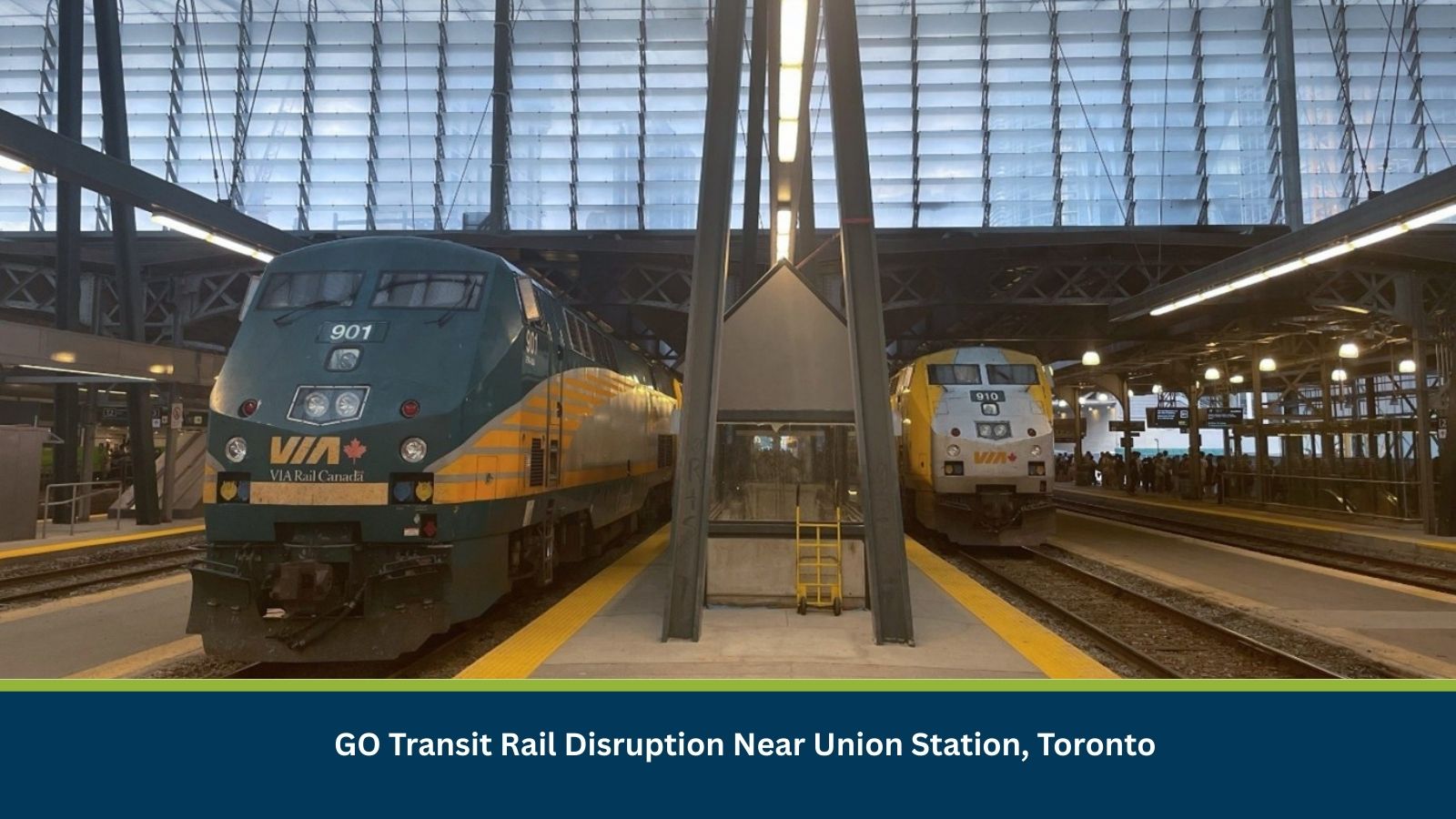
Executive Summary for the Rail Disruption in Toronto
A disabled GO train reported near Union Station resulted in significant delays across affected corridors. Based on comparable GO and TTC incidents, the most likely disruption window is two-eight hours, with residual timetable impacts potentially extending into the evening peak. Severity is assessed as moderate due to business and commuter disruption rather than safety or infrastructure damage. Confidence is high given established response patterns by GO Transit and Metrolinx.
- Date of Event: 03 February
- Location: Union Station, Toronto, Ontario, Canada
- Risk Category: Travel Risks
- Severity Score: 3 / 5
- Confidence Level: 78 %
What is Risk Analysis in the Context of Travel Risks Events
Travel risk analysis evaluates disruptions affecting the movement of people and goods, including public transport failures, strikes and infrastructure incidents. In major metropolitan centres such as Toronto, rail disruptions carry outsized impact due to commuter density and reliance on transit hubs. Historically, disabled-train events near Union Station have caused short but intense disruption with cascading effects across rail, surface transit and road networks.
Current Updates
GO Transit has confirmed a disabled train near Union Station, advising passengers of delays, short-turned services and potential cancellations. No injuries or major infrastructure damage have been reported. Contingency measures, including possible bus bridging, are expected, while TTC services through Union Station are experiencing increased passenger loads as commuters seek alternate routes.
Known Hotspots and Sensitive Areas
High Impact:
- Union Station concourse and rail approaches
- Lakeshore East and West corridors feeding into downtown
Medium Impact:
- TTC Line 1 interchanges and streetcar routes near Front Street
- Gardiner Expressway ramps and downtown arterial roads
Low Impact:
- Outer suburban stations with lower peak dependency on Union Station
These locations frequently experience recurrence of congestion during rail incidents, particularly during winter peak periods.
Impact on Transportation and Services
Rail services are directly affected through delays, cancellations and short turns on GO corridors serving Union Station. Overflow demand is shifting to TTC subway, streetcar and bus services, increasing crowding and surface congestion. Road traffic around Front Street, Bay Street and Gardiner approaches is likely to intensify. While freight impacts are limited, last-mile courier services and time-sensitive downtown deliveries may experience delays. Digital and communications systems remain operational, though customer-service channels face higher volumes.
Recommended Actions
Immediate Measures:
- Activate site-level travel contingency plans and authorize flexible start times or remote work for affected employees.
- Communicate clearly with staff, clients and partners on expected delays and alternate arrangements.
- Monitor GO Transit and TTC advisories for real-time service updates.
Strategic Measures:
- Update corporate travel and commuter resilience plans for downtown operations.
- Identify alternate work locations or staggered scheduling for future peak-hour disruptions.
- Maintain coordination with local transit agencies and municipal authorities for rapid response.
Multidimensional Impact
Cold weather conditions increase discomfort and minor safety risks for stranded commuters, while any concurrent protests or events downtown could amplify crowding and delay incident resolution.
Emergency Contacts
- GO Transit and Metrolinx Service Alert Channels: gotransit.com/en/find-a-station/un/service-alerts
- TTC Customer Information Lines: 416-393-4636
- Emergency Number: 911
Final Thoughts
The disruption is expected to remain short-lived, with gradual normalization once the disabled train is cleared. However, the incident highlights Union Station’s vulnerability as a single-point transit dependency. Businesses should continue monitoring service restoration and leverage early warning and situational awareness tools such as MitKat’s Datasurfr to mitigate productivity loss and improve preparedness for recurring urban transit disruptions.
Stay ahead of operational risks with real-time alerts, scenario modeling, and expert advisories with datasurfr’s Predict. Start your 14-day free trial of Datasurfr’s Risk Intelligence Platform today.