





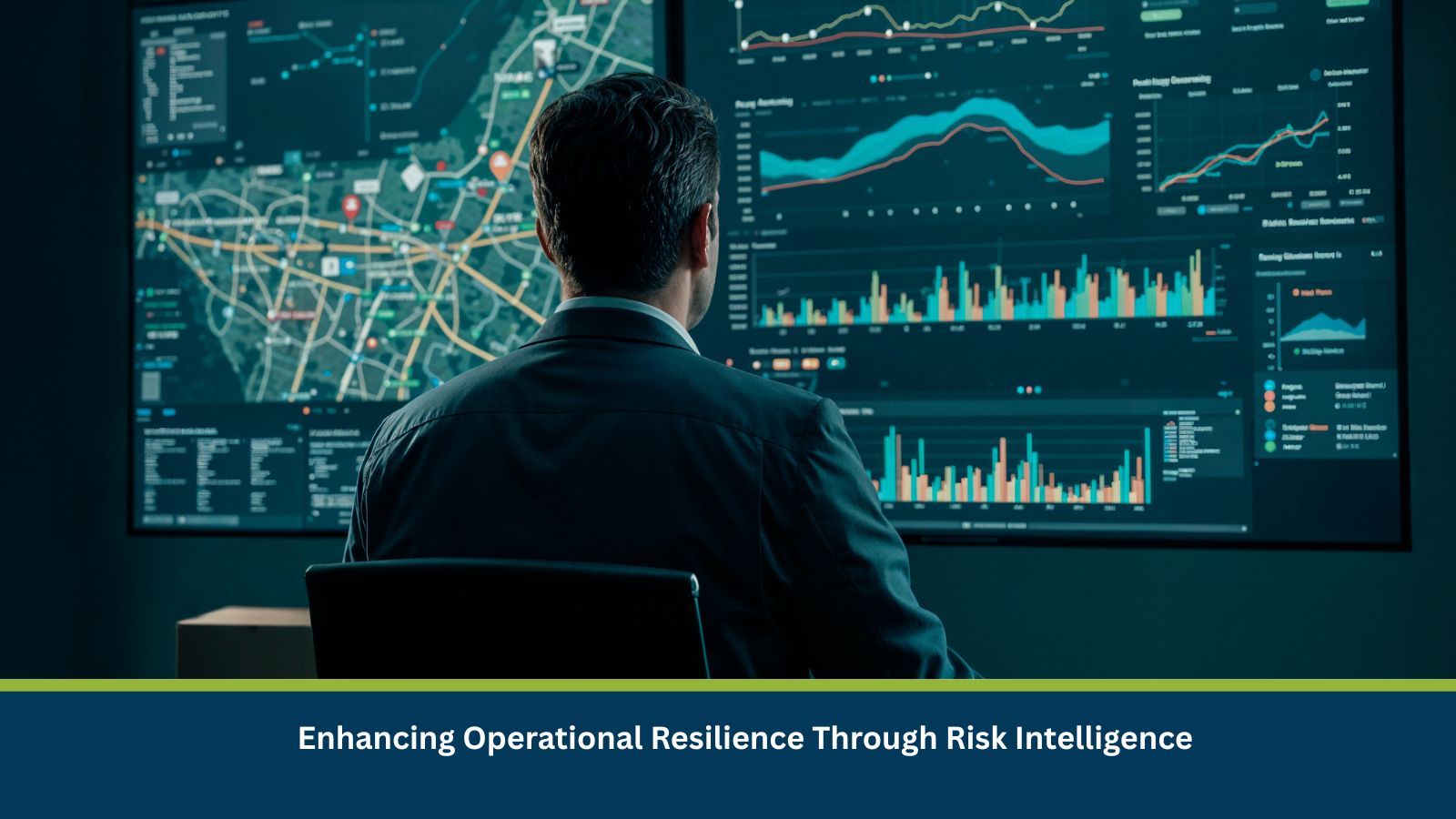
In today’s rapidly evolving risk landscape, organizations face a growing number of threats that can disrupt operations, impact employee safety, and damage business reputation. From cyberattacks and geopolitical tensions to natural disasters and supply chain disruptions, businesses must be prepared to respond quickly and effectively to unexpected challenges.
This is where risk intelligence plays a critical role. By leveraging real-time data, advanced analytics, and AI-driven insights, organizations can identify emerging threats, make informed decisions, and strengthen operational resilience.
This blog explores how businesses can enhance operational resilience through risk intelligence and why it has become essential for long-term success.
What Is Operational Resilience?
Operational resilience refers to an organization’s ability to anticipate, withstand, respond to, and recover from disruptions while continuing to deliver critical services.
Unlike traditional risk management, operational resilience focuses not only on preventing incidents but also on ensuring that essential operations remain functional during and after a crisis.
Core Elements of Operational Resilience
- Risk identification and assessment
- Business continuity planning
- Crisis management
- Incident response
- Supply chain resilience
- Cybersecurity preparedness
- Real-time monitoring and intelligence
Organizations that invest in resilience are better equipped to navigate uncertainty and maintain stakeholder confidence.
Understanding Risk Intelligence
Risk intelligence is the process of collecting, analysing, and interpreting information about potential threats to support proactive decision-making.
It combines multiple data sources, technologies, and analytical methods to provide actionable insights into risks that could impact an organization.
Key Components of Risk Intelligence
Real-Time Threat Monitoring
Continuous monitoring of global events, security incidents, cyber threats, and operational risks.
Predictive Analytics
Using AI and machine learning to identify patterns and forecast potential disruptions.
Situational Awareness
Providing a comprehensive view of evolving threats and their potential impact on business operations.
Actionable Insights
Delivering relevant information that enables organizations to make informed decisions quickly.
Why Risk Intelligence Is Critical for Operational Resilience
Modern risks are increasingly interconnected and can escalate rapidly.
Organizations that rely solely on reactive responses often struggle to manage disruptions effectively.
Risk intelligence enables businesses to shift from reactive crisis management to proactive resilience-building.
Key Benefits
Faster Threat Detection
Early identification of risks allows organizations to take preventive action before disruptions occur.
Improved Decision-Making
Leaders gain access to real-time information that supports informed and timely decisions.
Enhanced Business Continuity
Organizations can maintain critical functions even during significant disruptions.
Reduced Financial Impact
Proactive mitigation strategies help minimize losses and recovery costs.
Stronger Stakeholder Confidence
Demonstrating preparedness improves trust among customers, employees, investors, and regulators.
Major Risks Impacting Operational Resilience Today
Cybersecurity Threats
Ransomware attacks, phishing campaigns, and data breaches continue to threaten organizations worldwide.
Geopolitical Risks
Political instability, regional conflicts, and sanctions can disrupt operations and supply chains.
Supply Chain Disruptions
Global dependencies make organizations vulnerable to transportation, manufacturing, and logistics challenges.
Natural Disasters
Floods, earthquakes, hurricanes, and extreme weather events can impact facilities and infrastructure.
Workforce Safety Risks
Organizations must ensure employee safety during emergencies, travel disruptions, and security incidents.
How AI Is Transforming Risk Intelligence
Artificial intelligence is revolutionizing how organizations monitor and respond to risks.
AI-powered systems can process vast amounts of data from multiple sources in real time, enabling faster and more accurate threat detection.
AI Applications in Risk Intelligence
Predictive Risk Analysis
AI identifies trends and forecasts potential disruptions before they occur.
Automated Threat Monitoring
Continuous monitoring of global events and risk indicators.
Intelligent Alerting
Automated notifications help security and operations teams respond quickly.
Incident Prioritization
AI helps organizations focus on the most critical threats.
Decision Support
Advanced analytics provide actionable recommendations during crises.
By integrating AI into risk intelligence programs, organizations can significantly improve resilience and response capabilities.
Best Practices for Building Operational Resilience Through Risk Intelligence
Establish a Risk Intelligence Framework
Create a structured approach to collecting, analysing and acting on risk information.
Implement Real-Time Monitoring
Continuously monitor global threats, operational risks, and emerging incidents.
Integrate AI and Analytics
Leverage technology to improve threat detection and predictive capabilities.
Strengthen Cross-Functional Collaboration
Ensure coordination between security, operations, HR, compliance, and leadership teams.
Conduct Regular Risk Assessments
Identify vulnerabilities and update mitigation strategies regularly.
Develop Crisis Response Plans
Prepare detailed response procedures for various risk scenarios.
Train Employees and Leadership
Build organizational awareness and preparedness through regular exercises and simulations.
The Role of Risk Intelligence in Business Continuity
Business continuity and operational resilience are closely connected.
Risk intelligence helps organizations:
- Identify critical vulnerabilities
- Anticipate disruptions
- Prioritize response actions
- Protect employees and assets
- Maintain customer service levels
- Accelerate recovery efforts
Organizations that integrate risk intelligence into continuity planning are better prepared to handle complex and evolving threats.
Future Trends in Operational Resilience
As organizations become increasingly digital and interconnected, operational resilience strategies will continue to evolve.
Emerging Trends
- AI-powered risk intelligence platforms
- Predictive threat forecasting
- Automated crisis response workflows
- Real-time global situational awareness
- Integrated cyber and physical security monitoring
- Advanced geospatial analytics
Businesses that embrace these innovations will gain a significant advantage in managing future risks.
Frequently Asked Questions (FAQs)
What is operational resilience?
Operational resilience is an organization’s ability to prepare for, respond to, recover from, and adapt to disruptions while maintaining critical business operations.
What is risk intelligence?
Risk intelligence is the collection and analysis of threat-related information to help organizations identify, assess, and mitigate risks proactively.
Conclusion
Operational resilience has become a strategic necessity in today’s unpredictable business environment. Organizations can no longer rely on reactive approaches to manage disruptions. Instead, they must leverage risk intelligence to gain visibility into emerging threats, improve decision-making, and strengthen their ability to adapt and recover.
By combining real-time monitoring, AI-powered analytics, predictive insights, and proactive risk management practices, organizations can enhance resilience, protect critical operations, and maintain business continuity even during periods of uncertainty.
Companies that invest in risk intelligence today will be better positioned to navigate tomorrow’s challenges with confidence, agility, and resilience.
Datasurfr helps organizations enhance operational resilience by providing AI-powered real-time risk intelligence, continuous threat monitoring, predictive risk insights, and location-specific alerts, enabling faster decision-making, proactive risk mitigation and effective crisis response across global operations.