





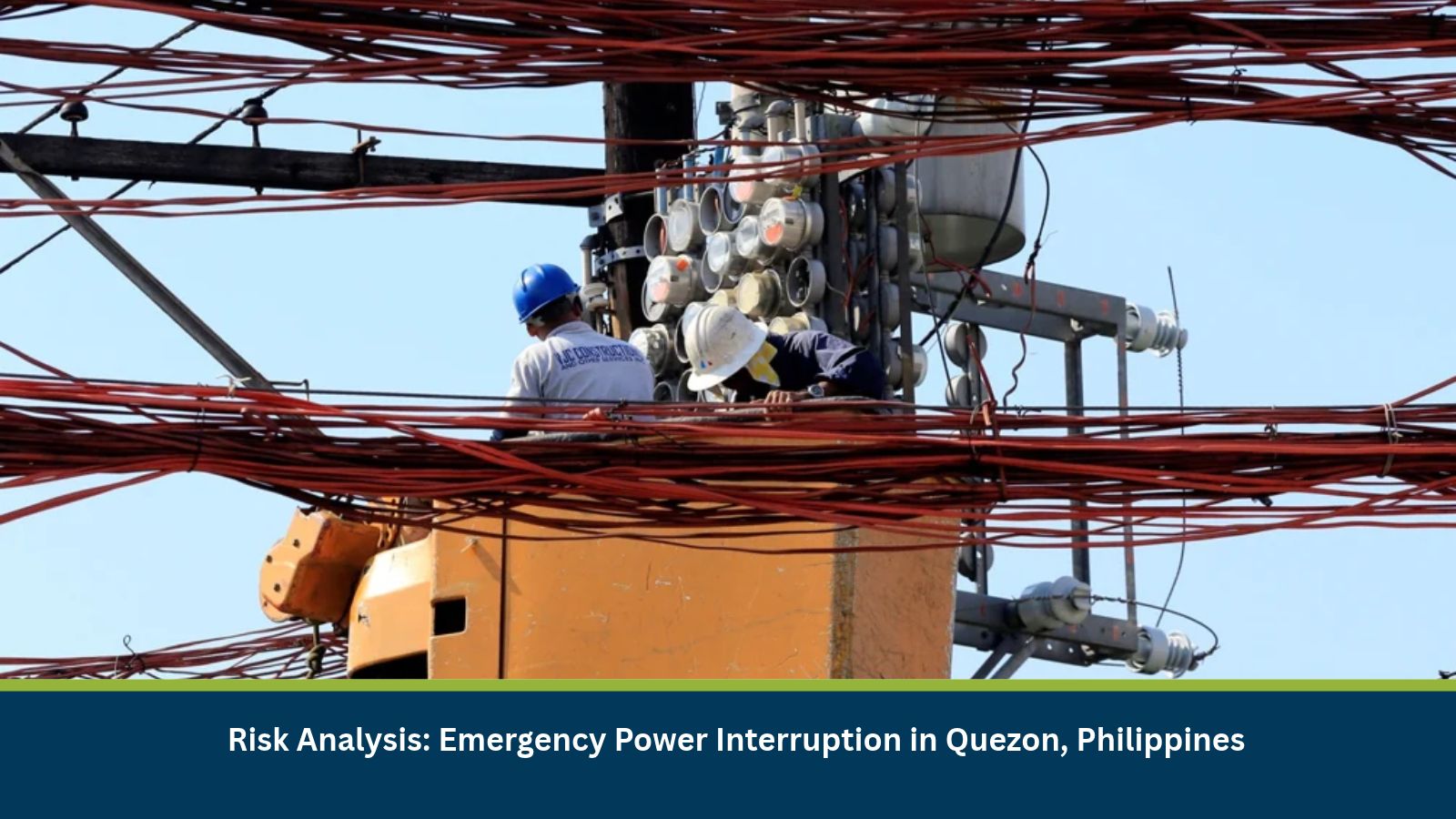
Executive Summary for the Emergency Power Interruption in Quezon
An emergency power interruption has been identified as a potential operational concern in Quezon, Philippines, for 23 October 2026, according to an advisory by the National Grid Corporation of the Philippines (NGCP). The interruption may affect electricity-dependent activities in the service areas concerned, with possible implications for commercial operations, residential services and essential facilities. The precise affected localities, outage duration, technical cause and expected restoration time could not be independently confirmed from the linked NGCP post during preparation of this assessment. Businesses and facility managers should therefore verify the latest advisory with NGCP and the relevant electric cooperative or distribution utility before making location-specific operational decisions. For businesses operating in the potentially affected area, the principal concern is continuity of electricity-dependent functions. Facilities relying on uninterrupted power for communications, security systems, refrigeration, information technology, water systems or production equipment should review contingency arrangements and monitor updates from the responsible electricity provider.
- Date of Event: Friday, 23 October 2026
- Location: Quezon, Philippines; specific affected localities require confirmation
- Risk Category: Critical Infrastructure
- Severity Score: 3/5
- Confidence Level: 75%
What is Risk Analysis in the Context of Critical Infrastructure Events
Risk analysis for critical infrastructure events assesses the potential consequences of electricity supply disruption for people, facilities, services and business operations. The severity of an interruption depends on its geographical extent, duration, cause and the level of dependence on electricity among affected users.
Known Hotspots and Sensitive Areas
High Impact
- Critical facilities that require continuous electricity, including healthcare facilities, emergency-response infrastructure and essential utility operations.
- Industrial facilities and commercial sites where a power loss could interrupt production or damage equipment.
- Data rooms, server infrastructure and communications facilities without sufficient backup power.
Medium Impact
- Commercial districts, offices, retail premises and service businesses located within the confirmed interruption area.
- Warehouses and cold-storage facilities reliant on powered refrigeration and monitoring systems.
- Residential and mixed-use areas where electricity is required for water pumps, elevators and building access systems.
Low Impact
- Businesses with functioning backup generators, battery systems or established alternative operating arrangements.
- Facilities able to defer non-essential electricity-dependent activities until supply is restored.
Impact on Transportation and Services
- Electricity and utilities: The primary concern is interruption to normal electricity-dependent activity within the confirmed service area. The scale of disruption will depend on the extent and duration of the outage.
- Business operations: Offices, shops, production facilities and other businesses may experience reduced productivity or temporary suspension of activities if power is unavailable and backup arrangements are inadequate.
- Transport and mobility: Traffic signals, parking systems, elevators and electric vehicle charging facilities may be affected where they depend on the disrupted supply.
- Communications and digital services: Internet equipment, mobile-network infrastructure and business communications may be affected if backup power is insufficient. The interruption should not be assumed to cause a wider telecommunications outage.
- Healthcare and essential services: Facilities with critical electrical requirements should verify generator readiness, backup fuel and emergency operating procedures. No specific disruption to healthcare or other essential services has been confirmed.
Recommended Actions
- Verify the outage details: Check the original NGCP advisory and contact the relevant electric cooperative or distribution utility for the affected locations, outage window and restoration updates.
- Review backup power: Test generators, uninterruptible power supplies (UPS), emergency lighting and battery-backed systems.
- Protect critical equipment: Follow approved shutdown procedures for sensitive electrical and IT equipment where necessary.
- Maintain communications: Ensure staff know the escalation process and have alternative communication methods if local connectivity is disrupted.
- Priorities essential operations: Identify functions that must continue during an outage and activate business continuity arrangements where needed.
- Assess cold-chain requirements: Monitor refrigeration and temperature-sensitive stock; arrange alternative storage if required.
- Prepare for restoration: Follow safe restart procedures and check critical equipment before returning to normal operations.
- Monitor official updates: Avoid relying on unverified social media claims about outage duration or restoration time.
Emergency Contacts
- Emergency Number: 911
Final Thoughts
The reported emergency power interruption in Quezon presents a moderate potential risk to business continuity and electricity-dependent services. Businesses should confirm the details with the relevant electricity provider, test backup systems and prepare for temporary operational disruption. Leveraging MitKat’s Datasurfr enables businesses to receive real-time intelligence, monitor evolving threats and make informed decisions to protect people, assets and operations.