





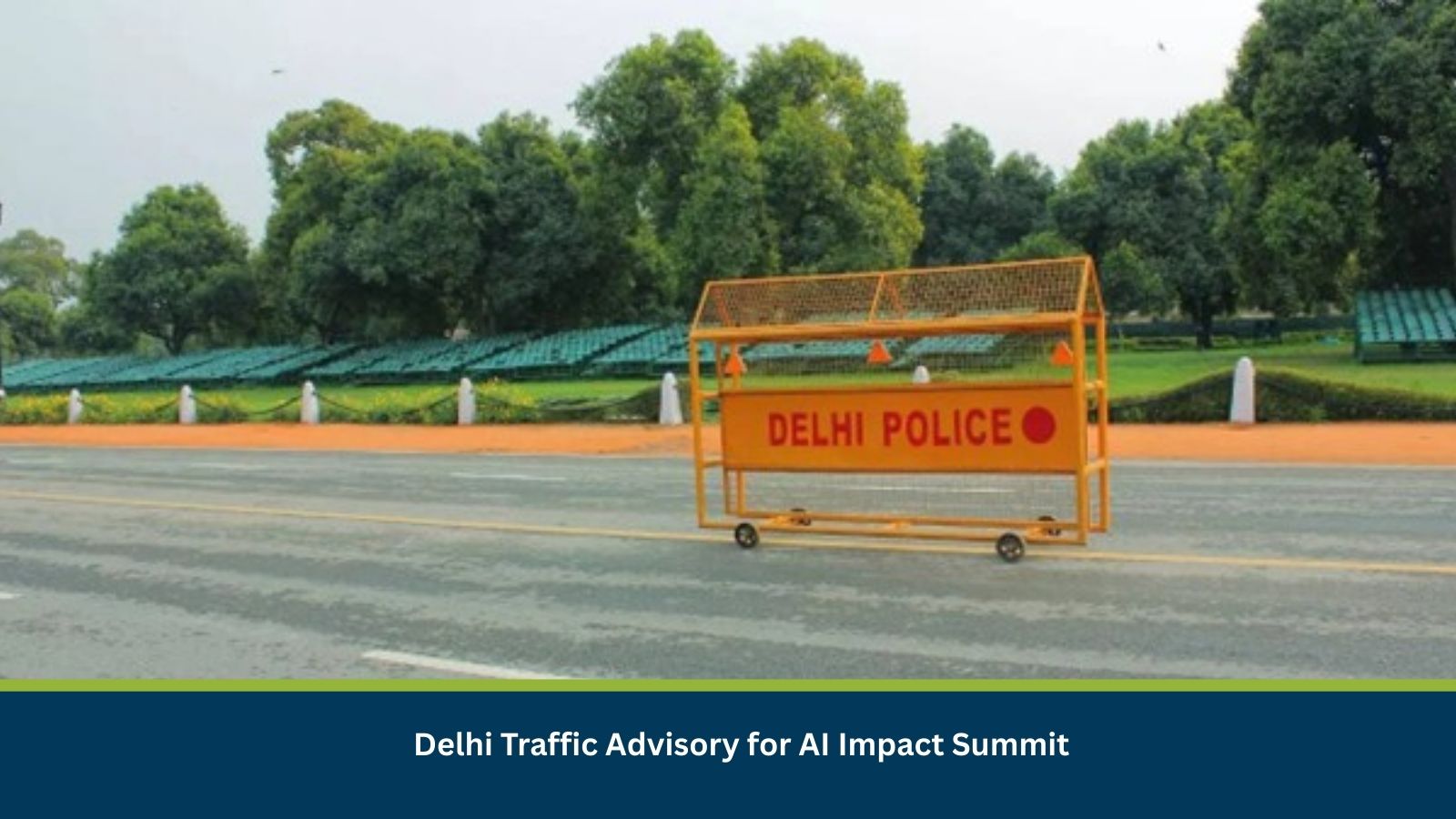
Executive Summary for the Traffic Advisory in Delhi
Delhi Traffic Police announced targeted vehicular restrictions for the AI Impact Summit scheduled on 18 February. The most disruptive window is expected between 0600 and 2200 hours, with preparatory and residual restrictions active between 16–20 February. Central corridors, including Pragati Maidan, Bharat Mandapam, India Gate and ITO, are subject to diversions. The impact is assessed as moderate, primarily affecting traffic flow, supply chain logistics and commuter movement.
- Date of Event: 18 February
- Location: Delhi, India
- Risk Category: Travel Risks
- Severity Score: 3 / 5
- Confidence Level: 82 %
What is Risk Analysis in the Context of Travel Risks Events
Travel risk analysis evaluates disruptions affecting mobility, commuter safety and transport-dependent operations. In major urban centres like Delhi, high-profile summits and VVIP movements routinely trigger controlled traffic advisories. While these are pre-announced and security-driven, they can significantly affect traffic congestion, last-mile logistics and workforce attendance. Historically, events such as G20 rehearsals and previous international summits have resulted in concentrated but time-bound transport disruption without long-term infrastructure damage.
Known Hotspots and Sensitive Areas
High Impact:
- Pragati Maidan / Bharat Mandapam complex
- Kartavya Path (India Gate corridor)
- ITO junction and Mathura Road approaches
Medium Impact:
- Ring Road interchanges near central Delhi
- Central Secretariat and adjoining diplomatic zones
Low Impact:
- Peripheral districts beyond the central administrative area
Such patterns are consistent with prior summit-related traffic advisories in Delhi, where disruption is concentrated around security perimeters.
Impact on Transportation and Services
Road closures and diversions may result in 30–120-minute delays during peak hours. Public buses are expected to operate on modified routes. Metro services are anticipated to continue, although pedestrian and feeder access near Pragati Maidan and ITO stations may be restricted. Businesses in central Delhi may experience reduced footfall, rescheduled meetings and delayed deliveries. Digital and utility infrastructure is not expected to be directly impacted.
Recommended Actions
Immediate Measures:
- Issue internal travel advisories on 18 February with alternate route planning.
- Enable remote work or staggered shifts for non-essential staff.
- Reschedule time-sensitive deliveries outside peak restriction windows.
- Maintain liaison with Delhi Police control rooms for real-time updates.
Strategic Measures:
- Integrate traffic advisory monitoring into corporate risk dashboards.
- Develop multi-route contingency plans for critical logistics.
- Pre-authorize alternate vendors or satellite offices for central operations.
Multidimensional Impact
Weather events such as light rain may compound congestion. Overlapping protests or unrelated emergencies could strain central corridors further, potentially affecting emergency response times and increasing urban mobility pressure.
Emergency Contacts
- Emergency Number: 112
- Delhi Traffic Police Helpline: 1095
Final Thoughts
The advisory represents a predictable, short-duration travel risk associated with a high-profile summit. The primary impact will be concentrated in central Delhi on 18 February, with residual restrictions through 20 February. Businesses should prioritise proactive route planning, flexible workforce management and real-time traffic monitoring.
Stay ahead of operational risks with real-time alerts, scenario modeling, and expert advisories with datasurfr’s Predict. Start your 14-day free trial of Datasurfr’s Risk Intelligence Platform today.