





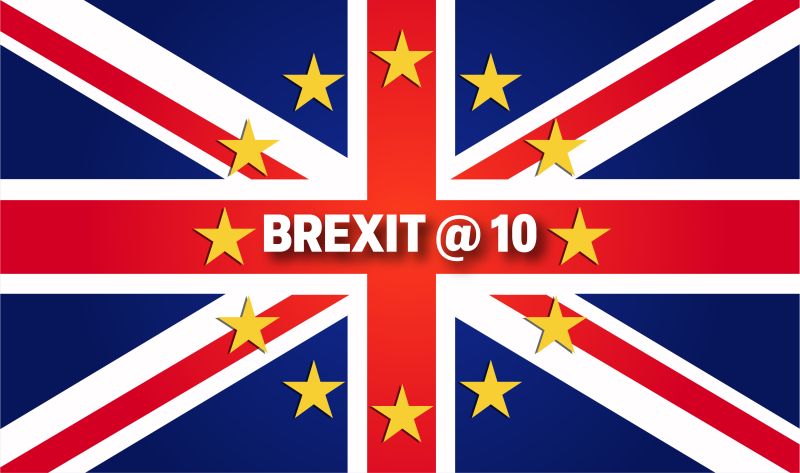
In a shock vote on 23 June 2016, the UK voted to leave the EU. FTSE 100 crashed, Pound collapsed and PM David Cameron resigned. Brexit, according to Brexiteers, was meant to “take back control” of immigration, free up money for health service, and bring prosperity with good trade deals.
Has Brexit Delivered?
Economists agree that leaving the EU may have weighed on the UK’s economic growth potential with 2 to 8% of foregone output. They argue Brexit has hurt business environment and investment, lowered productivity and impacted living standards.
The promised benefits of Brexit are difficult to quantify – from less regulation and reduced rates of immigration to better-funded public services and major new trading relationships. New trade deals with Australia, New Zealand, India, and Japan are small compared with UK-EU trade (GBP 856 billion in 2025). Brexit has driven up costs and made it harder to sell into the EU.
Labour and Immigration: The UK now has net emigration with EU, but migration from non-EU states has surged amid labour shortages, increase in international students and emergency Visa to Ukraine.
Currency: Sterling has not recovered from the Brexit vote, having lost nearly 10% of its value against the dollar. This has made foreign goods expensive for UK citizens, impacting the cost of living as UK imports food, energy and materials.
Services Continue to Grow: While goods exports have suffered, the UK’s global services exports have performed remarkably well. Britain remains the world’s second largest exporter of services and the leading net exporter of financial services.
Six in 10 Britishers think Brexit has been a failure, as per a recent YouGov poll.
Keir Starmer Resigns: UK prepares for 7th PM in a decade
On June 22, 2026, PM Keir Starmer, who led Labour to a huge parliamentary majority and tried to rebuild the country’s ties with Europe, particularly on security and defence, resigned, clearing the way for a seventh PM in a decade since Brexit. Will UK’s political volatility impede the new negotiations with the EU?
Relations with the EU:
The EU remains the UK’s largest trading partner (41% of UK’s exports and 50% of UK’s imports). A trade deal signed on 01 Jan 2021, prevents either side from introducing tariff quotas.
Europe faces its own problems. The US has become unpredictable. It faces economic threat from China. Eurosceptics are gaining ground in France, Italy, Spain and Poland. Russia’s invasion of Ukraine has upended the security and energy architecture of Europe.
In the new world, increased synergy with the UK – Europe’s second largest economy, a P-5 member, nuclear and military power – would be advantageous for the EU. Similarly, it would make much sense for the UK to continue strengthening trade and strategic relations with its largest trading partner.
Reference: BBC, CNBC and CNN.