





What is Risk Analysis in the Context of Travel Risk Events
Travel risk analysis assesses disruptions affecting mobility, transportation infrastructure and the movement of people and goods. In this case, industrial action within the aviation sector represents a recurrent travel risk in Italy. Historically, airport and airline strikes in Italy occur frequently, are highly predictable, and tend to generate short-term but system-wide disruption, particularly at major hubs and connecting routes.
Executive Summary
- Date of Event: 09 January
- Location: Italy
- Risk Category: Travel Risks
- Severity Score: 3 / 5
- Confidence Level: 78 %
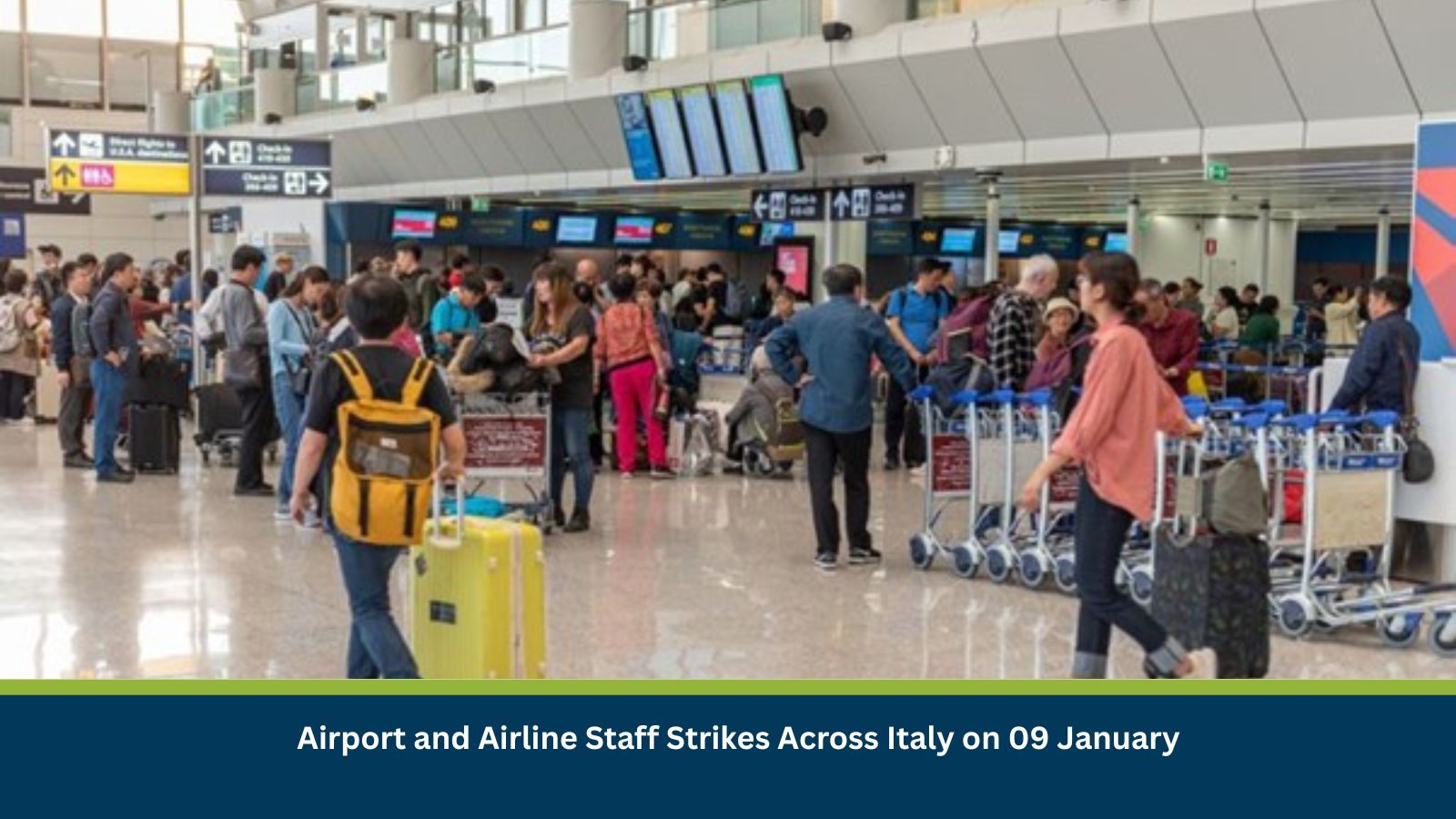
Italy is expected to experience coordinated airport and airline staff strikes on Friday, 09 January. Disruption is likely to be concentrated within a 24-hour window, with residual impacts such as delays, crew displacement and cancelled connections extending up to 72 hours. Major airports are expected to face moderate to significant operational strain.
Known Hotspots and Sensitive Areas
High Impact: Rome–Fiumicino (FCO), Milan–Malpensa (MXP), Milan–Linate (LIN), and Rome–Ciampino (CIA), due to high passenger volumes and hub dependency.
Medium Impact: Venice–Marco Polo (VCE) and Naples–Capodichino (NAP), where ground-handling constraints may delay regional and international services.
Low Impact: Smaller regional airports, though indirect cancellations may still occur due to aircraft and crew rotation issues.
A recurring pattern is observed, with strikes often scheduled in January and other peak operational periods, amplifying disruption.
Impact on Transportation and Services
Air transport will be the primary sector affected, with flight cancellations, missed connections and extended recovery timelines. Ground handling, baggage processing and cargo operations may slow considerably. While no formal road closures are expected, access routes to major airports may experience congestion. Rail and local transport services could face secondary pressure from passengers shifting away from air travel.
Recommended Actions
- Organizations should defer non-essential travel to and from Italy, identify mission-critical staff and approve alternative work arrangements.
- Logistics teams should pre-book contingency cargo routes and reroute time-sensitive shipments.
- Clear stakeholder communication plans should be activated, and coordination with airline partners and ground handlers should be strengthened to manage cascading delays.
Multidimensional Impact
The aviation strike coincides with other unrelated events, including regional rail disruptions and local utility maintenance in parts of Italy. These overlapping factors increase the likelihood of localized congestion and service bottlenecks, particularly around Rome and northern Italy, compounding passenger inconvenience and logistical delays.
Emergency Contacts
- Emergency Services (Police/Fire/Ambulance): 112
- Local Police: 113
- Civil Aviation Authority (ENAC): enac.gov.it/en/
Final Thoughts
The risk trajectory indicates a high probability of short-term but system-wide aviation disruption on 09 January, followed by a gradual normalization over two to three days. Businesses and travelers should focus on preparedness, flexibility and timely communication. Early-warning and travel-risk intelligence platforms such as MitKat’s Datasurfr are critical for anticipating disruption and safeguarding operational continuity. Stay ahead of operational risks with real-time alerts, scenario modeling, and expert advisories with datasurfr’s Predict. Start your 14-day free trial of Datasurfr’s Risk Intelligence Platform today.