





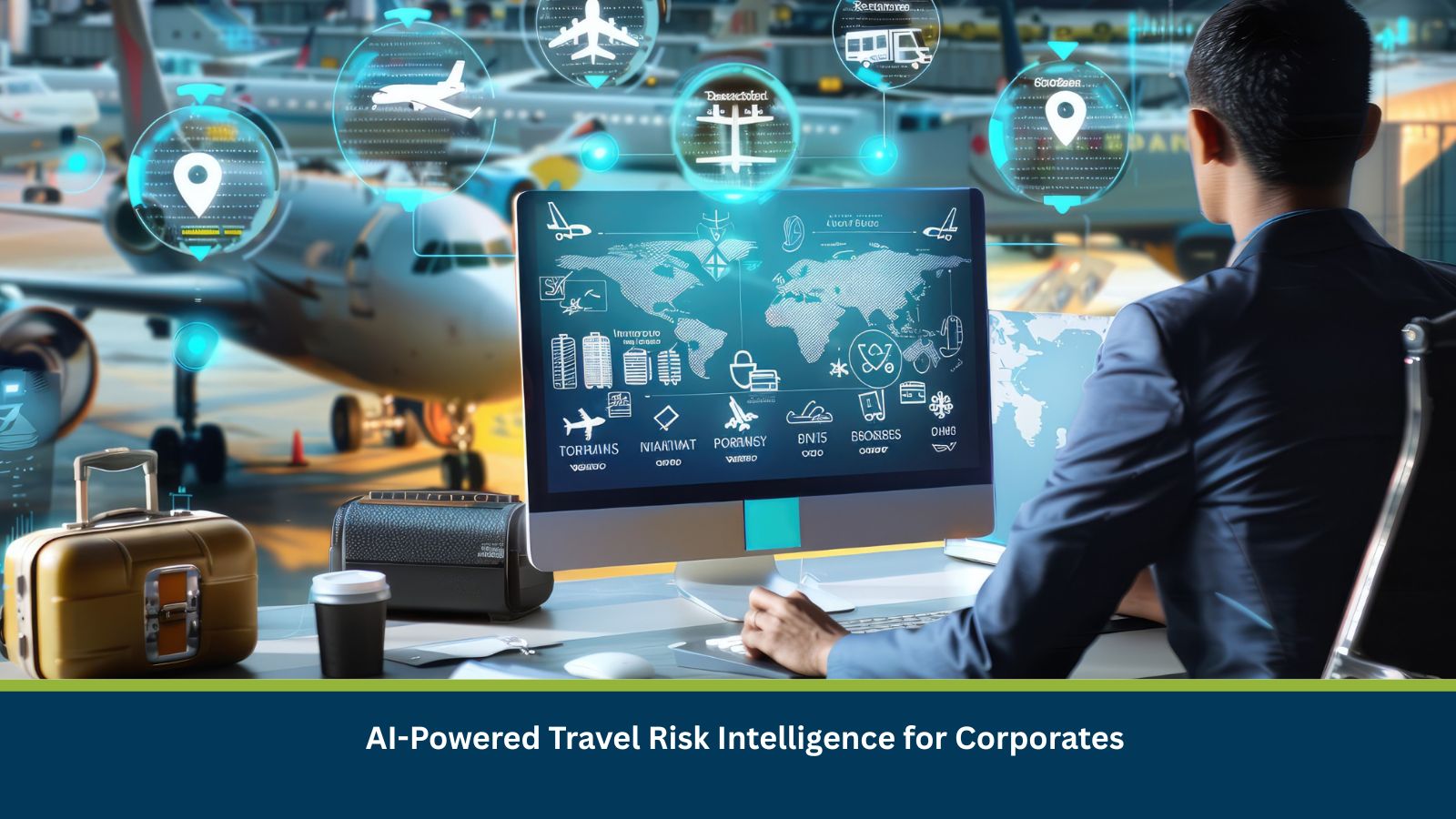
In today’s fast-changing global environment, corporate travel comes with increasing risks ranging from geopolitical instability and cyber threats to natural disasters and public health emergencies. As businesses continue to expand internationally, ensuring the safety of traveling employees has become a critical priority for organizations worldwide.
Traditional travel risk management approaches are no longer sufficient to address modern threats. This is where AI-powered travel risk intelligence is transforming corporate security by enabling real-time threat monitoring, predictive analytics, and proactive crisis response.
This blog explores how AI-driven travel risk intelligence helps corporates enhance employee safety, strengthen operational resilience, and improve decision-making during global travel operations.
What Is AI-Powered Travel Risk Intelligence?
AI-powered travel risk intelligence refers to the use of artificial intelligence, machine learning, real-time data analytics, and geospatial intelligence to identify, assess, and respond to travel-related risks affecting employees.
These systems continuously analyse global data sources to provide organizations with actionable insights and early warnings about potential threats.
Key Capabilities Include:
- Real-time threat monitoring
- Predictive risk analysis
- Geolocation-based alerts
- Crisis response automation
- Global situational awareness
- Traveler tracking and communication
- AI-driven decision support
AI enhances the speed, accuracy, and effectiveness of travel risk management operations.
Why Corporates Need AI-Driven Travel Risk Intelligence
Global risks are becoming more dynamic and unpredictable. Organizations must proactively monitor threats that can impact employee safety and business continuity.
Common Travel Risks for Corporates
Geopolitical Instability
Political unrest, protests, and regional conflicts can disrupt travel operations.
Cybersecurity Threats
Travelers are increasingly vulnerable to phishing attacks, unsecured networks, and data breaches.
Natural Disasters
Earthquakes, floods, hurricanes, and extreme weather events can affect employee safety.
Public Health Emergencies
Pandemics and regional disease outbreaks create significant travel challenges.
Transportation Disruptions
Flight cancellations, airport closures, and infrastructure failures can impact operations.
AI-powered intelligence helps organizations respond to these challenges faster and more effectively.
How AI Enhances Corporate Travel Risk Management
1. Real-Time Threat Detection
AI systems continuously scan and analyse:
- News feeds
- Government advisories
- Social media signals
- Security intelligence reports
- Weather alerts
- Global incident databases
This enables organizations to identify emerging risks in real time.
2. Predictive Risk Analytics
Machine learning models analyse historical and live data to predict potential disruptions before they escalate.
Predictive analytics can help organizations:
- Anticipate travel disruptions
- Assess high-risk destinations
- Forecast crisis impact
- Improve contingency planning
This proactive approach strengthens operational resilience.
3. Location-Based Risk Monitoring
AI-powered platforms integrate geospatial intelligence and GPS tracking to monitor employee exposure to threats.
Security teams can:
- Identify travellers in affected regions
- Send location-specific alerts
- Coordinate emergency responses
- Improve traveller accountability
Location intelligence improves situational awareness during rapidly evolving incidents.
4. Automated Alerts and Notifications
AI systems automatically deliver alerts when threats arise near traveler locations.
Examples include:
- Severe weather warnings
- Civil unrest notifications
- Terror threat alerts
- Transportation disruption updates
- Health advisory notifications
Automated communication ensures faster responses and improved traveler safety.
5. Intelligent Crisis Response
AI-powered workflows help organizations coordinate crisis management more efficiently.
Capabilities include:
- Automated incident escalation
- Risk prioritization
- Emergency communication
- Resource allocation support
- Decision-making assistance
This reduces response time during critical incidents.
Benefits of AI-Powered Travel Risk Intelligence
Enhanced Employee Safety
Employees receive timely alerts and support during emergencies.
Faster Decision-Making
Real-time intelligence enables rapid and informed responses.
Improved Operational Resilience
Organizations can minimize disruptions caused by travel-related incidents.
Better Duty of Care Compliance
Businesses strengthen their responsibility toward employee safety.
Reduced Financial and Reputational Risks
Proactive risk mitigation helps avoid costly disruptions and reputational damage.
Technologies Driving AI Travel Risk Intelligence
Artificial Intelligence and Machine Learning
Analyse large datasets to identify patterns and emerging risks.
Geospatial Intelligence
Visualizes global threats and traveler locations in real time.
Natural Language Processing (NLP)
Processes multilingual news and intelligence reports for threat detection.
Predictive Analytics
Forecasts disruptions using historical and live data.
Cloud-Based Monitoring Platforms
Provide centralized visibility across global travel operations.
Best Practices for Implementing AI-Powered Travel Risk Intelligence
Build a Comprehensive Travel Risk Strategy
Integrate technology, processes, and crisis response planning.
Centralize Risk Monitoring
Use unified platforms for intelligence gathering and traveller management.
Conduct Continuous Risk Assessments
Regularly evaluate evolving global threats.
Train Employees on Travel Safety
Ensure travellers understand security protocols and emergency procedures.
Enable 24/7 Monitoring and Support
Provide continuous traveller assistance and crisis management capabilities.
Protect Traveler Privacy
Ensure compliance with data protection and privacy regulations.
The Future of AI in Corporate Travel Security
AI will continue to reshape corporate travel risk management through advanced automation and predictive intelligence.
Future trends include:
- AI-driven predictive crisis modelling
- Autonomous threat detection systems
- Advanced behavioural analytics
- Integrated cyber and physical security monitoring
- Real-time multilingual intelligence analysis
- Intelligent traveller assistance platforms
Organizations adopting AI-powered travel intelligence today will be better positioned to manage future global risks.
Conclusion
AI-powered travel risk intelligence is becoming an essential component of modern corporate security and operational resilience strategies. As global travel risks continue to evolve, organizations must move beyond reactive approaches and adopt proactive, intelligence-driven solutions to protect employees and maintain business continuity.
By leveraging real-time monitoring, predictive analytics, geospatial intelligence, and automated crisis response capabilities, corporates can significantly enhance traveler safety, improve situational awareness, and respond faster to emerging threats.
Businesses that invest in AI-driven travel risk management not only strengthen employee protection but also build greater resilience, trust, and operational agility in an increasingly uncertain world.
Frequently Asked Questions (FAQs)
What is AI-powered travel risk intelligence?
AI-powered travel risk intelligence uses artificial intelligence, real-time analytics, and geospatial intelligence to monitor and manage risks affecting business travellers.
Why is travel risk intelligence important for corporates?
It helps organizations protect employees, improve crisis response, maintain business continuity, and fulfil duty of care obligations.
Conclusion
AI-powered travel risk intelligence is becoming an essential component of modern corporate security and operational resilience strategies. As global travel risks continue to evolve, organizations must move beyond reactive approaches and adopt proactive, intelligence-driven solutions to protect employees and maintain business continuity.
By leveraging real-time monitoring, predictive analytics, geospatial intelligence, and automated crisis response capabilities, corporates can significantly enhance traveller safety, improve situational awareness, and respond faster to emerging threats.
Businesses that invest in AI-driven travel risk management not only strengthen employee protection but also build greater resilience, trust, and operational agility in an increasingly uncertain world.
Datasurfr helps corporates enhance travel risk intelligence through AI-powered real-time threat monitoring, geospatial alerts, predictive risk analysis and proactive crisis response for traveling employees.