





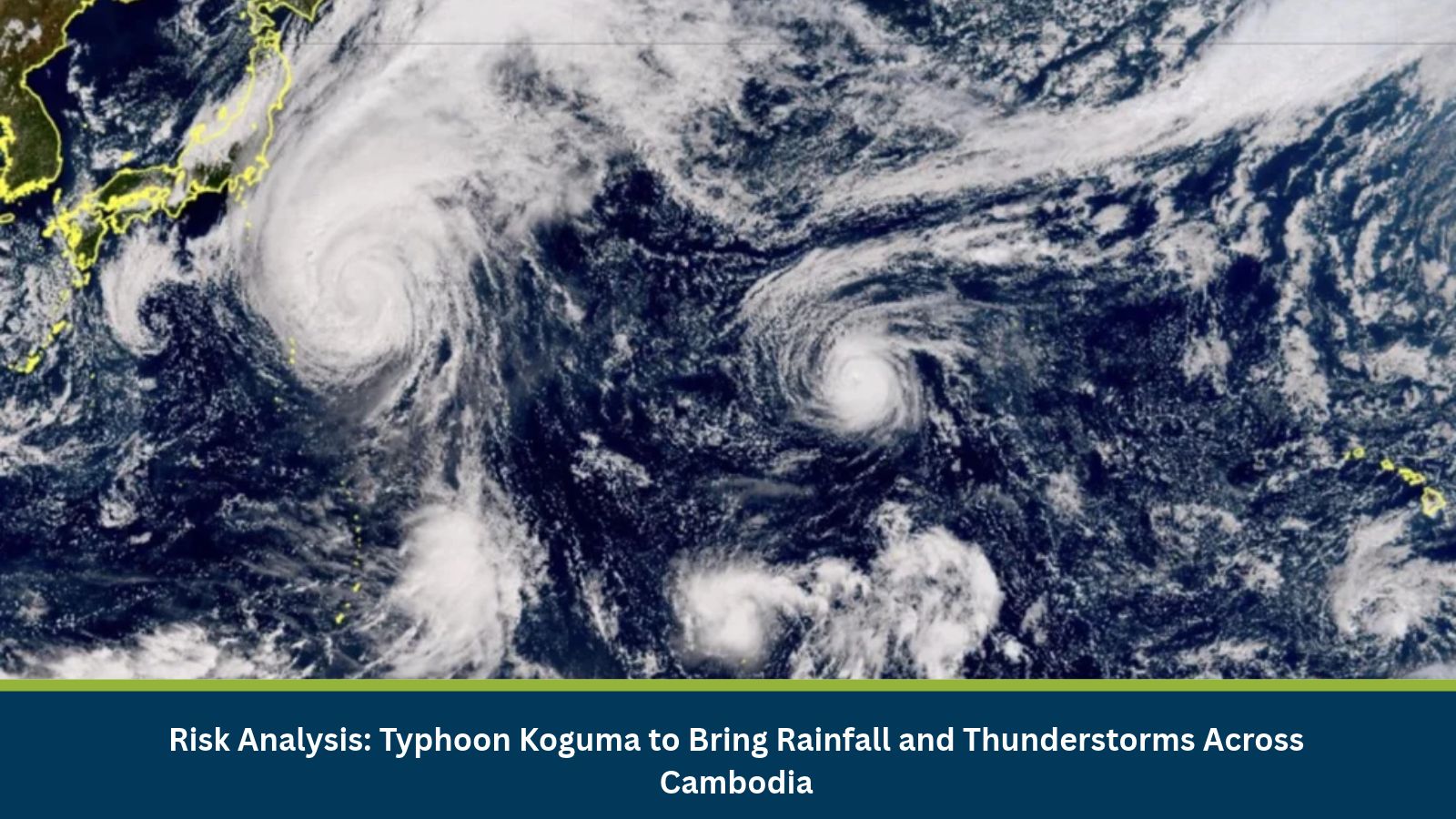
Executive Summary for Typhoon Koguma’s Impact on Cambodia
Cambodia is forecast to experience rain, thunderstorms, lightning and gusty winds through Thursday, 15 October, as Typhoon Koguma influences the southwest monsoon. Although Cambodia is not directly in the typhoon’s projected path, the associated weather system is expected to affect lowland, highland and coastal areas. The forecast indicates rainfall could affect approximately 30 percent of lowland areas, 40 percent of highland areas and up to 50 percent of coastal areas. Coastal waters may experience waves of approximately 0.50–1.75 meters. The primary operational concerns are potential localized flooding, reduced road visibility, weather-related travel delays, lightning exposure and disruption to outdoor work. Coastal businesses, fishing communities and waterway operators may also face difficult operating conditions. These are forecast-based risks; widespread damage or specific transport shutdowns have not been established by the available reporting.
- Date of Event: 14–15 October 2026
- Location: Cambodia
- Risk Category: Natural Disasters
- Severity Score: 3/5
- Confidence Level: 80%
What is Risk Analysis in the Context of Natural Disasters
Natural disasters risk analysis in assesses how storm-related rainfall, thunderstorms and strong winds could affect business continuity, employee safety, transportation and local infrastructure, even when a country is outside the storm’s direct path.
Known Hotspots and Sensitive Areas
High Impact
- Coastal provinces: Koh Kong, Preah Sihanouk, Kampot and Kep, along with the Bokor mountain range, are forecast to experience rain, thunderstorms, lightning and gusty winds. The forecast suggests rainfall could affect up to 50 ppercent of coastal areas. Marine operators should monitor wave and wind conditions.
- Highland regions: Kampong Speu, Pailin, Oddar Meanchey, Preah Vihear, Kratie, Stung Treng, Ratanakiri and Mondulkiri, as well as the Dangrek and Cardamom mountain ranges, may face rainfall and thunderstorms across approximately 40 percent of these areas. Localized disruption to road access and outdoor work is possible.
Medium Impact
- Lowland provinces and Phnom Penh: Banteay Meanchey, Battambang, Pursat, Kampong Chhnang, Siem Reap, Kampong Thom, Kampong Cham, Tbong Khmum, Prey Veng, Svay Rieng, Takeo and Kandal may experience rain, thunderstorms, lightning and gusty winds. Rainfall is forecast to affect around 30 percent of lowland areas.
- Commercial and logistics corridors: Businesses operating across affected provinces should account for possible delays in staff movement and deliveries, particularly during periods of intense rainfall.
Low Impact
- Indoor commercial facilities outside localized impact areas: Offices, warehouses and retail facilities with adequate drainage and secure buildings may face limited direct exposure. However, disruptions to staff travel, deliveries and outdoor access remain possible.
Impact on Transportation and Services
- Road transportation: Rainfall and reduced visibility may increase driving risks and extend journey times. Localized flooding could affect low-lying roads where drainage is inadequate.
- Maritime transportation: Forecast waves of 0.50–1.75 meters warrant caution for fishing vessels, small boats and coastal transport operators. Actual service suspensions have not been confirmed.
- Air transportation: Thunderstorms and gusty winds could create weather-related delays, but no specific airport closures or flight disruptions have been confirmed.
- Utilities and telecommunications: Lightning and strong winds may pose localized risks to exposed infrastructure. No widespread service outages have been established.
- Business operations: Companies reliant on road deliveries, outdoor work or coastal supply chains should prepare for intermittent delays through 15 October.
Recommended Actions
- Monitor official forecasts: Follow updates from Cambodia’s Ministry of Water Resources and Meteorology and relevant local authorities through 15 October.
- Review transport schedules: Allow additional time for employee commutes and freight deliveries, particularly in forecast-affected provinces.
- Protect outdoor personnel: Suspend exposed outdoor work during lightning or hazardous wind conditions and ensure workers have access to safe shelter.
- Inspect drainage and facilities: Clear drains, secure loose outdoor equipment and check for potential water ingress in warehouses and commercial premises.
- Review coastal operations: Fishing and waterway operators should assess local marine conditions before departure and follow official safety instructions.
- Activate contingency arrangements: Identify alternative delivery windows and communication procedures if weather conditions interrupt normal operations.
Emergency Contacts
- Police: 117
- Ambulance: 119
- Fire services: 118
Final Thoughts
Typhoon Koguma presents Cambodia with a period of elevated weather-related operational risk through 15 October 2026, despite the country not being in the typhoon’s direct path. The principal concerns are localized rainfall impacts, thunderstorms, gusty winds and potentially challenging coastal conditions. Businesses should priorities workforce safety, monitor transport and marine conditions, and prepare for short-term operational delays without assuming that widespread disruption has already occurred. Leveraging MitKat’s Datasurfr enables businesses to receive real-time intelligence, monitor evolving threats and make informed decisions to protect people, assets and operations.