





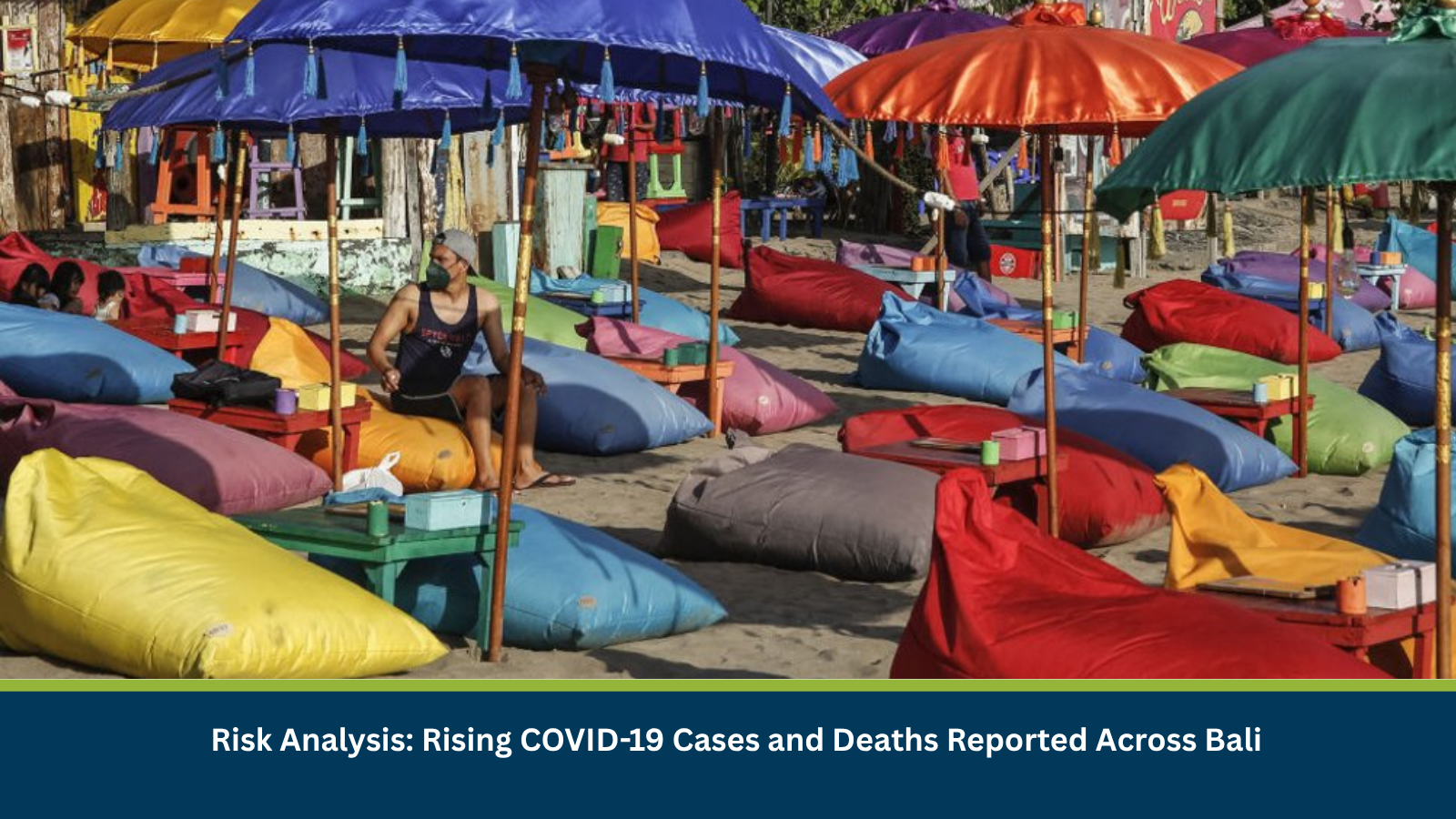
Executive Summary for Rising COVID-19 Cases in Bali
Bali reported a further increase in COVID-19 infections on 6 July 2020, with 51 new cases recorded by midday. The cumulative number of confirmed cases on the island reached 1,900, while active cases stood at 903.
The island also recorded three additional deaths, including two in Badung and one in Gianyar, bringing cumulative COVID-19 fatalities to 23. Only seven additional recoveries were reported, taking total recoveries to 974. The continued rise in active cases indicated ongoing community transmission and potential pressure on healthcare and business operations.
- Date of Event: 6 July 2020
- Location: Bali, Indonesia, particularly Badung and Gianyar
- Risk Category: Health
- Severity Score: 3/5
- Confidence Level: 90%
What is Risk Analysis in the Context of Rising COVID-19 Cases?
Continued growth in COVID-19 infections can affect workforce availability, business continuity, travel activity and healthcare capacity. A sustained increase in active cases may also result in additional health-control measures, restrictions on movement and disruption to tourism-dependent businesses.
Known Hotspots and Sensitive Areas
High Impact
- Badung, where two of the three newly reported COVID-19 deaths occurred.
- Gianyar, where one additional COVID-19 death was recorded.
- Areas experiencing continued community transmission and increasing active cases.
Medium Impact
- Denpasar and other urban areas of Bali, where population density and movement may facilitate continued transmission.
- Tourism and hospitality locations that depend heavily on visitor movement and face-to-face interaction.
Low Impact
- Areas recording comparatively fewer new cases and where healthcare capacity remains sufficient to manage infections.
Impact on Transportation and Services
Continued COVID-19 transmission could disrupt tourism, hospitality, transportation and retail services across Bali. Businesses may face workforce shortages if employees become infected or require isolation, while further increases in cases could lead to tighter public-health measures.
The tourism sector is particularly exposed because Bali relies heavily on domestic and international visitor movement.
Recommended Actions
- Monitor local COVID-19 case trends and government health measures.
- Businesses should maintain appropriate hygiene and workplace health protocols.
- Review business-continuity arrangements for potential employee absences.
- Organisations operating in tourism and hospitality should prepare for possible changes in visitor demand.
- Monitor developments in Badung, Gianyar and other areas reporting increased infections.
Emergency Contacts
- Emergency Services: 112
- Police: 110
- Ambulance: 118/119
- Fire and Rescue: 113
Final Thoughts
Bali recorded 51 new COVID-19 cases and three deaths on 6 July 2020, taking cumulative infections to 1,900 and active cases to 903. The continued increase in infections presented a risk to tourism, workforce availability and business continuity, particularly if community transmission persisted. Leveraging MitKat’s Datasurfr enables businesses to receive real-time intelligence, monitor evolving threats and make informed decisions to protect people, assets and operations.