





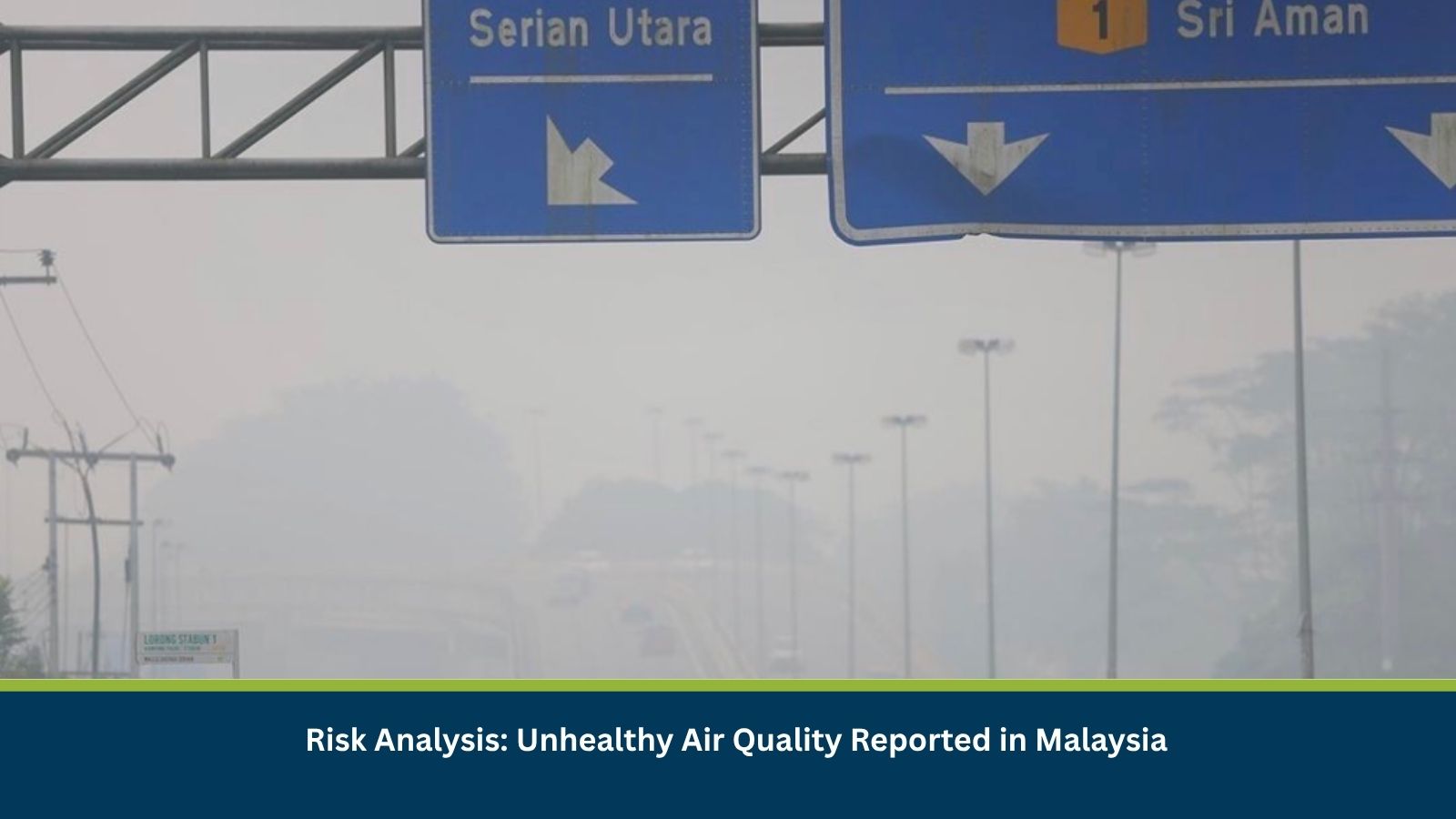
Executive Summary for Unhealthy Air Quality in Malaysia
Air quality remained unhealthy in parts of Malaysia on 28 September, with Serian District Police Headquarters (IPD) in Sarawak recording an Air Pollutant Index (API) reading of 157 at 1600 hours local time. According to Malaysia’s Air Pollutant Index Management System (APIMS), this was the only area nationwide recording an unhealthy reading at that time. The Malaysian API categorises readings of 101–200 as unhealthy, while 51–100 is considered moderate. At the same time, 62 areas across Malaysia recorded moderate readings and five recorded good air quality.
- Date of Event: 29 September 2026
- Location: Malaysia, particularly Serian, Sarawak
- Risk Category: Environment
- Severity Score: 3/5
- Confidence Level: 75%
What is Risk Analysis in the Context of Environment Events
Environment event risk analysis assesses the impact of weather events like high pollution on business operations and public health. Unhealthy air quality can affect outdoor activities, employee health and visibility, while persistent haze can disrupt outdoor work and transport operations. The extent of exposure depends on local API readings and the duration of elevated pollution.
Known Hotspots and Sensitive Areas
High Impact
- Serian, Sarawak: API 157, placing the area within the unhealthy category
- Outdoor workplaces and operations in areas where API readings exceed 100.
Medium Impact
- Other areas of Sarawak, particularly locations that have previously experienced elevated API readings amid regional haze.
- Outdoor commercial, construction and logistics operations exposed to prolonged periods of poor air quality.
Low Impact
- The majority of monitored areas reported moderate rather than unhealthy air quality as of the latest nationwide reading.
Impact on Transportation and Services
The immediate impact is primarily related to outdoor activities and employee exposure rather than widespread transportation disruption. Malaysia’s haze situation has previously been associated with smoke from fires in Indonesia, with transboundary smoke affecting parts of Sarawak and other areas of the region. Under Malaysia’s National Haze Action Plan, outdoor activities may be suspended when API readings exceed 100, while additional measures can be considered if pollution remains elevated for prolonged periods.
Recommended Actions
- Monitor hourly API readings through Malaysia’s official air-quality monitoring system.
- Limit prolonged outdoor activities in areas recording unhealthy API levels.
- Businesses should assess outdoor work and employee exposure where pollution remains elevated.
- Consider appropriate respiratory protection for personnel required to work outdoors.
- Monitor developments in Sarawak and neighboring areas for changes in haze intensity.
- Review outdoor events and activities if API levels increase further.
Emergency Contacts
- Emergency Services: 999
- Malaysia Fire and Rescue Department: 999
Final Thoughts
Malaysia’s air-quality situation remains locally unhealthy rather than nationwide, with Serian in Sarawak recording an API of 157 in the latest available Bernama report. Continued monitoring is warranted because regional haze conditions can change rapidly with weather and fire activity. Leveraging MitKat’s Datasurfr enables businesses to receive real-time intelligence, monitor evolving threats and make informed decisions to protect people, assets and operations.