





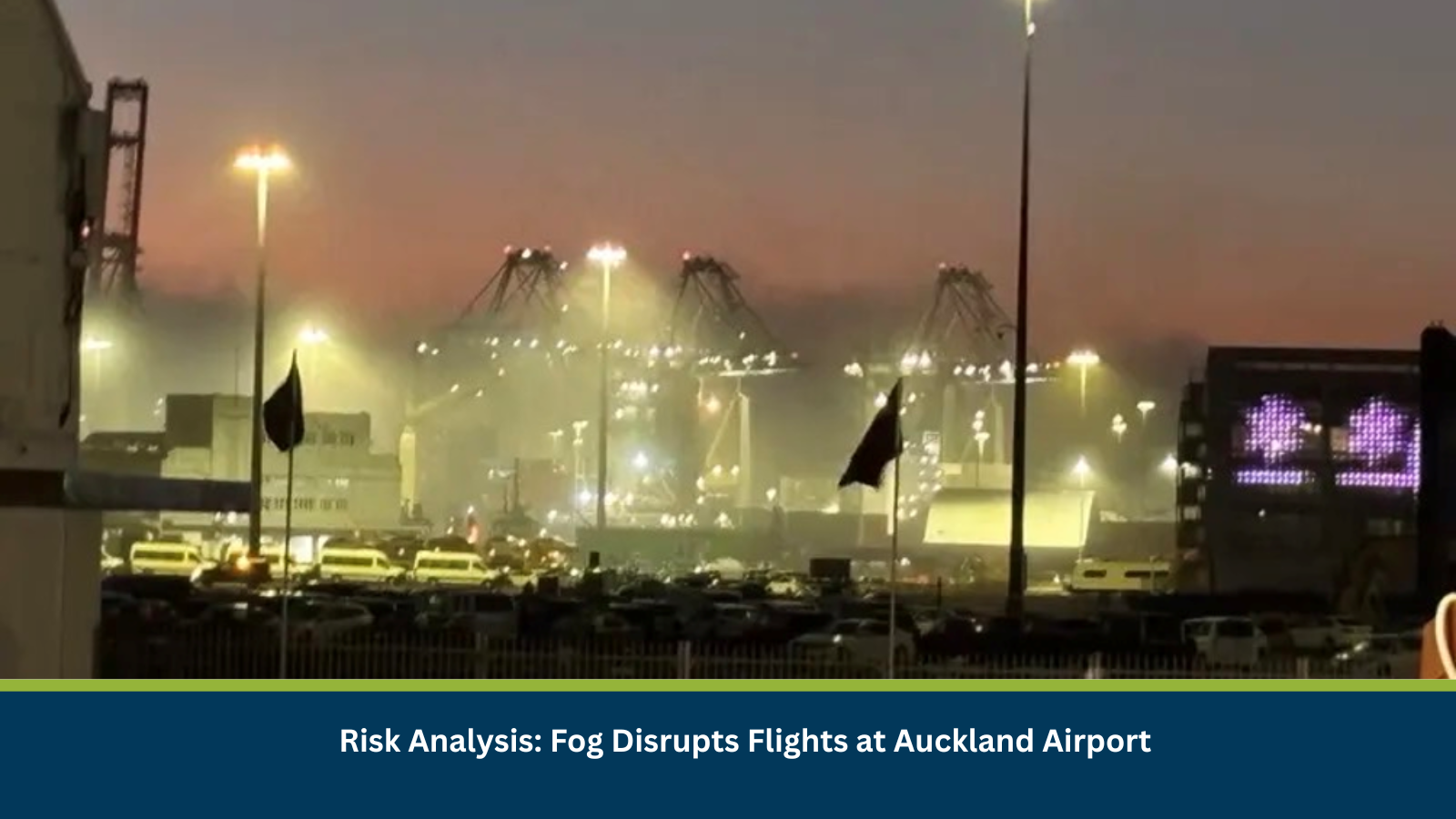
Executive Summary for Fog at Auckland Airport
Dense fog has disrupted operations at Auckland Airport on 10 August 2026, resulting in 19 flight delays and eight cancellations. Reduced visibility has affected aircraft movements and caused disruptions to scheduled services. Further delays may occur if fog persists and visibility remains below safe operating levels.
- Date of Event: 10 August 2026
- Location: Auckland Airport, Auckland, New Zealand
- Risk Category: Travel Risks
- Severity Score: 3 / 5
- Confidence Level: 78%
What is Risk Analysis in the Context of Aviation Disruptions
Travel risk event analysis assesses how reduced visibility and adverse weather affect aircraft operations, passenger movement and airport capacity. Dense fog can slow aircraft movements, delay departures and arrivals, and result in cancellations or diversions.
Known Hotspots and Sensitive Areas
High Impact
- Auckland Airport runways
- Aircraft arrival and departure operations
- Terminal areas affected by flight disruptions
Medium Impact
- Connecting domestic and international flights
- Airport ground operations
- Passenger transport connections
Low Impact
- Other airports unaffected by the fog
- Airport services not dependent on aircraft movements
Impact on Transportation and Services
The fog has already caused 19 flight delays and eight cancellations, disrupting passenger travel and airline schedules. Continued low visibility could lead to additional delays and cancellations throughout the day.
Recommended Actions
- Check flight status directly with the airline before travelling.
- Allow additional time for airport journeys.
- Prepare for possible delays or rescheduling.
- Follow instructions from Auckland Airport and airline staff.
Emergency Contacts
- Emergency Services: 111
Final Thoughts
The fog presents a low to moderate operational risk to Auckland Airport, with impacts currently concentrated on flight schedules. Conditions should be monitored closely as visibility changes throughout the day. Leveraging MitKat’s Datasurfr enables businesses to receive real-time intelligence, monitor evolving threats and make informed decisions to protect people, assets and operations.