





Introduction
The Asia-Pacific (APAC) region has become one of the fastest-growing digital economies in the world. As businesses embrace cloud computing, artificial intelligence (AI), big data, Internet of Things (IoT), and digital transformation, the demand for reliable and scalable data center infrastructure continues to rise.
APAC data centers serve as the foundation for digital services by storing, processing, and managing vast amounts of information. From global cloud providers to financial institutions, healthcare organisations, governments, and e-commerce platforms, businesses rely on these facilities to ensure uninterrupted operations, secure data storage, and high-speed connectivity.
With increasing internet penetration, expanding 5G networks, and rising investments in smart cities, the APAC data center market is expected to experience significant growth over the coming years.
What Are APAC Data Centers?
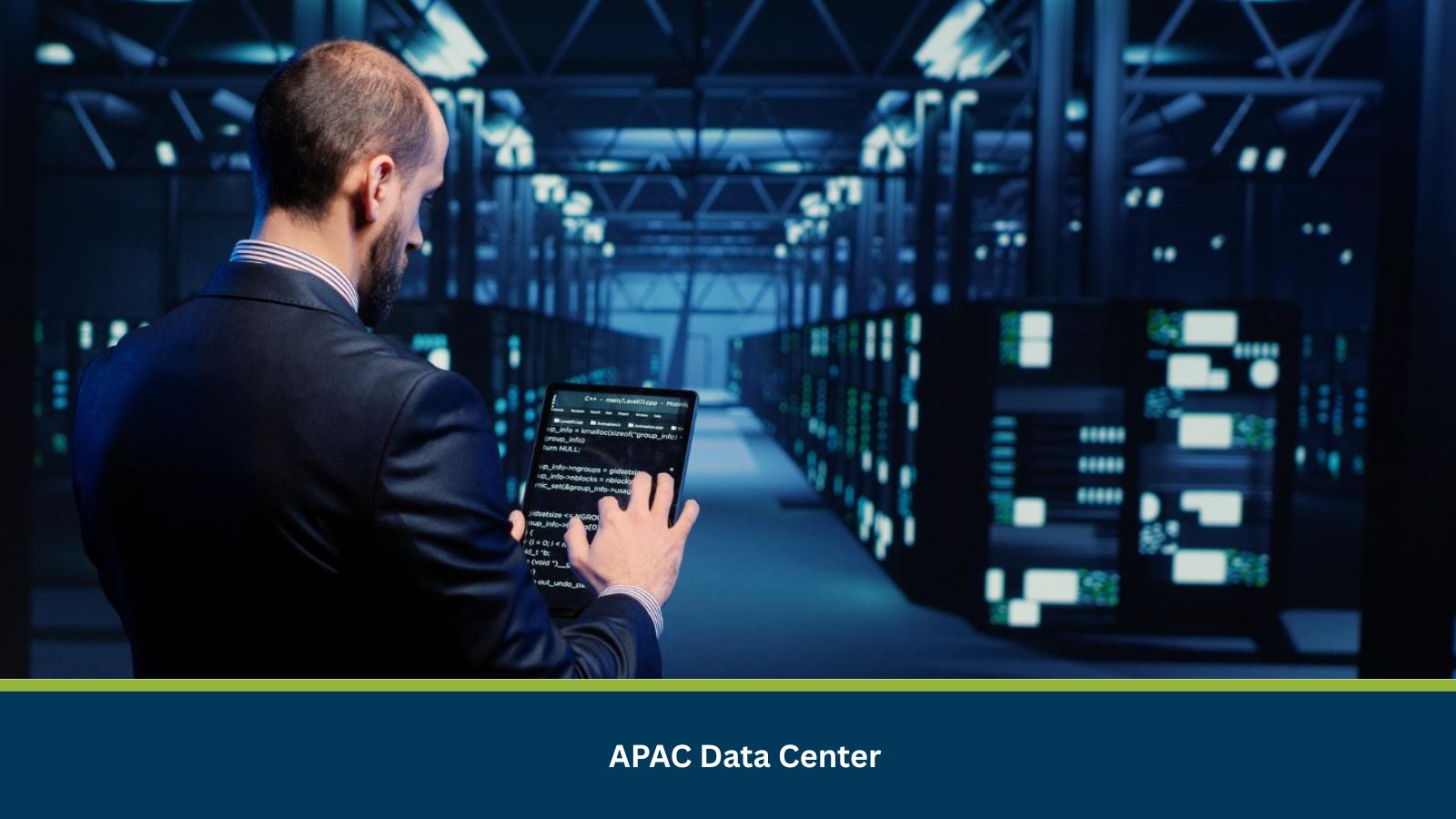
APAC data centers are specialised facilities located across the Asia-Pacific region that house servers, networking equipment, storage systems, and supporting infrastructure. These facilities provide computing resources for businesses, cloud service providers, government agencies, and enterprises.
Unlike traditional server rooms, modern data centers are designed with:
- Advanced cooling systems
- Redundant power supplies
- High-speed fiber connectivity
- Physical and cyber security
- Fire suppression systems
- Disaster recovery capabilities
- Continuous monitoring
These features ensure maximum uptime, security, and operational efficiency.
Why Are APAC Data Centers Important?
The APAC region is experiencing rapid digital transformation. Businesses are generating enormous amounts of data every second through online transactions, mobile applications, connected devices, and AI-powered services.
Data centers enable organisations to:
- Store massive datasets securely
- Process applications with low latency
- Deliver cloud services efficiently
- Support digital banking and financial services
- Power AI and machine learning workloads
- Ensure regulatory compliance
- Improve business continuity
Without robust data center infrastructure, digital businesses would struggle to maintain performance, availability, and security.
Key Drivers of APAC Data Center Growth
1. Cloud Computing Adoption
Cloud services continue to dominate enterprise IT strategies.
Businesses are migrating workloads from on-premises infrastructure to cloud platforms to improve scalability, reduce costs, and increase operational flexibility.
This migration creates strong demand for hyperscale and colocation data center throughout APAC.
Benefits include:
- Flexible computing resources
- Reduced infrastructure costs
- Faster deployment
- Improved disaster recovery
- Better resource utilisation
2. Artificial Intelligence (AI)
AI applications require enormous computing power.
Training large language models, image recognition systems, recommendation engines, and predictive analytics consume substantial processing resources.
Modern APAC data centers are investing in:
- GPU clusters
- AI accelerators
- High-density server racks
- Advanced liquid cooling
- High-performance networking
These technologies help organisations process AI workloads efficiently.
3. Growing Internet Users
Asia-Pacific has one of the world’s largest online populations.
Countries such as India, Indonesia, Vietnam, and the Philippines continue to experience rapid internet adoption.
More internet users mean:
- More digital transactions
- More streaming
- More online gaming
- More cloud storage
- Higher demand for computing resources
This directly increases data center capacity requirements.
4. Expansion of 5G Networks
The rollout of 5G is transforming digital connectivity.
5G enables:
- Faster downloads
- Real-time applications
- Autonomous vehicles
- Smart manufacturing
- Remote healthcare
- Smart cities
To minimise latency, data centers are being deployed closer to users through edge computing facilities.
5. E-commerce Growth
APAC has become a global leader in online shopping.
Major e-commerce platforms process millions of transactions every day.
Data centers support:
- Payment processing
- Inventory systems
- Customer analytics
- Product recommendations
- Fraud detection
- Website hosting
As online retail grows, so does the need for reliable digital infrastructure.
Types of APAC Data Centers
Enterprise Data Centers
These facilities are owned and operated by individual organisations.
Large enterprises maintain private infrastructure to meet security, compliance, and operational requirements.
Common users include:
- Banks
- Healthcare providers
- Government agencies
- Manufacturing companies
Colocation Data Centers
Colocation providers lease physical space, power, cooling, and networking to businesses.
Advantages include:
- Lower infrastructure costs
- Professional facility management
- High reliability
- Improved security
- Scalability
Many growing businesses choose colocation instead of building their own facilities.
Hyperscale Data Centers
Hyperscale facilities support cloud providers and internet giants.
They feature:
- Thousands of servers
- Massive computing capacity
- High automation
- Energy-efficient operations
- Global connectivity
These centers support millions of users simultaneously.
Edge Data Centers
Edge facilities are smaller data centers located closer to end users.
Their primary purpose is reducing latency for applications requiring real-time processing.
Examples include:
- Smart factories
- Video streaming
- Autonomous vehicles
- IoT applications
- Online gaming
Edge computing is becoming increasingly important across APAC.
Frequently Asked Questions (FAQs)
1. What is an APAC data center?
An APAC data center is a facility located within the Asia-Pacific region that stores, processes, and manages digital information while providing secure and reliable computing infrastructure
2. How does MitKat support data centers in APAC?
MitKat supports data center operations by providing real-time risk intelligence, monitoring, and advisory services. This helps organizations identify potential threats, manage geopolitical and operational risks, and ensure uninterrupted business continuity.
3. Why is risk intelligence important for data centers?
Data centers operate in a dynamic environment where risks such as cyber threats, regulatory changes, and regional instability can impact operations. MitKat’s intelligence-driven approach enables proactive decision-making and minimizes disruptions.
4. How can businesses benefit from MitKat’s services?
By leveraging MitKat’s insights, businesses can enhance security, optimize operations, and make informed strategic decisions, ensuring maximum efficiency and reliability of their digital infrastructure.
Conclusion
APAC data centers are driving rapid digital growth across industries. As technology evolves, their role in enabling secure and scalable infrastructure will continue to expand. With advanced risk intelligence and advisory support from MitKat, businesses can confidently navigate challenges and maximize opportunities in this dynamic landscape.