





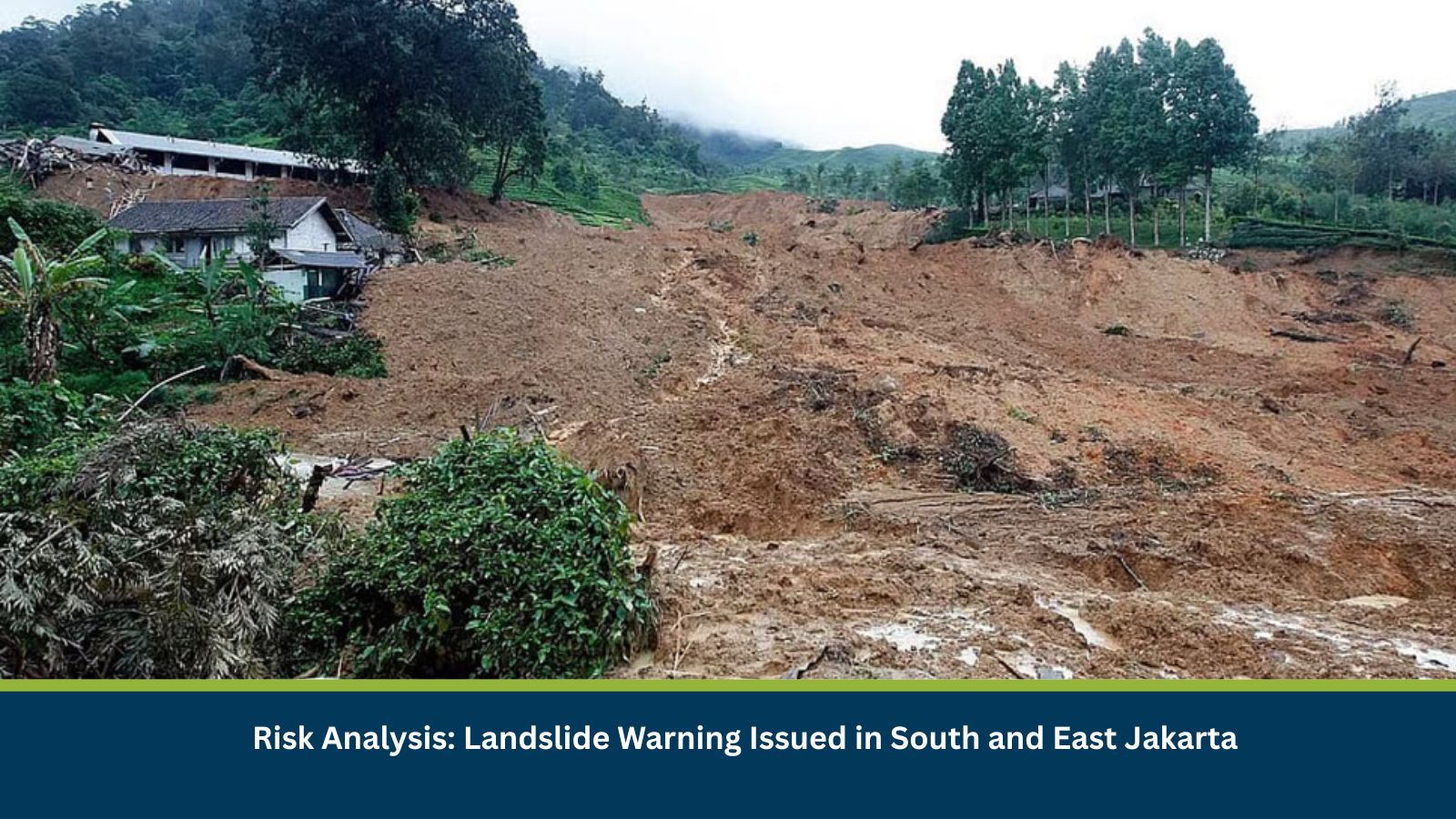
Executive Summary for the Landslide Warning Issued in South and East Jakarta
Authorities have issued landslide warnings for nine sub-districts across South and East Jakarta following persistent rainfall and saturated ground conditions. According to Indonesia’s Meteorology, Climatology and Geophysics Agency (BMKG), several areas remain vulnerable to slope failures, particularly in locations with unstable terrain and poor drainage. Businesses should anticipate localized transportation disruptions, flooding and delays to commuting and logistics operations should landslides occur.
- Date of Event: 15 July 2026
- Location: South Jakarta and East Jakarta, Indonesia
- Risk Category: Natural Disasters
- Severity Score: 3 / 5
- Confidence Level: 82%
What is Risk Analysis in the Context of Landslide Events
Natural Disaster event risk analysis evaluates the potential impact of natural disasters, including landslides and unstable slopes on transportation networks, critical infrastructure, business continuity and public safety. Prolonged rainfall can weaken soil stability, increasing the likelihood of landslides that block roads, damage utilities, and disrupt commercial operations.
The latest warning identifies nine sub-districts, primarily in South Jakarta, as being susceptible to landslides due to continued rainfall and saturated soil conditions. While large-scale impacts are not currently anticipated, localized slope failures and flooding could affect transportation, residential communities and essential services if heavy rainfall persists.
Known Hotspots and Sensitive Areas
High Impact
- Jagakarsa
- Pasar Minggu
- Cilandak
- Kebayoran Lama
- Other identified landslide-prone sub-districts in South Jakarta
Medium Impact
- East Jakarta districts identified by local authorities
- Hillside residential communities
- Local road networks and drainage corridors
Low Impact
- Central Jakarta and areas outside the identified landslide-prone zones
Impact on Transportation and Services
Localized landslides may temporarily block roads, disrupt public transportation and delay logistics operations. Heavy rainfall may also contribute to localized flooding, affecting commuter mobility and access to businesses. Utility services could experience temporary interruptions if infrastructure is damaged by slope failures.
Recommended Actions
- Monitor advisories issued by BMKG and the Jakarta Regional Disaster Management Agency (BPBD).
- Avoid unnecessary travel through landslide-prone areas during periods of heavy rainfall.
- Review business continuity plans for weather-related disruptions.
- Advise employees to use alternative routes where necessary.
- Monitor local traffic conditions and emergency notifications.
Multidimensional Impact
The landslide warnings may compound congestion and emergency service demand already strained by the Tendean pedestrian bridge collision and associated traffic management operations in South Jakarta. Redirected traffic from road closures could exacerbate existing jams on Kapten Tendean, TB Simatupang and other parallel arterial routes, prolonging the disruption caused by the bridge incident.
Emergency Contacts
- Emergency Services: 112
Final Thoughts
The landslide warning represents a moderate weather-related operational risk for parts of Jakarta. Organizations should continue monitoring official weather advisories, prioritize employee safety, and implement contingency measures where necessary. Leveraging MitKat’s Datasurfr enables businesses to receive real-time severe weather alerts and respond proactively to evolving natural hazards.