





Disruption is no longer a rare event — it’s a recurring cost of doing business. Ransomware attacks now occur every 40 seconds somewhere in the world, supply chains buckle under geopolitical shocks, natural disasters shut down facilities with no warning, and regulators keep raising the bar on what “prepared” actually means.
This guide walks through what Business Continuity Management (BCM) software actually does, why it matters more in 2026 than it did even a few years ago, what to look for when evaluating platforms, how to think about ROI, and the questions most people ask before buying.
What is business continuity management software
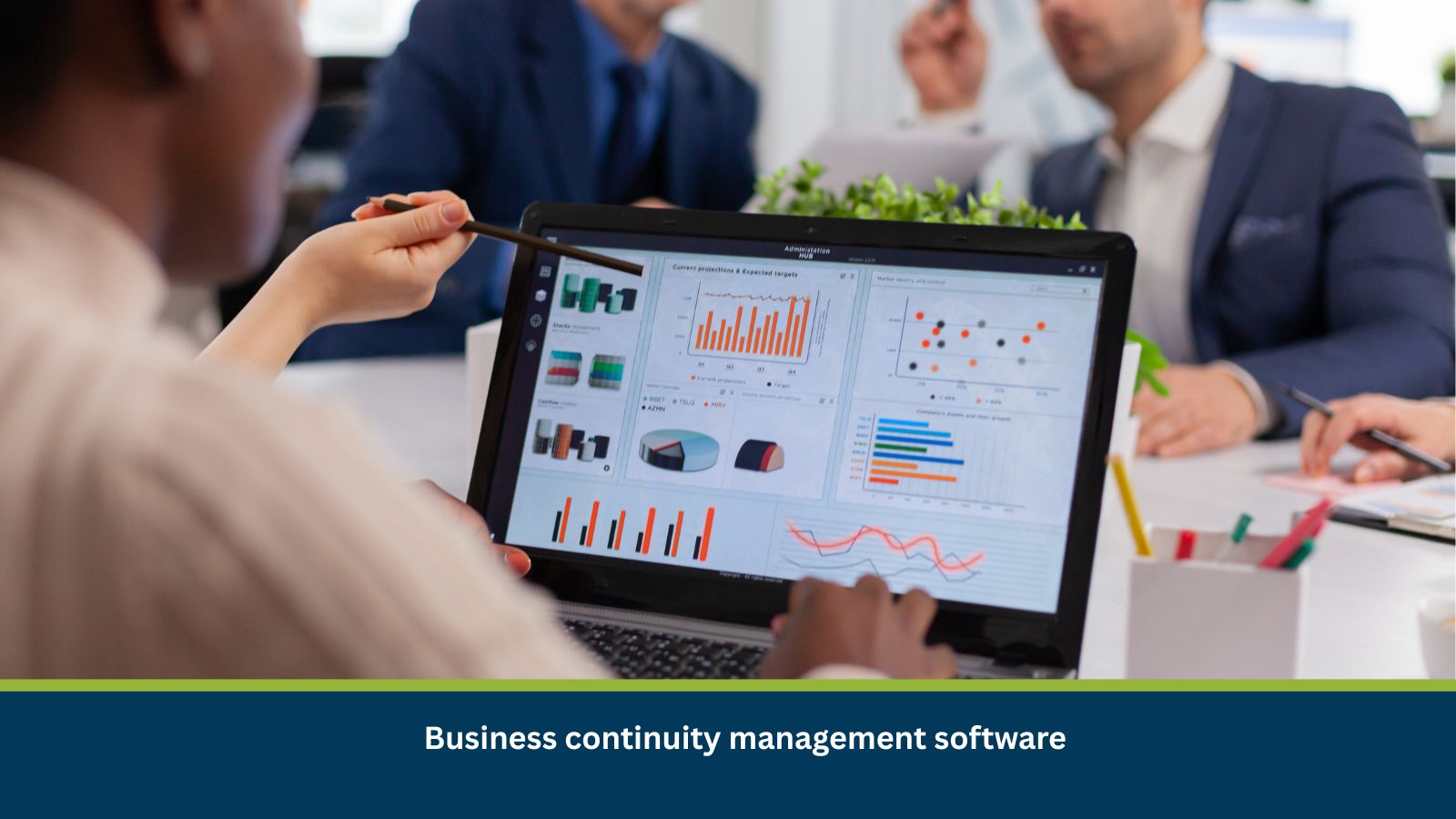
Business management system is a holistic management system that help organization prepare for, respond to and recover from disrupted occurrence whether it’s a natural disaster, cyber-attack, pandemic, system outrage or supply chain failure. In simple word BCM isn’t just an IT system or disaster recovery system this is use to make business more resilient from operations and logistic to people and technology.
How Business continuity management software works?
The Basic Idea
Imagine your business is a house. BCM software is like a fire escape plan pinned to every door, except it also:
- Tells you which rooms matter most if there’s a fire
- Knows exactly who needs to grab what on the way out
- Texts everyone the moment smoke is detected
- Keeps a record that the fire drill actually happened, for the insurance company
Step by Step, How It Actually Works
1. It asks you questions first.
The software sends structured questionnaires to different teams: “What do you do? What happens if this stops for a day? A week? What do you need to keep going?” This is called a Business Impact Analysis (BIA) — it’s just the software’s way of learning what actually matters in your business before anything goes wrong.
2. It maps the connections.
Based on those answers, it builds a map: this process needs that software, which needs that vendor, which needs that one employee who knows how it works. Now if any single piece breaks, the software already knows everything downstream that’s affected — instead of someone finding out the hard way during a crisis.
3. It writes the plan for you (sort of).
Using that map, it helps build a step-by-step response plan: who does what, in what order, if X breaks. Unlike a Word document, this plan updates itself — if a vendor changes or a team gets reorganized, the plan reflects that automatically instead of going stale in a drawer.
4. It runs practice drills.
Periodically, the software runs a “what if” test — simulating a ransomware attack or a supplier going down — so the team practices the plan before it’s needed for real, the same way a fire drill works.
5. When something actually breaks, it takes over.
Instantly shows what’s affected (because it already had the map)Sends alerts to the right people via text, call, email — whatever gets through fastestTracks who’s doing what in real time, so nothing falls through the cracksKeeps a log of everything, so afterward you can prove to regulators, insurers, or your own board that the plan worked (or figure out what to fix if it didn’t)
Why It Matters More in 2026 Than Ever Before
1. Ransomware Downtime Is Brutal
Change Healthcare (2024) — A BlackCat/ALPHV ransomware attack crippled this UnitedHealth Group subsidiary, which processes 15 billion healthcare transactions annually. Billing and prescription processing froze for hospitals and pharmacies across the U.S. for weeks. Many providers only discovered afterward that their continuity plans had no procedure for extended “paper downtime” — some came close to insolvency, while others with pre-established backup clearinghouse relationships survived intact.
2. Disruption Sources Have Multiplied and Interconnected
Nexperia chip export ban (late 2025-2026) — A regulatory and ownership dispute involving Dutch chipmaker Nexperia triggered Chinese export restrictions on chip components, which cascaded across multiple tiers of global vehicle production — from final assembly all the way down to infotainment systems. Automakers with no visibility past their tier-1 suppliers found their actual exposure sat two or three tiers deeper, in regions they had no mapping for at all.
Marks & Spencer cyberattack (2025) — A cyberattack disrupted the retailer’s food distribution network and cost an estimated £300 million in operating profit — a single IT-security incident cascading directly into physical supply chain and retail operations, not staying contained as an “IT problem.”
3. Post-Pandemic Scrutiny Hasn’t Faded
COVID-19 Fortune 1000 exposure — During the pandemic, 94% of Fortune 1000 companies experienced supply chain interruptions, primarily because of reliance on single points of failure they hadn’t mapped or diversified. That statistic became the anchor point for a wave of board-level continuity reviews afterward — and it’s frequently cited even now, years later, as the reason boards stopped treating resilience as an IT/ops-department concern and started demanding direct visibility themselves.
Frequently Asked Questions
What’s the difference between business continuity management and disaster recovery?
Disaster recovery focuses specifically on restoring IT systems, data, and infrastructure after an outage. Business continuity management is the broader discipline — it covers how the entire organization keeps functioning during a disruption, including people, facilities, suppliers, customer communications, and financial operations, not just technology. Most modern BCM platforms include DR capabilities, but the two aren’t interchangeable terms.
Do small and mid-sized businesses actually need dedicated BCM software, or is that overkill?
It depends on complexity and risk exposure, not just company size. A small business with a single location and few regulatory obligations might manage adequately with lighter, out-of-the-box tools. But if you depend on a handful of critical suppliers, operate in a regulated industry, or would suffer serious revenue loss from even a few days of downtime, dedicated software becomes worthwhile well before you reach “enterprise” scale. The average 24-day ransomware recovery window doesn’t discriminate by company size.
How is BCM software different from a plain document or spreadsheet-based plan?
Static documents go stale the moment circumstances change — a new vendor, a reorganized team, an updated IT system — and nobody remembers to update the spreadsheet buried on a shared drive. Software keeps plans connected to live data, flags when information is outdated, automates testing schedules, and can immediately show which processes and people are affected by a specific disruption instead of requiring someone to manually piece it together during a crisis.
Conclusion
Business continuity is no longer just a compliance checkbox tucked away in a risk manual — it’s become a genuine competitive differentiator. Organizations that can absorb a ransomware attack, a key vendor failure, or a regional disaster and keep operating will consistently outperform competitors who are still figuring out their response plan when the disruption hits. Customers, insurers, and increasingly regulators are all paying closer attention to which organizations can prove they’re actually prepared, not just claim to be.
The right BCM software doesn’t just document what to do in a crisis — it makes sure the plan stays current, gets tested regularly, and is genuinely usable by real people under real pressure when it matters most. It won’t stop disruptions from happening, and it won’t show up as a line item that obviously pays for itself the way a sales tool might. But measured against the alternative — weeks of downtime, regulatory penalties, and reputational damage that outlasts the incident itself — it’s one of the more defensible investments an organization can make.