





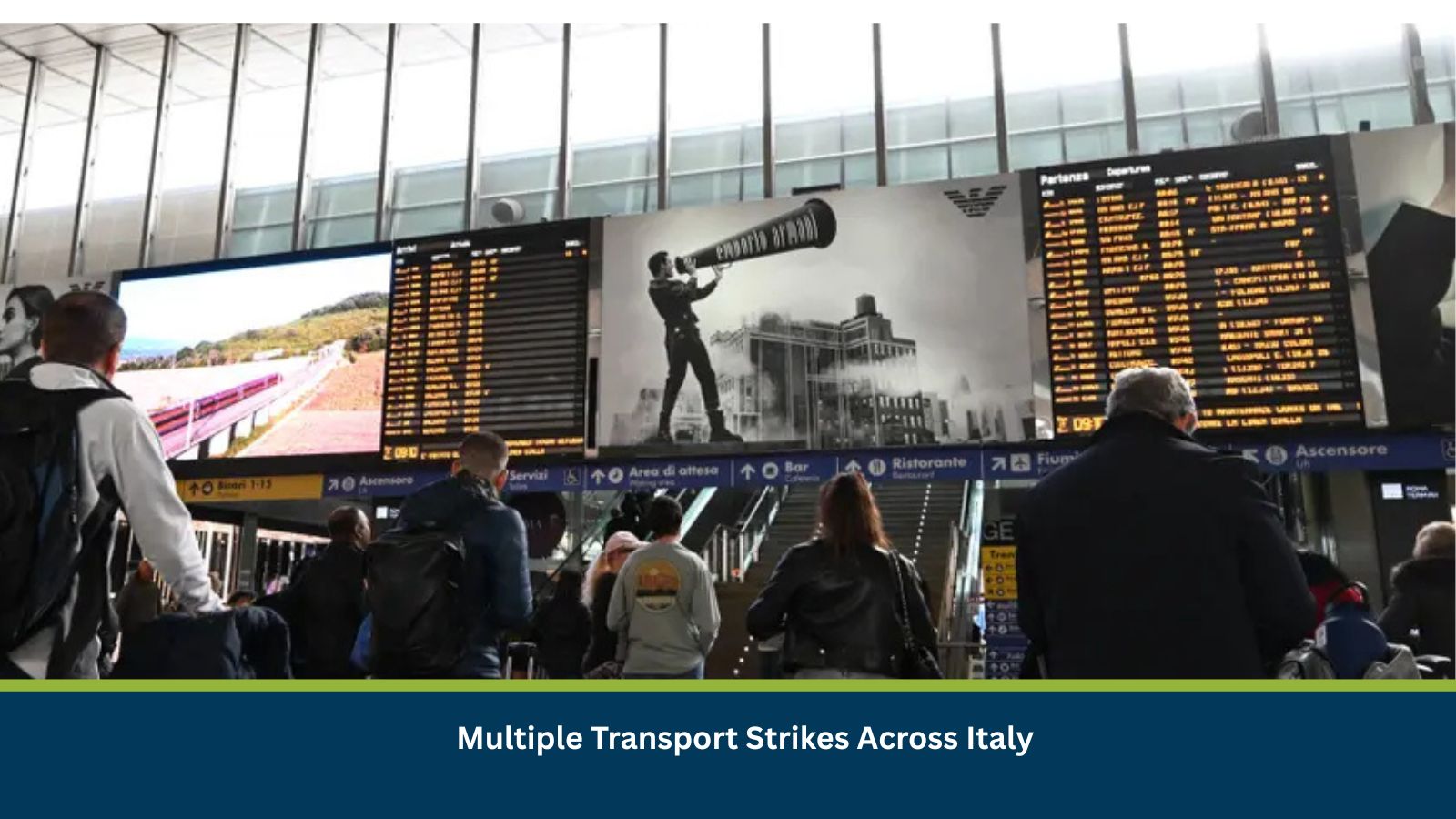
Throughout Italy, multiple transport strikes have been scheduled in July 2026, with disruptions expected to affect air, rail and local public transportation. While no significant security threats are anticipated, the industrial action is likely to cause moderate to significant disruption to domestic and international travel, commuter mobility and logistics operations. Businesses should expect delays, cancellations and increased congestion, particularly on strike days.
- Date of Event: Throughout July 2026 (Strike dates vary)
- Location: Italy (Nationwide)
- Risk Category: Travel Risk
- Severity Score: 3.5 / 5
- Confidence Level: 90%
What is Risk Analysis in the Context of Travel Risk Events
Travel risk analysis assesses disruptions that affect the safe and efficient movement of people and goods. Industrial action within the transportation sector can significantly impact aviation, railways, urban transit systems and supply chains, leading to operational delays and increased business costs.
Italy has historically experienced periodic nationwide transport strikes involving airport personnel, railway workers and local transit operators. Although essential services are generally maintained, previous strike actions have resulted in flight cancellations, reduced rail frequencies, extended travel times and congestion across major transport hubs.
Known Hotspots and Sensitive Areas
High Impact
- Major airports including Rome Fiumicino, Milan Malpensa, Milan Linate and Naples International Airport
- High-speed rail corridors operated by Trenitalia and Italo
- Rome, Milan, Naples and Florence metropolitan transit systems
Medium Impact
- Regional railway stations
- Intercity bus terminals
- Tourist destinations are experiencing peak summer travel
Low Impact
- Secondary road networks
- Private transport operators not participating in strike action
Impact on Transportation and Services
The planned industrial action is expected to disrupt domestic and international flights, reduce railway services and affect metro, tram and bus operations across several Italian cities. Increased passenger volumes on alternative transport modes may result in longer waiting times and congestion.
Business travel, employee mobility, tourism and time-sensitive logistics operations are likely to experience delays. Organisations with operations in Italy should also anticipate possible impacts on customer meetings, field operations and supply chain schedules.
Recommended Actions
- Monitor official announcements from airlines, railway operators and local transport authorities.
- Build flexibility into employee travel itineraries and logistics schedules.
- Consider alternative transport options where feasible.
- Communicate expected disruptions to employees, customers and suppliers.
- Review contingency plans for business-critical travel and supply chain operations.
Multidimensional Impact
The strikes coincide with Italy’s peak summer travel season, increasing the likelihood of congestion across airports, railway stations and alternative transport routes. High passenger volumes may extend delays beyond the scheduled strike periods and create secondary impacts on tourism, hospitality and cross-border logistics.
Emergency Contacts
Emergency Services: 112
Final Thoughts
The planned transport strikes represent a moderate but widespread disruption to travel and business operations across Italy. Organisations should closely monitor official updates, maintain flexible travel arrangements and prepare contingency measures to minimise operational impacts. Leveraging real-time intelligence platforms such as Datasurfr can help organisations monitor transport disruptions, assess operational risks and make informed decisions during periods of heightened travel uncertainty.