



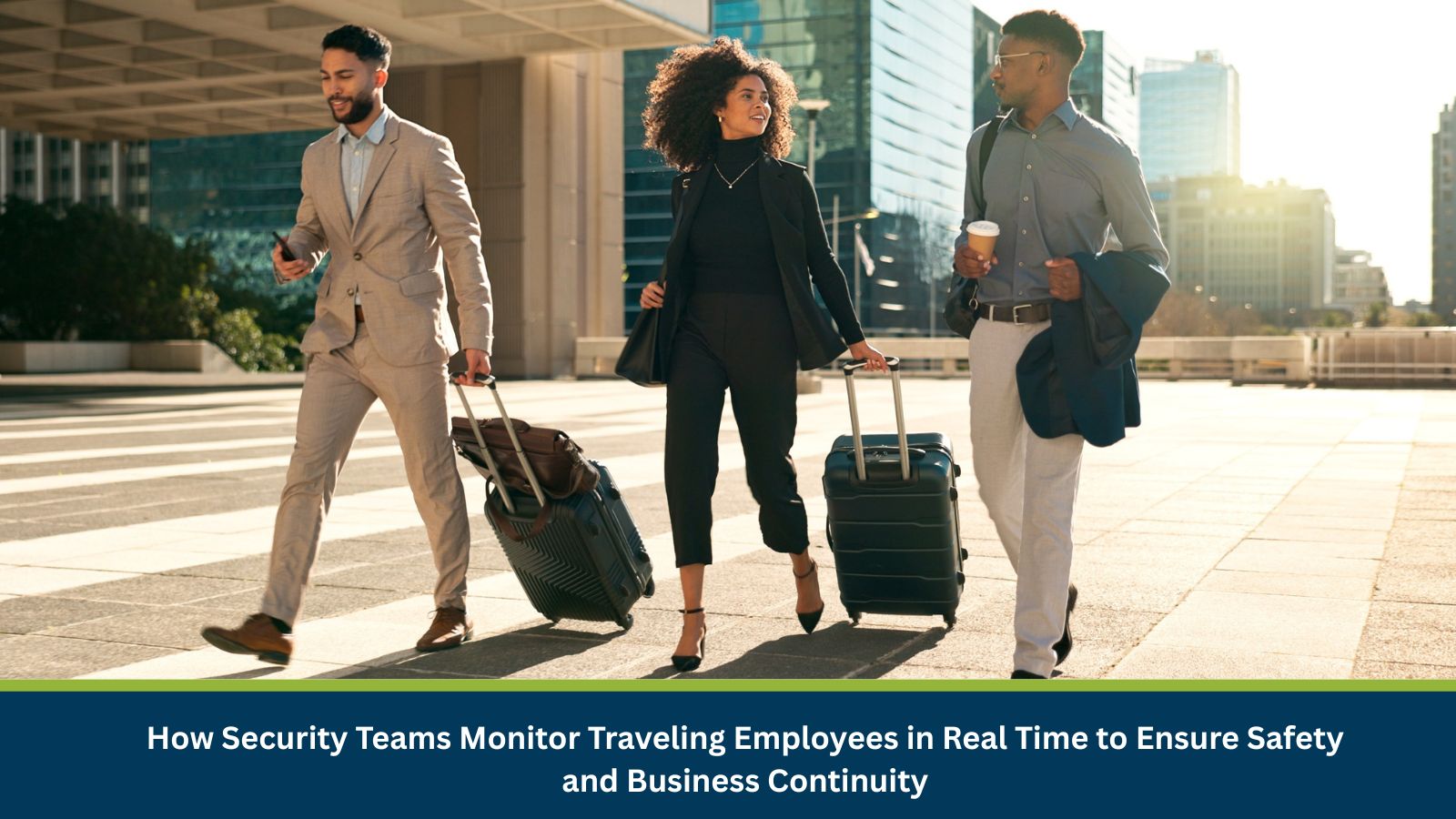
As global business travel continues to increase, organizations face growing challenges in protecting traveling employees from evolving security risks. From geopolitical unrest and cyber threats to natural disasters and health emergencies, businesses must ensure employee safety while maintaining operational continuity.
To address these challenges, modern security teams are leveraging real-time travel risk monitoring and advanced intelligence systems to track, assess, and respond to potential threats affecting employees on the move.
This blog explores how security teams monitor traveling employees in real time, the technologies involved, and why proactive travel risk management has become essential for organizations worldwide.
Why Real-Time Employee Monitoring Matters
Business travellers often operate in unfamiliar environments where risks can emerge rapidly. Delayed responses to security incidents can impact employee safety, disrupt operations, and expose organizations to legal and reputational risks.
Real-time monitoring helps organizations:
- Improve traveller safety
- Respond faster to emergencies
- Ensure business continuity
- Meet duty of care obligations
- Reduce operational disruptions
- Enhance crisis management capabilities
Organizations that adopt proactive travel risk management strategies can better protect employees while minimizing the impact of unexpected events.
What Is Real-Time Travel Risk Monitoring?
Real-time travel risk monitoring refers to the continuous tracking and analysis of potential threats that may affect employees during business travel.
Security teams use advanced technologies, intelligence feeds, and communication systems to maintain situational awareness and support rapid decision-making.
Key Components of Real-Time Monitoring
- Live threat intelligence
- Geolocation tracking
- Emergency alert systems
- Incident monitoring
- Crisis communication tools
- AI-powered risk analytics
- Travel itinerary monitoring
These capabilities help organizations identify risks early and take immediate action when necessary.
How Security Teams Monitor Traveling Employees in Real Time
1. GPS and Location-Based Tracking
Many organizations use secure mobile applications and travel management platforms that allow employees to share location data during business trips.
This enables security teams to:
- Identify employees in high-risk areas
- Monitor movement during emergencies
- Coordinate evacuations if required
- Provide location-specific alerts
Location intelligence plays a critical role in improving traveler safety during dynamic situations.
2. Real-Time Threat Intelligence Monitoring
Security operations centres continuously monitor global intelligence sources for emerging risks such as:
- Civil unrest
- Terror threats
- Natural disasters
- Political instability
- Transportation disruptions
- Public health emergencies
Real-time intelligence allows organizations to quickly assess how incidents may impact employees in affected regions.
3. Automated Risk Alerts and Notifications
Modern travel risk management systems automatically send alerts to employees and security teams when threats occur near traveler locations.
Examples include:
- Severe weather warnings
- Airport disruptions
- Security incidents
- Regional protests
- Emergency evacuation notices
Automated notifications help travellers make informed decisions quickly and reduce response delays.
4. Travel Itinerary Integration
Security teams often integrate employee itineraries with monitoring platforms to gain visibility into:
- Flight schedules
- Hotel locations
- Transportation routes
- Planned meetings
This helps organizations proactively assess risk exposure before and during travel.
5. AI-Powered Risk Analysis
Artificial intelligence is transforming travel risk management by enabling faster and more accurate threat detection.
AI systems can:
- Analyse large volumes of risk data in real time
- Detect anomalies and emerging patterns
- Predict potential disruptions
- Prioritize high-risk incidents
- Improve decision-making speed
AI-driven analytics significantly enhance situational awareness for security teams.
Key Technologies Used for Employee Travel Monitoring
Mobile Safety Applications
Provide location sharing, emergency communication, and alert notifications.
Geospatial Intelligence Platforms
Map real-time incidents and visualize employee exposure to risks.
Threat Intelligence Systems
Aggregate data from multiple intelligence sources for comprehensive monitoring.
Emergency Communication Tools
Enable rapid communication with employees during crises.
Incident Management Platforms
Support coordinated response workflows and escalation procedures.
Benefits of Real-Time Travel Monitoring
Faster Emergency Response
Security teams can react immediately to incidents affecting travelers.
Enhanced Employee Safety
Real-time visibility improves traveller protection and support.
Improved Operational Resilience
Organizations can minimize disruptions to business operations.
Stronger Duty of Care Compliance
Businesses demonstrate commitment to employee safety and legal obligations.
Better Crisis Management
Security teams gain greater situational awareness during emergencies.
Challenges in Monitoring Traveling Employees
While real-time monitoring offers significant advantages, organizations must also address key challenges.
Privacy and Data Protection
Employee location tracking must comply with privacy laws and organizational policies.
Data Accuracy
Security teams require reliable, real-time intelligence for effective decision-making.
Global Risk Complexity
Threat landscapes vary significantly across regions and evolve rapidly.
Communication Gaps
Maintaining reliable communication during crises can be difficult in some locations.
Best Practices for Effective Travel Risk Monitoring
Develop a Comprehensive Travel Risk Policy
Define clear protocols for traveller safety and emergency response.
Use Integrated Risk Intelligence Platforms
Centralize monitoring, communication, and incident management capabilities.
Conduct Pre-Travel Risk Assessments
Evaluate destination-specific risks before employees travel.
Enable Real-Time Communication
Ensure employees can receive alerts and contact security teams instantly.
Train Employees on Travel Safety
Educate travellers about risk awareness and emergency procedures.
Regularly Review Monitoring Systems
Continuously improve processes and technologies based on emerging risks.
The Future of Real-Time Travel Risk Management
As global risks continue to evolve, organizations are increasingly adopting advanced technologies to improve travel security operations.
Future trends include:
- AI-driven predictive threat intelligence
- Automated crisis response workflows
- Advanced geospatial analytics
- Integrated cybersecurity and physical security monitoring
- Real-time global situational awareness platforms
- Intelligent traveller assistance systems
Businesses that invest in proactive travel risk monitoring will be better equipped to protect employees and maintain resilience during disruptions.
Frequently Asked Questions (FAQs)
What is real-time travel risk monitoring?
Real-time travel risk monitoring involves continuously tracking potential threats and incidents that may impact employees during business travel.
Why do organizations monitor traveling employees?
Organizations monitor traveling employees to ensure safety, respond quickly to emergencies, maintain business continuity, and fulfil duty of care responsibilities.
Conclusion
Real-time monitoring of traveling employees has become a critical component of modern corporate security and operational resilience strategies. With risks becoming more dynamic and unpredictable, organizations must adopt proactive approaches to traveller safety and crisis management.
By leveraging real-time threat intelligence, AI-powered analytics, location tracking, and integrated communication systems, security teams can improve situational awareness, accelerate emergency response, and enhance employee protection worldwide.
Organizations that prioritize intelligent travel risk management not only strengthen operational resilience but also build greater trust, safety, and confidence among employees traveling globally.
Datasurfr helps security teams monitor traveling employees in real time through AI-powered threat intelligence, location-based alerts and proactive risk monitoring to enhance traveler safety and operational resilience.