





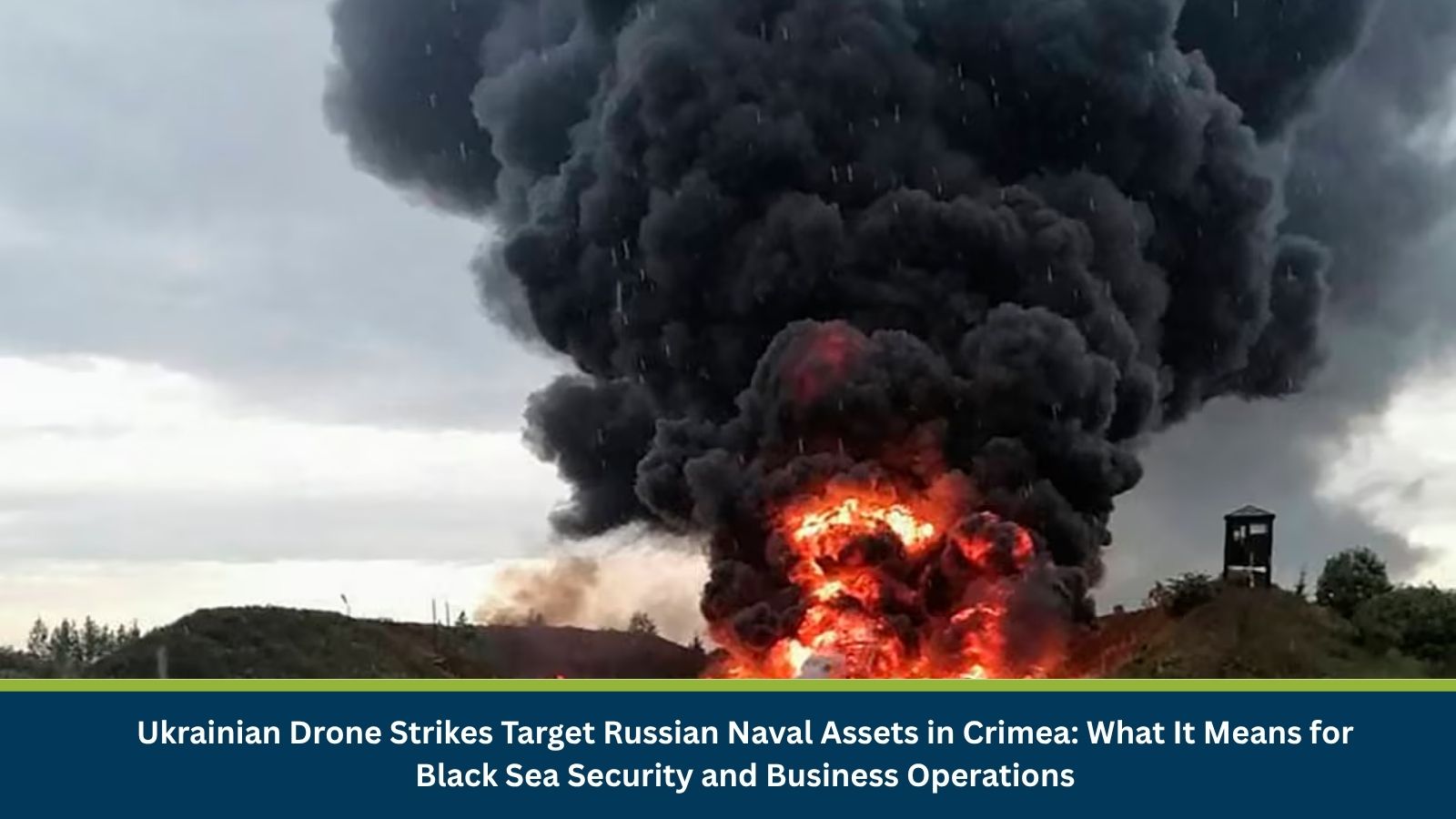
A fresh wave of overnight strikes—reportedly carried out using Ukrainian long-range and sea-launched unmanned systems—has damaged or destroyed multiple Russian patrol vessels and naval support assets in Crimea. The attacks are believed to have occurred in and around Sevastopol, the strategic heart of Russia’s Black Sea Fleet. While full verification remains limited, open-source intelligence, social media footage, and regional reporting all point to a coordinated night operation involving both aerial and maritime drones.
This latest development is not an isolated event. Instead, it reflects a continuation of a pattern that has emerged since 2023, where Ukraine has repeatedly targeted Russian naval infrastructure in Crimea. These campaigns have focused on ships at berth, air defence systems, fuel depots, and port facilities—often during nighttime operations designed to exploit gaps in surveillance and response.
Based on historical trends and current indicators, analysts assess that such strikes are likely to continue over the next 2 to 6 weeks. Rather than a one-off escalation, this appears to be part of a sustained harassment campaign aimed at degrading Russia’s Black Sea capabilities and limiting its operational freedom.
A Pattern of Persistent Maritime Pressure
Since 2023, Ukraine has demonstrated a growing ability to conduct precision strikes using unmanned systems—both aerial drones and sea-based platforms. These systems have been used to target high-value military assets in Crimea, including naval vessels, air defence installations, and logistics hubs.
The recent strikes follow a familiar pattern:
- Night-time execution to reduce detection
- Coordinated drone waves to overwhelm defences
- Targeting of moored vessels and support infrastructure
- Use of both aerial and maritime unmanned platforms
While Russia has improved its air defence capabilities and interception rates, these systems have not been fully effective. A consistent “leakage rate” remains, allowing some drones to penetrate defences and inflict damage.
This dynamic—improved defence but persistent vulnerability—is likely to define the operational environment in the coming weeks.
Risk Outlook: Sustained Harassment, Not Strategic Shift
The current situation is best understood as a medium-term harassment campaign rather than a turning point in territorial control. The severity of the situation is rated at 4 out of 5, reflecting the operational significance of repeated strikes on naval assets and port infrastructure. Confidence in this assessment stands at approximately 70%, supported by multiple corroborated incidents and consistent open-source reporting patterns.
Over the next 2 to 6 weeks, the following trends are expected:
- Continued episodic drone strikes, particularly at night
- Intermittent high-intensity attack windows
- Increased Russian air defence activity
- Temporary disruptions to port operations in Crimea
- Heightened risk to nearby commercial shipping routes
Despite these developments, there is no immediate indication of a strategic shift in control over Crimea. However, the cumulative impact of repeated strikes could gradually degrade Russia’s naval effectiveness in the region.
Immediate Developments and Military Response
Initial reports indicate that multiple Russian vessels were either damaged or destroyed during the latest attack. Russian authorities have acknowledged air defence engagements and drone interceptions, suggesting an active response during the incident.
Imagery circulating on social media appears to show explosions and damage in naval berthing areas, though independent verification of specific ship classes or casualty figures remains unavailable.
In response, Russia is expected to:
- Increase naval patrols in and around Crimean waters
- Restrict access to key ports such as Sevastopol
- Elevate air defence alert levels
- Expand surveillance and interception efforts
These measures are likely to create a more controlled and militarized maritime environment, with implications for both military and civilian
FAQ:
1. What triggered the recent strikes in Crimea?
The strikes were reportedly carried out by Ukrainian long-range and sea-launched drones targeting Russian naval vessels and support assets in and around Sevastopol.
2. How long is this phase of attacks expected to continue?
Analysts assess a continued pattern of episodic strikes over the next 2–6 weeks, with intermittent high-intensity attack nights.
Conclusion:
The recent Ukrainian drone strikes on Russian naval assets in Crimea signal a sustained phase of targeted pressure rather than a decisive strategic shift, with continued episodic attacks likely over the coming weeks. While primarily military in nature, these operations are already impacting port activity, naval movement, and regional risk levels in the Black Sea, creating spillover effects for commercial shipping and logistics. Businesses should anticipate ongoing volatility, including temporary disruptions, tighter security controls, and elevated operational risks, making proactive planning, flexible supply chain strategies, and strong crisis response capabilities essential for maintaining resilience in this evolving environment.