





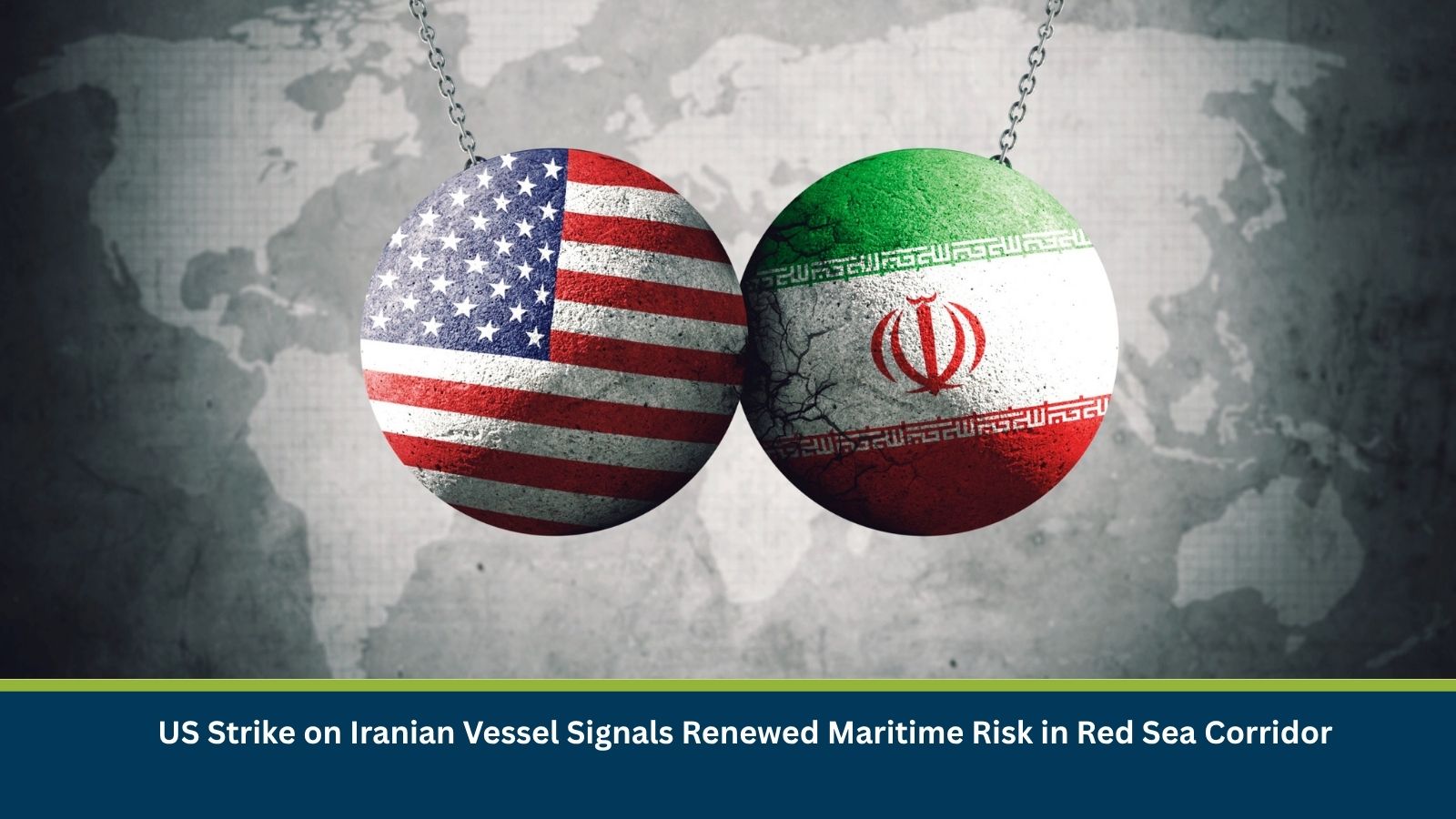
On 20 April 2026, the United States Central Command (CENTCOM) announced that its forces had destroyed an Iranian-flagged vessel allegedly attempting to evade international sanctions. The engagement reportedly took place in the southern Red Sea, a region that has seen a steady rise in maritime tensions over the past three years. While initial statements indicate no confirmed large-scale casualties, the incident marks another escalation in an already fragile maritime security environment spanning the Red Sea, Bab al-Mandeb Strait, and the Strait of Hormuz.
This development fits into a broader pattern of maritime confrontations observed since 2023. These include Houthi attacks on merchant vessels, suspected Iranian proxy operations, and intermittent US-led naval interdictions. Taken together, these events have created a volatile operating environment for global shipping and trade. Based on historical patterns, analysts assess a heightened but regionally contained risk window over the next 7 to 21 days, during which follow-on incidents are increasingly likely.
Rising Tensions in Strategic Maritime Chokepoints
The Red Sea and its surrounding waterways are among the world’s most critical maritime chokepoints. The Bab al-Mandeb Strait alone handles a substantial share of global oil and container traffic, linking the Indian Ocean to the Mediterranean via the Suez Canal. Any disruption in this corridor has immediate ripple effects across global supply chains.
Since 2023, this region has experienced repeated disruptions driven by asymmetric warfare tactics. Houthi forces, often linked to Iranian support, have targeted commercial vessels using drones, missiles, and small boats. In response, international naval coalitions have increased patrols and surveillance, while the US has conducted targeted strikes and interdictions aimed at curbing illicit activities and protecting maritime routes.
The latest CENTCOM action reinforces the reality that this is no longer a low-intensity threat environment. Instead, it represents a persistent, medium-level conflict zone where escalation risks remain high.
Risk Outlook: Contained but Elevated
Current assessments place the severity of risk at a moderate level (3 out of 5), with a medium-high confidence level of approximately 72%. This rating reflects both the demonstrated capability of proxy actors to escalate tensions and the dense concentration of commercial shipping traffic in the affected areas.
Historically, kinetic actions such as vessel strikes have triggered short-term spikes in maritime disruption. These include:
- Temporary denial of key shipping routes
- Increased convoy requirements
- Sudden rerouting of vessels
- Sharp rises in maritime insurance premiums
In the immediate aftermath of this incident, similar patterns are expected. Within the next 72 hours to two weeks, there is a strong likelihood of retaliatory or opportunistic actions, particularly using asymmetric methods such as unmanned aerial vehicles (UAVs), naval mines, or fast-attack boats.
Immediate Operational Impacts
Shipping and logistics operators should prepare for near-term disruptions, particularly in container and tanker movements transiting the Bab al-Mandeb and southern Red Sea. Key expected impacts include:
- Delays and Scheduling Disruptions: Vessel movements may slow due to increased security checks and convoy coordination.
- Heightened Naval Presence: International maritime security forces have already increased patrol and sensor activity.
- Shipping Advisories: Industry bodies and naval authorities are issuing updated guidance, urging heightened vigilance.
- Insurance Implications: Protection & Indemnity (P&I) and Kidnap & Ransom (K&R) insurance premiums are likely to rise in response to increased risk.
Over a longer time horizon, companies may begin rerouting high-value shipments around the Cape of Good Hope. While safer, this alternative adds 7 to 14 days to transit times and significantly increases fuel and operational costs.
Sensitive Areas and Strategic Exposure
The primary zones of concern remain:
- Bab al-Mandeb Strait: A critical chokepoint with dense traffic and high vulnerability
- Southern Red Sea: Active operational area for recent incidents
- Gulf of Aden: A known hotspot for piracy and militant activity
- Strait of Hormuz: Broader regional risk tied to Iran-related tensions
Key ports in proximity to these risk zones include Djibouti, Aden, Mokha, and the northern approaches to the Suez Canal. While no direct onshore infrastructure damage has been reported, past incidents suggest that prolonged maritime alerts can lead to increased security measures on land, including checkpoints and restricted port access.
Transport and Infrastructure Considerations
At present, there are no confirmed road closures linked directly to the incident. However, escalation could affect access routes to major ports, particularly in regions like Sudan and Djibouti, where past security alerts have led to tightened controls.
Transport disruption is expected to remain primarily maritime in nature. This includes:
- Rerouting of vessels
- Delays at Suez Canal entry points
- Temporary suspension of convoy transits
Utility infrastructure remains unaffected for now, though there is a marginal risk to fuel supply chains and bunkering operations if disruptions persist.
FAQs:
1. What happened on 20 April 2026 in the Red Sea?
US Central Command (CENTCOM) reported that American forces destroyed an Iranian-flagged vessel in the southern Red Sea, alleging it was attempting to evade sanctions. No large-scale casualties have been confirmed so far.
2. Why is this incident significant for global trade?
The Red Sea and Bab al-Mandeb Strait are critical global shipping routes. Any disruption in this region can delay shipments, increase transportation costs, and impact supply chains worldwide, especially for oil, LNG, and container cargo.
Conclusion
The destruction of the Iranian vessel by US forces is more than a standalone incident—it is a signal of heightened maritime risk in one of the world’s most vital maritime corridors. Businesses operating in or reliant on these routes must act swiftly to reassess risks, strengthen contingency plans, and ensure operational resilience.
In an environment where disruptions can emerge rapidly and unpredictably, preparedness is no longer optional—it is a strategic necessity.