





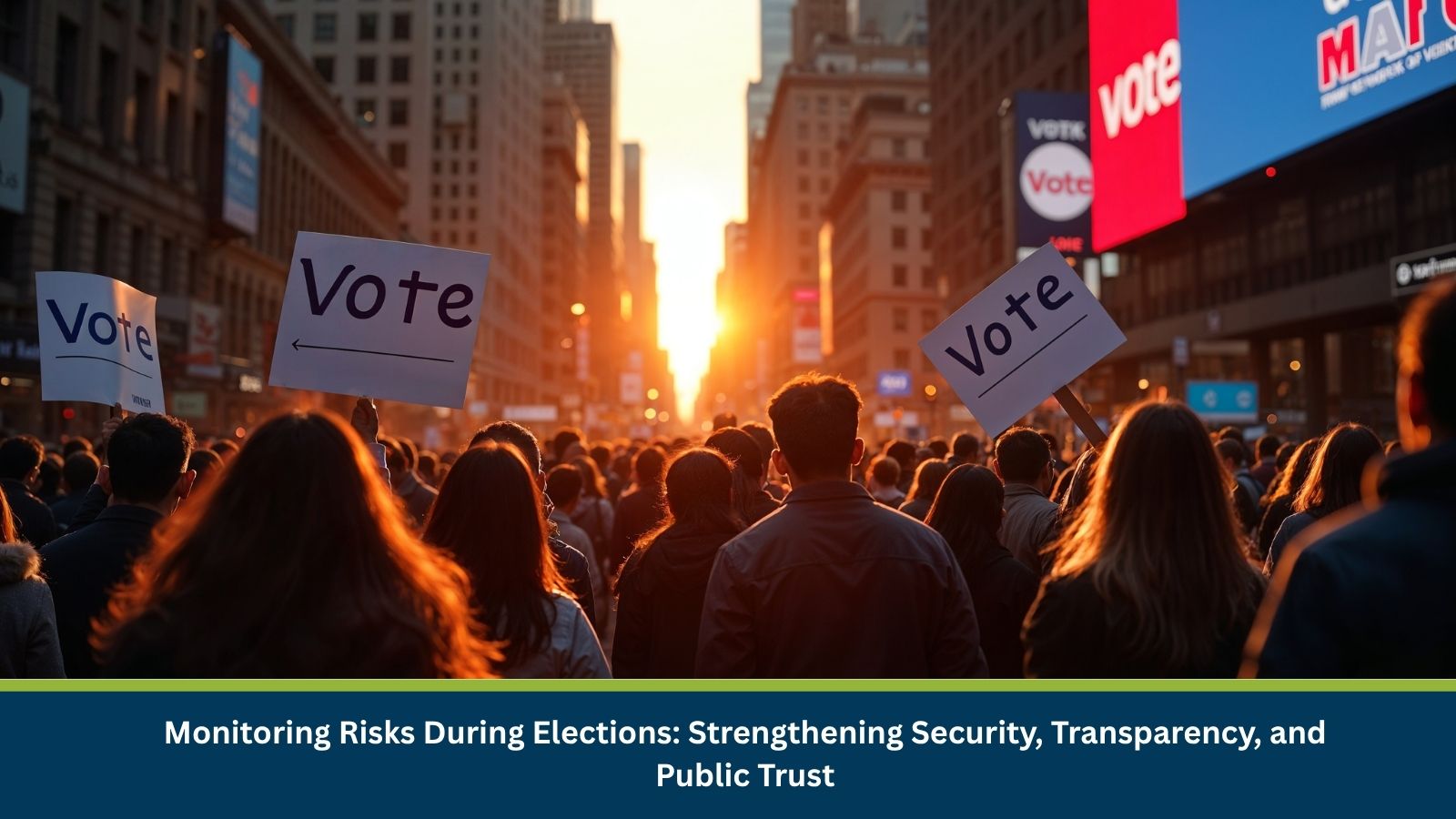
Elections are the backbone of any democracy—but they also represent periods of heightened risk and vulnerability. From large public gatherings and political rallies to digital misinformation and localized unrest, elections create complex security challenges.
This makes monitoring risks during elections essential for governments, law enforcement agencies, and stakeholders to ensure peaceful, fair, and transparent electoral processes.
Why Risk Monitoring is Critical During Elections
Elections involve:
- Massive voter participation
- Political tensions and competition
- Nationwide logistical coordination
- High media and public attention
These factors increase exposure to risks such as:
- Violence or civil unrest
- Misinformation and cyber threats
- Disruptions at polling stations
- Operational and logistical failures
Effective risk monitoring ensures early detection and rapid response—minimizing disruptions and maintaining public confidence.
Key Risks During Elections
Law & Order Risks
- Political clashes or protests
- Violence near polling booths
- Crowd control issues
Electoral Integrity Risks
- Voter intimidation
- Booth capturing or tampering
- Illegal campaigning
Cyber & Information Risks
- Misinformation campaigns
- Fake news and deepfakes
- Cyberattacks on election systems
Operational Risks
- Delays in voting processes
- EVM or system failures
- Logistics and transportation issues
External & Environmental Risks
- Natural disasters impacting voting
- Regional instability
- Infrastructure disruptions
How Risk Monitoring Systems Work During Elections
1. Real-Time Surveillance & Intelligence
- Monitoring polling stations and sensitive areas
- Tracking incidents through CCTV and field reports
- Gathering intelligence from multiple sources
2. Geo-Based Risk Alerts
- Alerts for incidents near polling locations
- Identification of high-risk zones
- Targeted response planning
3. Command & Control Centres
- Centralized monitoring hubs
- Coordination between agencies
- Real-time decision-making
4. Incident Reporting & Escalation
- Field officers report issues instantly
- Automated escalation workflows
- Quick deployment of response teams
5. AI & Data Analytics
- Predict potential hotspots
- Analyse trends and patterns
- Reduce false alarms
Role of Technology in Election Risk Monitoring
Predictive Analytics
Helps identify:
- High-risk constituencies
- Potential conflict zones
- Voter turnout patterns
Hyper-Local Monitoring
Tracks risks at:
- Booth level
- District level
- Specific geographic zones
Mobile-Based Reporting
Enables:
- Real-time updates from field officers
- Faster communication
- Improved coordination
Integrated Monitoring Platforms
Combine:
- Physical security
- Cyber monitoring
- Operational tracking
into one unified system.
Challenges in Monitoring Election Risks
- Managing large-scale operations across regions
- Coordinating multiple agencies
- Handling misinformation and digital threats
- Ensuring data accuracy and reliability
- Maintaining neutrality and transparency
Best Practices for Effective Election Risk Monitoring
Establish Centralized Command Centres
Enable unified oversight and faster decision-making.
Use Real-Time Data & Alerts
Ensure immediate visibility into emerging risks.
Strengthen Inter-Agency Coordination
Align efforts between:
- Election authorities
- Law enforcement
Deploy Technology & Analytics
Leverage AI for predictive insights and efficient monitoring.
Promote Public Awareness
Encourage responsible behaviour and accurate information sharing.
The Future of Election Security
As elections become more complex, risk monitoring will evolve to be:
- Predictive and intelligence-driven
- Highly localized and real-time
- Integrated across physical and digital domains
The ultimate goal is to ensure free, fair, and secure elections while maintaining public trust in democratic systems.
FAQs:
1. Why is risk monitoring important during elections?
It helps prevent violence, ensure smooth operations, and maintain the integrity of the electoral process.
2. What are the main risks during elections?
Law and order issues, cyber threats, misinformation, operational disruptions, and electoral malpractice.
Datasurfr helps authorities monitor election risks by providing real-time, location-based alerts on incidents, enabling faster response and better coordination to ensure safe and smooth elections.