




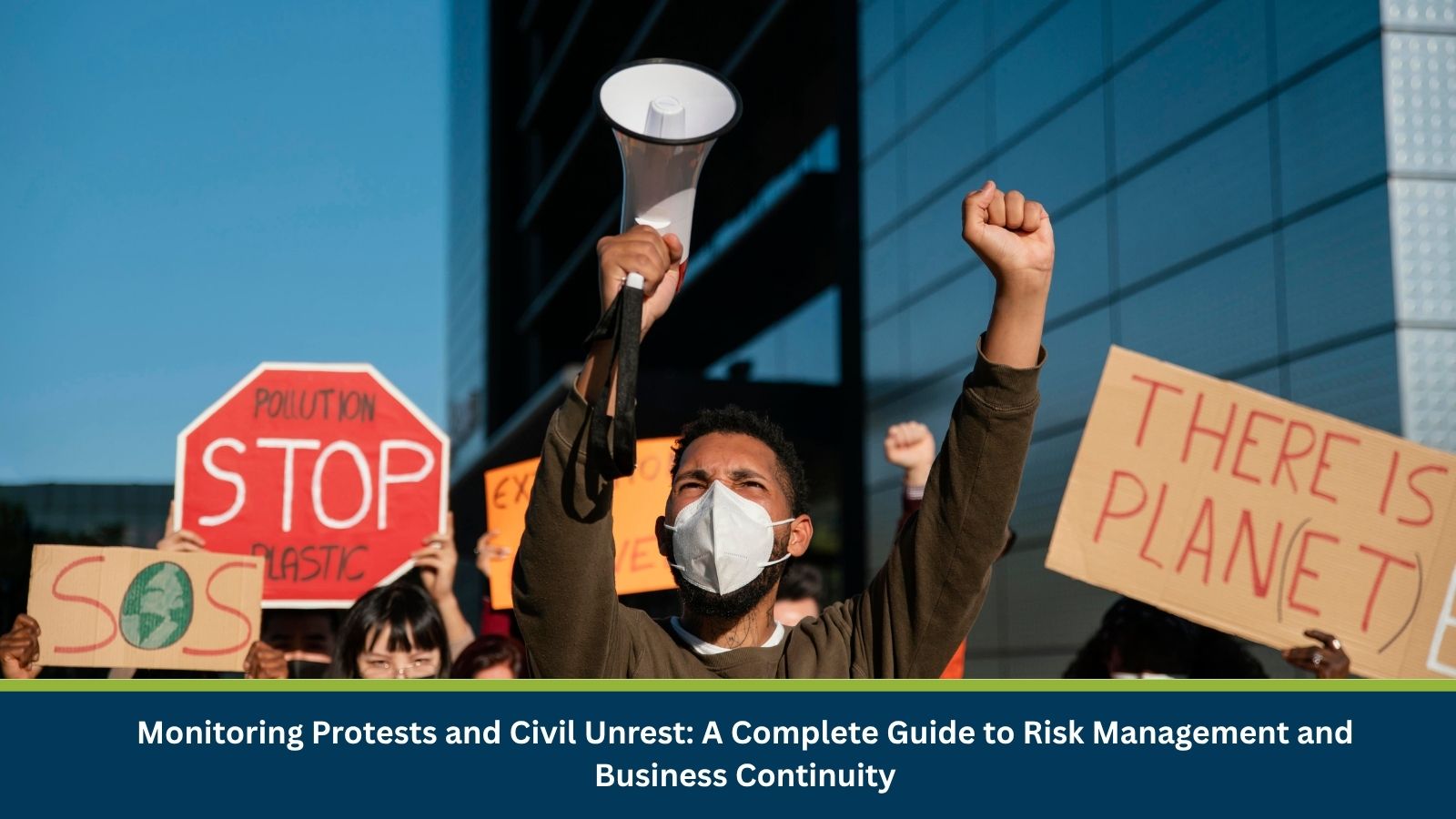
In an increasingly volatile world, protests and civil unrest are becoming more frequent, affecting businesses across the globe. Whether due to political tensions, economic crises, or social movements, these events can lead to significant disruptions, putting employees, assets, and operations at risk.
For organizations, having an effective strategy to monitor and respond to protests and civil unrest is crucial to protecting employees, ensuring business continuity, and minimizing operational impact.
In this blog, we’ll explore how to monitor protests and civil unrest, manage associated risks, and leverage technology for proactive risk management.
Why Monitoring Protests and Civil Unrest is Crucial for Businesses
1. Employee Safety
Protests and civil unrest often lead to violent clashes, roadblocks, and restricted movement. Employees working in or near these areas face serious risks, including:
- Physical harm
- Delays or road closures
- Inability to return to work or access resources
By monitoring these events in real-time, companies can take swift action to relocate or evacuate employees, ensuring their safety and well-being.
2. Operational Disruptions
Civil unrest can severely impact supply chains, prevent staff from getting to work, or halt operations entirely. For example:
- Transportation disruptions
- Temporary closure of business premises
- Impact on local infrastructure
An effective monitoring system allows businesses to anticipate and adapt to these disruptions quickly.
3. Brand Reputation
How a company responds to social movements or civil unrest can have long-lasting implications for its brand reputation. A delayed or ineffective response can damage trust with customers, investors, and the public.
By actively monitoring civil unrest, businesses can demonstrate their commitment to employee and community safety, which can bolster reputation management.
Key Components of Effective Protest and Civil Unrest Monitoring
1. Real-Time Risk Monitoring
Real-time monitoring of protests and civil unrest involves tracking developments across different locations using:
- News outlets (local and international)
- Social media platforms (hashtags, live feeds, videos)
- Government and security reports on current unrest
Real-time data helps companies react quickly, adjusting travel plans, halting operations, or sending out notifications to employees in affected areas.
2. Geospatial Intelligence and Incident Tracking
Using geospatial intelligence, businesses can visualize the location and scale of protests in real-time on an interactive map. This allows companies to:
- Identify hotspots and high-risk areas
- Track the proximity of employees to areas of unrest
- Evaluate potential threats to assets or infrastructure
This location-based intelligence helps businesses make data-driven decisions about evacuations, rerouting staff, or securing critical assets.
3. Social Media Monitoring
Social media platforms, particularly Twitter, Facebook, and Instagram, are powerful tools for tracking real-time developments during protests or civil unrest. Monitoring hashtags, location tags, and posts from locals can provide:
- Early warnings about potential flashpoints
- Insight into crowd size, intensity, and locations of clashes
- Updates on any government-imposed restrictions like curfews or lockdowns
By leveraging AI-based tools for social media sentiment analysis and keyword monitoring, organizations can gain real-time insights into evolving situations.
4. AI and Predictive Analytics
Artificial Intelligence (AI) and predictive analytics can play a pivotal role in protest and civil unrest monitoring. These technologies allow businesses to:
- Predict unrest patterns: AI can analyse historical data, social media trends, and global intelligence to forecast when and where protests may escalate.
- Analyse crowd behaviour: AI can assess crowd dynamics to predict the likelihood of violence or disturbances.
- Automate alerts: AI can automatically trigger notifications when it detects a significant escalation, ensuring timely decision-making.
Best Practices for Monitoring Protests and Civil Unrest
1. Develop a Crisis Communication Plan
Having a clear communication plan ensures that your employees receive timely and accurate information about the situation. This plan should include:
- Emergency contact information
- Evacuation procedures
- Regular updates on the status of the protest
This ensures clarity during high-pressure situations.
2. Implement Proactive Monitoring Systems
Leverage technology for proactive risk detection. Use geospatial intelligence, AI-powered monitoring platforms, and social media listening tools to stay ahead of potential disruptions.
3. Employee Safety Protocols
Implement protocols that include:
- Monitoring employees’ locations during work and travel
- Sending safety alerts when employees are near protest zones
- Re-routing or evacuating employees when necessary
4. Coordinate with Local Authorities
Work closely with local law enforcement, government agencies, and security services. Stay informed on road closures, curfews, and other governmental decisions that may affect your operations.
The Role of Technology in Managing Civil Unrest
1. Mobile Alerts for Employees
Mobile apps and push notifications can instantly alert employees about emerging risks, roadblocks, or incidents in their vicinity, ensuring they remain safe.
2. Predictive Analytics for Early Warning
By integrating AI-based risk forecasting tools, organizations can predict where unrest is likely to occur, giving them enough time to adjust plans and prepare for potential disruptions.
3. Collaboration Platforms for Crisis Response
Secure, centralized platforms that allow organizations to communicate with all stakeholders in real-time (from employees to executives) during a crisis are invaluable.
The Future of Protest and Civil Unrest Monitoring
As technology continues to evolve, the future of protest monitoring will likely be:
- More AI-driven: AI tools will become increasingly advanced, allowing for better prediction and real-time analysis.
- More integrated: Different data sources—news, social media, geospatial data, and incident reports—will be seamlessly integrated for comprehensive insights.
- More automated: Automation will reduce manual intervention, triggering instant alerts, notifications, and crisis responses.
Organizations must prepare for this evolving landscape by continuously updating their risk management strategies.
Conclusion
Monitoring protests and civil unrest is not just about reacting to emergencies—it’s about proactive risk management, employee safety, and business continuity. In a world where public sentiment can shift quickly, staying informed and prepared is essential.
By combining real-time data, AI-powered insights, and clear safety protocols, organizations can protect their people, operations, and reputation during periods of unrest.
MitKat’s Datasurfr can help organizations monitor and manage protests and civil unrest by providing real-time risk intelligence, predictive insights and location-based alerts. Leveraging cutting-edge technologies like AI-driven analytics, geospatial intelligence, and social media monitoring.