





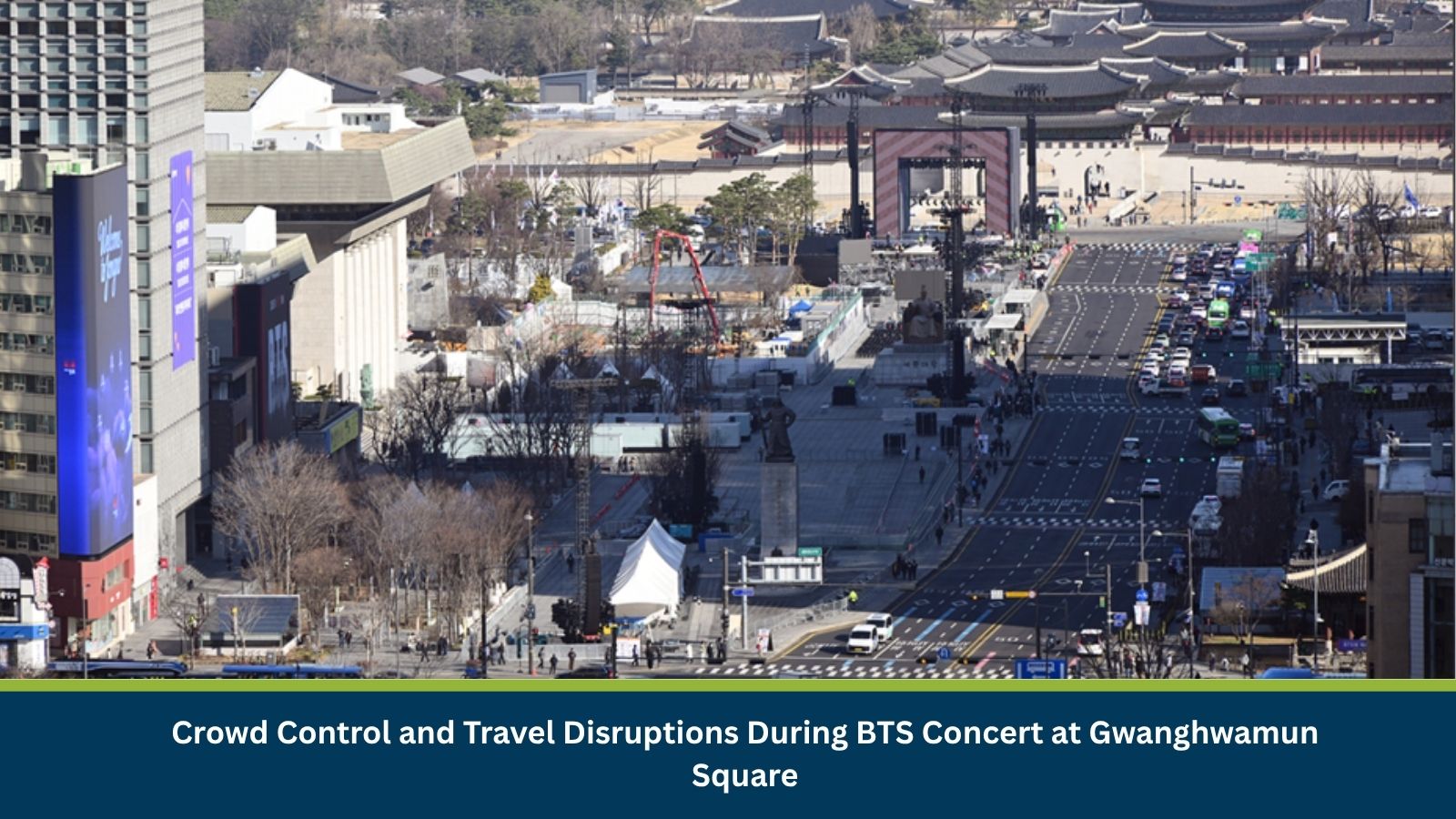
Executive Summary for the Crowd Control Measures in Seoul
Authorities have announced extensive crowd control and traffic measures for a high-attendance BTS concert. With projected attendance exceeding 200,000, the event is expected to generate severe congestion, transport disruption, and elevated public safety risks within a concentrated timeframe of 18–36 hours.
- Date of Event: 21 March
- Location: Gwanghwamun Square, Seoul, South Korea
- Risk Category: Travel Risks
- Severity Score: 4 / 5
- Confidence Level: 78 %
What is Risk Analysis in the Context of Travel Risks Events
Travel risk analysis focuses on disruptions to mobility systems, including road networks, public transport, and pedestrian movement. In mass gathering events, such as concerts or public rallies, risks stem from high crowd density, infrastructure strain, and emergency response limitations. In this case, the BTS concert presents a high-impact, short-duration urban disruption scenario. Historically, large-scale events in central Seoul, particularly in districts like Jongno, have demonstrated predictable patterns of congestion, transport delays, and localized safety concerns, making proactive planning essential.
Known Hotspots and Sensitive Areas
High Impact:
- Gwanghwamun Square
- Sejong-daero corridor and Jongno intersections
- Gwanghwamun, City Hall, and Jonggak subway stations
Medium Impact:
- Gyeongbokgung Palace vicinity
- Central business districts in Jongno-gu
Low Impact:
- Peripheral districts with indirect traffic spillover
These areas have historically experienced recurring congestion and crowd surges during major cultural events.
Impact on Transportation and Services
Significant transport disruption is expected across metro, bus, and road networks. Subway stations will likely enforce crowd-control measures, causing delays and restricted access. Road closures along Sejong-daero will impact vehicular movement and logistics routes. Businesses in central Seoul may face reduced accessibility, delayed deliveries, and workforce disruptions. Mobile network congestion may occur due to high user density, though core systems are expected to remain operational.
Recommended Actions
- Activate business continuity planning and remote work policies for central Seoul offices.
- Restrict non-essential travel within a one to two km radius of the event site.
- Pre-schedule or reroute logistics and supply chain operations.
- Secure physical assets and enhance on-site security measures.
- Coordinate with local authorities such as Seoul Metropolitan Government and police for real-time updates.
Multidimensional Impact
High resource deployment for the event may reduce emergency response capacity for unrelated incidents. Concurrent cultural events and demonstrations may further strain infrastructure and public services, amplifying overall urban risk.
Emergency Contacts
- Emergency Services: 119
- Police: 112
Final Thoughts
The risk trajectory indicates a high-probability, short-duration disruption with manageable but significant impacts on mobility and safety. Key watchpoints include peak crowd density periods and transport bottlenecks. Businesses should prioritize early warning systems, flexible operations, and real-time monitoring tools such as Datasurfr to mitigate disruption. Strategic preparedness remains critical in managing large-scale urban events with elevated travel and public safety risks.
Stay ahead of operational risks with real-time alerts, scenario modelling, and expert advisories with datasurfr’s Predict. Start your 14-day free trial of Datasurfr’s Risk Intelligence Platform today.