





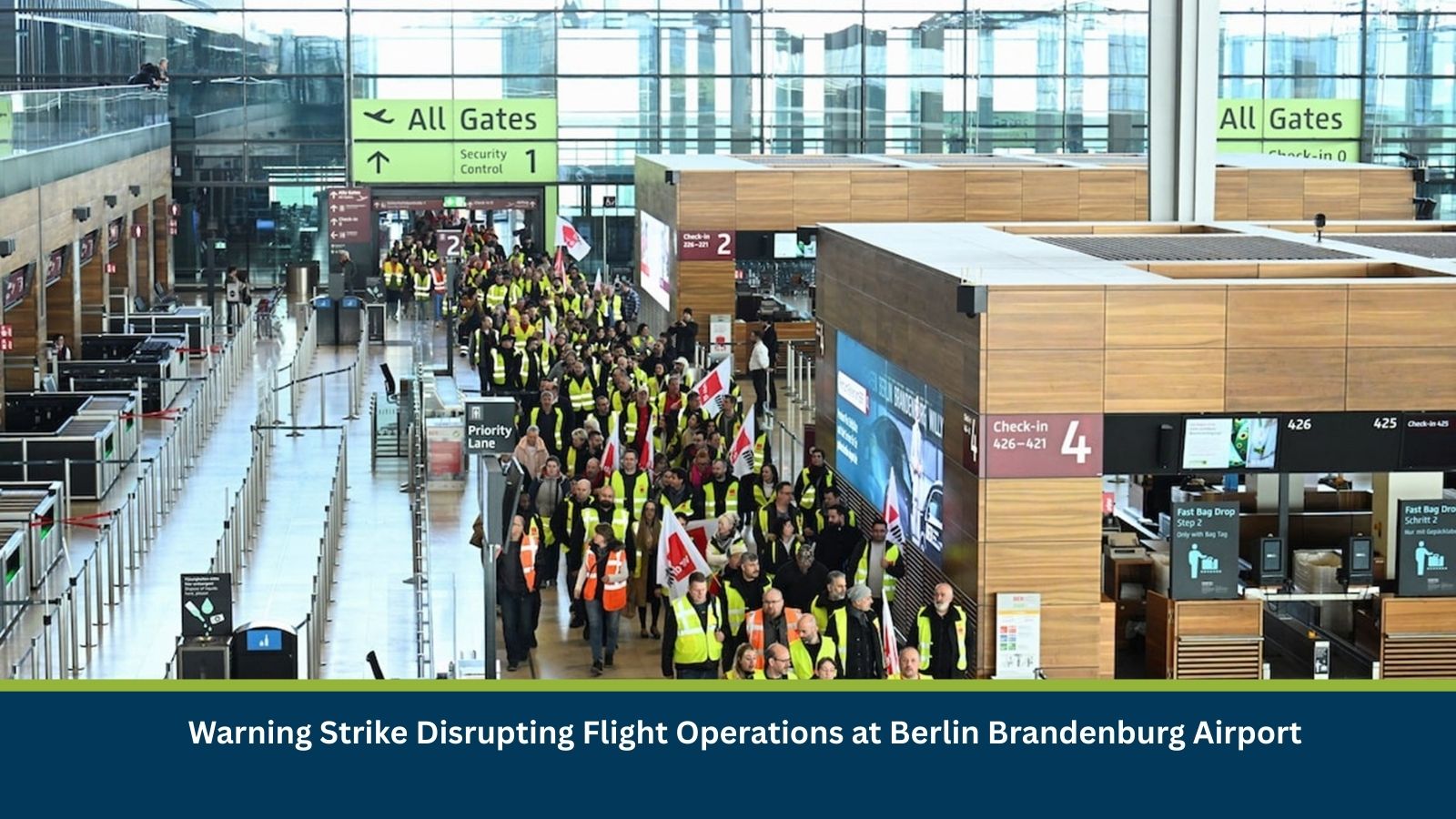
Executive Summary for the Warning Strike at Berlin Brandenburg Airport
A one-day warning strike at Berlin Brandenburg Airport has resulted in the cancellation of all scheduled passenger departures, affecting approximately 57,000–67,000 passengers. The disruption is expected to last 12–36 hours, with residual impacts extending up to 72 hours. The severity is assessed as moderate-to-high, driven by complete operational shutdown, significant passenger backlog, and strain on alternative transport systems. Historical patterns indicate high compliance with such strikes, reinforcing confidence in the disruption forecast.
- Event Date: 18 March
- Location: Berlin Brandenburg Airport, Berlin, Germany
- Risk Category: Travel Risks
- Severity Level: 4 / 5
- Confidence Score: 85 %
What is Risk Analysis in the Context of Travel Risks Events
Risk analysis in travel risk events assesses disruptions affecting transportation systems, passenger mobility, and logistics infrastructure. These risks often arise from industrial actions, operational failures, or security incidents impacting airports, railways, and road networks. In this case, the warning strike at Berlin Brandenburg Airport (BER) represents a high-impact aviation disruption, driven by industrial action from security and ground staff. Such strikes are common across Europe and have historically resulted in mass flight cancellations, passenger displacement, and cascading transport disruptions. Given Berlin’s reliance on BER as a primary international gateway, such events can significantly affect air travel, supply chains, and regional connectivity, even within a short duration.
Known Hotspots and Sensitive Areas
High Impact:
- BER Terminal 1 and Terminal 2 complexes
- Airport forecourt, parking, and terminal access roads
Medium Impact:
- S-Bahn routes S9 and S45 connecting Berlin to BER
- A113 and B96a road corridors leading to the airport
Low Impact:
- Wider Berlin metropolitan areas not directly reliant on airport access
Recurring strike patterns indicate airport terminals and connecting transport hubs are the most affected during such disruptions.
Impact on Transportation and Services
The strike has caused complete suspension of passenger flight operations, leading to widespread cancellations and delays. Airlines face operational backlogs, aircraft repositioning challenges, and increased compensation claims. Surface transport networks, including S-Bahn and bus services, are operating under strain, contributing to traffic congestion and commuter delays. Cargo and logistics operations may experience moderate delays, particularly for time-sensitive shipments. Business operations face disruption through missed travel schedules, delayed deliveries, and reduced workforce mobility, impacting productivity and service delivery.
Recommended Actions
Immediate Actions:
- Advise travellers to avoid BER and confirm flight status before travel.
- Activate contingency plans for rebooking, refunds, and alternate routing.
- Enable remote work arrangements for affected employees.
- Monitor updates from airport authorities and transport operators.
Strategic Measures:
- Develop travel risk management frameworks to address recurring industrial actions.
- Diversify routing strategies using alternate airports and transport modes.
- Coordinate with authorities such as airport operators, airlines, and local transport agencies for real-time updates.
Multidimensional Impact
Concurrent disruptions in public transport may amplify multi-modal congestion, while increased passenger volume at alternate hubs could strain regional infrastructure. Repeated strikes may also contribute to public dissatisfaction and reputational challenges for service providers.
Emergency Contacts
- Emergency Services: 112
- Police: 110
- Berlin Brandenburg Airport (BER): ber.berlin-airport.de/en.html
Final Thoughts
The warning strike at Berlin Brandenburg Airport represents a high-impact travel disruption, with immediate consequences for aviation operations and regional mobility. While the disruption is expected to be short-lived, secondary impacts may persist for up to 72 hours. Organizations should prioritize proactive communication, contingency travel planning, and operational flexibility.
Stay ahead of operational risks with real-time alerts, scenario modelling, and expert advisories with datasurfr’s Predict. Start your 14-day free trial of Datasurfr’s Risk Intelligence Platform today.