





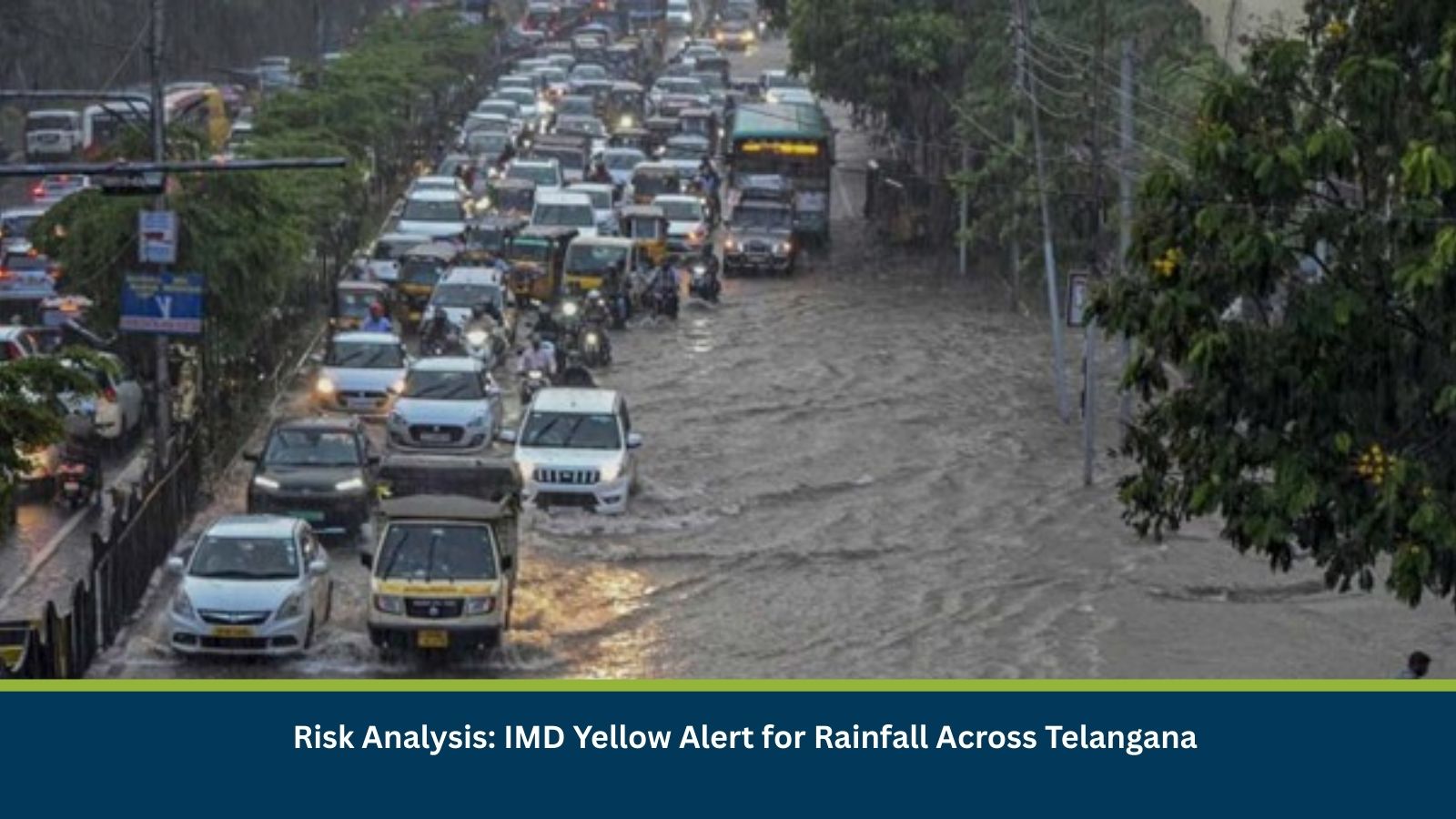
Executive Summary for the Yellow Rainfall Alert Across Telangana
The India Meteorological Department (IMD) has issued a yellow alert for Telangana from 17–21 March, forecasting moderate rainfall with isolated thunderstorms. The highest impact is expected within the first 48–72 hours. The event is assessed as moderate severity, with likely impacts including urban flooding, traffic delays, and disruption to business operations. While no large-scale infrastructure damage is anticipated, localized disruptions to commuting and logistics are expected across Hyderabad and surrounding districts.
- Date of Event: 17-21 March
- Location: Hyderabad, Telangana, India
- Risk Category: Environment
- Severity Score: 3 / 5
- Confidence Level: 78 %
What is Risk Analysis in the Context of Environment Events
Risk analysis in environmental events evaluates the impact of weather-related hazards such as rainfall, storms, and flooding on public safety, infrastructure, and economic activity. These risks are often cyclical and influenced by seasonal weather patterns. In this case, the yellow alert for rainfall in Telangana indicates moderate-intensity weather conditions, including intermittent heavy showers and thunderstorms. Such alerts are critical for urban centres like Hyderabad, where drainage limitations and rapid urbanization contribute to recurrent waterlogging and mobility disruptions. Historically, similar alerts in Telangana have resulted in localized flooding, traffic congestion, and temporary service disruptions, with limited long-term infrastructure damage but notable short-term operational impact.
Known Hotspots and Sensitive Areas
High Impact:
- Low-lying areas of Hyderabad including Ameerpet, Mehdipatnam, Kukatpally, and Old City corridors
- Hussain Sagar and Musi River embankment zones
- Key urban underpasses and drainage-deficient pockets
Medium Impact:
- Hyderabad Outer Ring Road (ORR) and major arterial routes
- Rajiv Gandhi International Airport access routes (Shamshabad corridor)
Low Impact:
- Elevated and well-drained suburban areas
These locations have historically experienced recurrent waterlogging and traffic congestion during yellow-alert rainfall events.
Impact on Transportation and Services
The rainfall is expected to disrupt urban mobility, particularly through traffic congestion, temporary road closures, and delays in public transport systems such as buses and suburban rail. Airport access routes may experience delays due to surface flooding, though flight operations are likely to continue with minimal interruption. Last-mile logistics and supply chain operations may face delays, impacting delivery timelines and retail activity. Utilities could see localized outages, including power disruptions and drainage overflow in flood-prone zones, affecting residential and commercial operations.
Recommended Actions
Immediate Measures:
- Issue weather advisories to employees and enable remote or flexible working arrangements.
- Avoid travel through flood-prone routes and monitor real-time traffic updates.
- Secure ground-level assets and ensure drainage systems are cleared.
- Follow updates from the India Meteorological Department and local municipal authorities.
Strategic Measures:
- Strengthen urban flood preparedness and drainage infrastructure.
- Develop contingency plans for business continuity during weather disruptions.
- Coordinate with agencies such as State Disaster Response Force (SDRF) and municipal bodies for rapid response.
Multidimensional Impact
Rainfall may disrupt planned public gatherings and protests, altering crowd management dynamics. Increased road accidents and strain on emergency services are also possible during peak rainfall periods.
Emergency Contacts
- Emergency Number: 112
- India Meteorological Department (IMD): mausam.imd.gov.in/
Final Thoughts
The IMD yellow alert for Telangana represents a moderate environmental risk, primarily affecting urban transport, infrastructure, and business continuity. While impacts are expected to remain localized, key concerns include waterlogging, traffic disruption, and operational delays. Organizations should maintain proactive monitoring and preparedness measures to mitigate short-term disruptions.
Stay ahead of operational risks with real-time alerts, scenario modeling, and expert advisories with datasurfr’s Predict. Start your 14-day free trial of Datasurfr’s Risk Intelligence Platform today.