





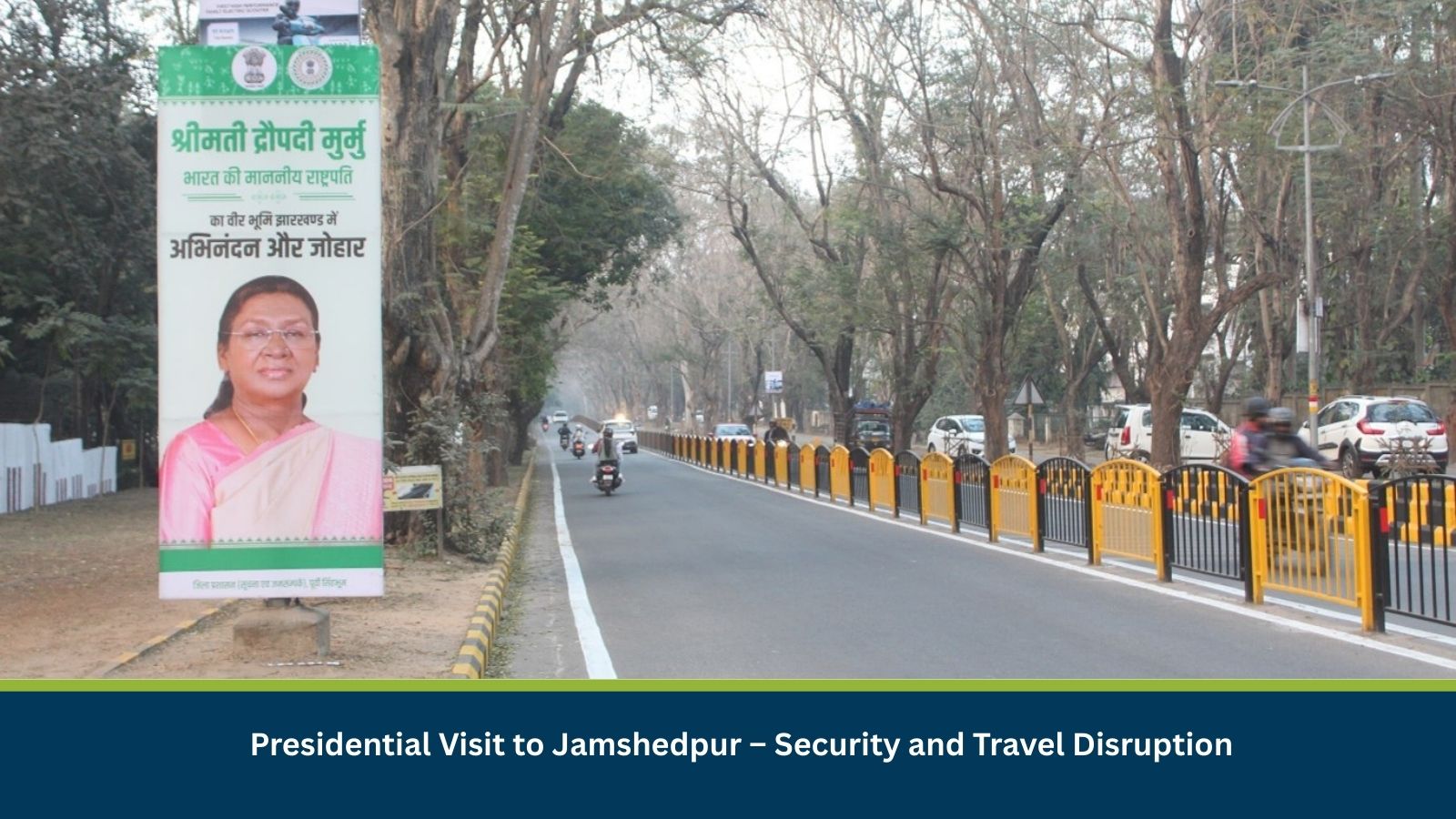
Executive Summary for the Presidential Visit to Jamshedpur
President Droupadi Murmu is scheduled to visit Jamshedpur on 26 February to lay the foundation stone for a Jagannath temple. Authorities are expected to enforce standard VIP security protocols, including road closures, vehicle screening and public-space cordons. Disruption is likely to peak between 0800–2000 hours, with preparatory restrictions beginning 24 hours prior. Severity is moderate due to concentrated but manageable civic disruption and low probability of serious security incidents.
- Date of Event: 26 February
- Location: Jamshedpur, Jharkhand, India
- Risk Category: Travel Risks
- Severity Score: 3 / 5
- Confidence Level: 85 %
What is Risk Analysis in the Context of Travel Risks Events
Travel risk analysis evaluates threats that affect transportation networks, commuter safety and access to critical infrastructure. High-profile VIP visits fall under travel disruption risk due to planned security cordons, traffic diversions and restricted public access. In India, presidential and prime ministerial visits routinely generate 12–36-hour mobility constraints in host cities. While such events rarely result in large-scale violence, they produce concentrated traffic congestion, last-mile delivery delays and temporary access restrictions. Proactive traffic management and business continuity planning are essential to mitigate operational impact.
Known Hotspots and Sensitive Areas
High Impact:
- Sakchi area including Jubilee Park and Gopal Maidan
- Mango–Pardih corridor
- Access roads to Tatanagar railway station
- Sonari airport approach roads
Medium Impact:
- Tata–Ranchi Highway (NH-33 approaches)
- Mango Road and city gateway corridors
Low Impact:
- Peripheral residential districts outside central Jamshedpur
VIP visits in Jamshedpur historically result in temporary heavy vehicle bans and staged motorcade routes concentrated within central corridors.
Impact on Transportation and Services
Road closures and traffic diversions will likely affect commuter mobility and public transport reliability. Temporary suspension or diversion of local train services near Tatanagar station may occur. Airport access delays are possible due to security screening. Businesses within cordoned areas may experience staff absenteeism, reduced retail footfall and last-mile logistics delays of six to 12 hours. Digital infrastructure and utilities are expected to remain operational, though localized mobile network congestion may occur near event venues.
Recommended Actions
Immediate Measures:
- Issue internal travel advisories and encourage staggered reporting times.
- Reschedule non-essential deliveries through Mango–Pardih and Tata–Ranchi corridors.
- Establish alternate routing plans and designate an on-ground incident coordinator.
- Secure facilities within high-impact zones and restrict contractor access.
Strategic Measures:
- Maintain coordination with Jharkhand Police and district administration for updated traffic advisories.
- Strengthen remote-work capability and emergency contact trees.
- Conduct post-event operational review to refine VIP-visit contingency planning.
Multidimensional Impact
Concurrent criminal incidents in other districts may marginally strain statewide policing resources. While geographically separate, resource allocation toward VIP security could affect inter-district coordination during the visit window.
Emergency Contacts
- Emergency Number: 112
Final Thoughts
The 26 February presidential visit presents a short duration but concentrated travel disruption risk in central Jamshedpur. Impact is expected to remain localized and manageable with structured traffic management. Businesses should prioritise workforce mobility planning, secure logistics scheduling and real-time monitoring.
Stay ahead of operational risks with real-time alerts, scenario modeling, and expert advisories with datasurfr’s Predict. Start your 14-day free trial of Datasurfr’s Risk Intelligence Platform today.