





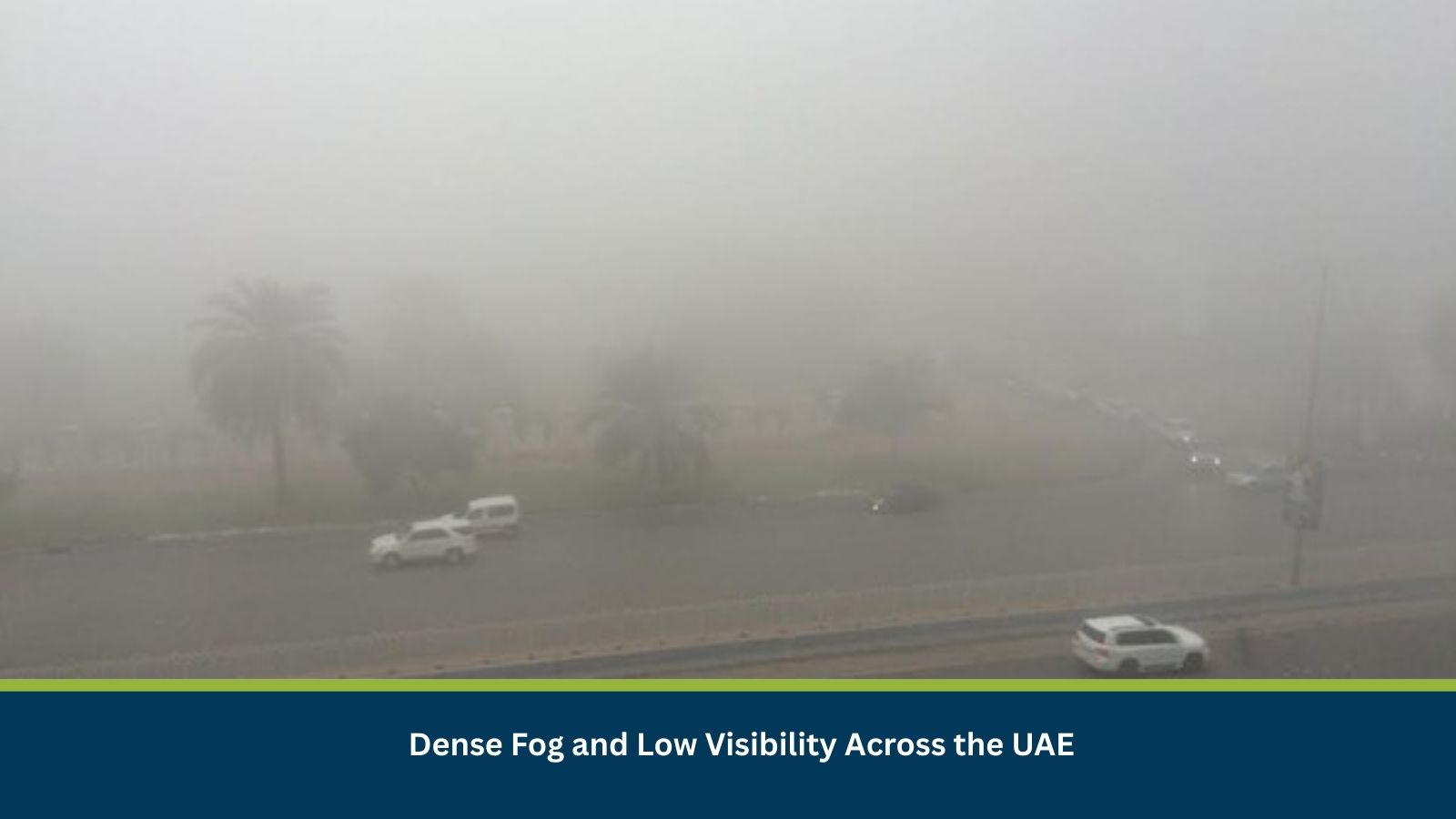
Executive Summary for the Low Visibility Conditions Across the UAE
Forecast models and National Centre of Meteorology advisories indicate dense, patchy fog, with localized persistence up to 18 hours. Impacts are expected to include traffic congestion, multi-vehicle collision risk, short-haul aviation delays and slower freight movement. Severity is assessed as moderate, with disruptions largely time-bound and concentrated during morning commute windows.
- Date of Event: 24 February
- Location: Sila, Ruwais, Ras Al Khaimah, Nahil, Mirfa, Liwa, Habshan, Dalma, Al Rahba, Abu Dhabi, Dubai, United Arab Emirates
- Risk Category: Environment
- Severity Score: 3 / 5
- Confidence Level: 78 %
What is Risk Analysis in the Context of Environment Events
Environmental risk analysis evaluates natural atmospheric hazards such as dense fog, reduced visibility and adverse weather conditions that affect transportation networks, infrastructure and workforce mobility. In the UAE, late-winter fog events are recurrent due to high humidity, light winds and temperature inversion layers. These events typically disrupt road traffic, airport operations and logistics corridors during early-morning hours. Given the country’s dependence on high-speed highways and aviation hubs, low visibility conditions present measurable operational and safety risks requiring proactive mitigation.
Known Hotspots and Sensitive Areas
High Impact:
- Sheikh Zayed Road (E11) corridor between Dubai and Abu Dhabi
- Emirates Road (E611) and Al Ain Road (E22)
- Dubai International Airport and Abu Dhabi International Airport
Medium Impact:
- Industrial zones near Jebel Ali and Abu Dhabi ports
- Northern emirates including Ras Al Khaimah
- Coastal and low-lying areas such as Mirfa and Ruwais
Low Impact:
- Elevated inland areas where faster surface heating reduces fog persistence
Fog episodes of similar intensity historically recur during late winter, particularly overnight and early morning.
Impact on Transportation and Services
Reduced visibility may cause traffic slowdowns, lane restrictions and temporary suspensions on major highways. Multi-vehicle collisions are a recurring risk during dense fog conditions. Short-haul aviation at Dubai and Abu Dhabi airports may face holding patterns, delays or limited cancellations. Bus services and inter-emirate freight movements could experience schedule disruptions, affecting supply chains and last-mile deliveries. No direct utility damage is expected, though slower emergency response times are possible in severe low-visibility pockets.
Recommended Actions
Immediate Measures:
- Activate low-visibility transport protocols and delay non-essential travel.
- Implement remote work or flexible shifts for affected emirates.
- Suspend early-morning field operations and high-speed fleet movement.
- Issue internal safety advisories and establish staff check-in mechanisms.
Strategic Measures:
- Strengthen fleet telematics and GPS tracking for real-time driver monitoring.
- Coordinate with the National Centre of Meteorology and UAE traffic authorities for updated advisories.
- Review business continuity plans for logistics and aviation-dependent operations.
Multidimensional Impact
Prolonged fog may increase insurance claims related to traffic accidents and temporarily reduce freight throughput at ports and industrial yards. However, systemic infrastructure failure is unlikely.
Emergency Contacts
- Emergency Number: 999
- National Centre of Meteorology Alerts: ncm.gov.ae
Final Thoughts
The fog event presents a moderate, time-bound environmental risk concentrated in early-morning hours on 24 February. While large-scale infrastructure damage is unlikely, transport disruption and elevated road safety risks require coordinated mitigation. Businesses should prioritize workforce safety, adjust commute policies and maintain real-time monitoring.
Stay ahead of operational risks with real-time alerts, scenario modeling, and expert advisories with datasurfr’s Predict. Start your 14-day free trial of Datasurfr’s Risk Intelligence Platform today.