





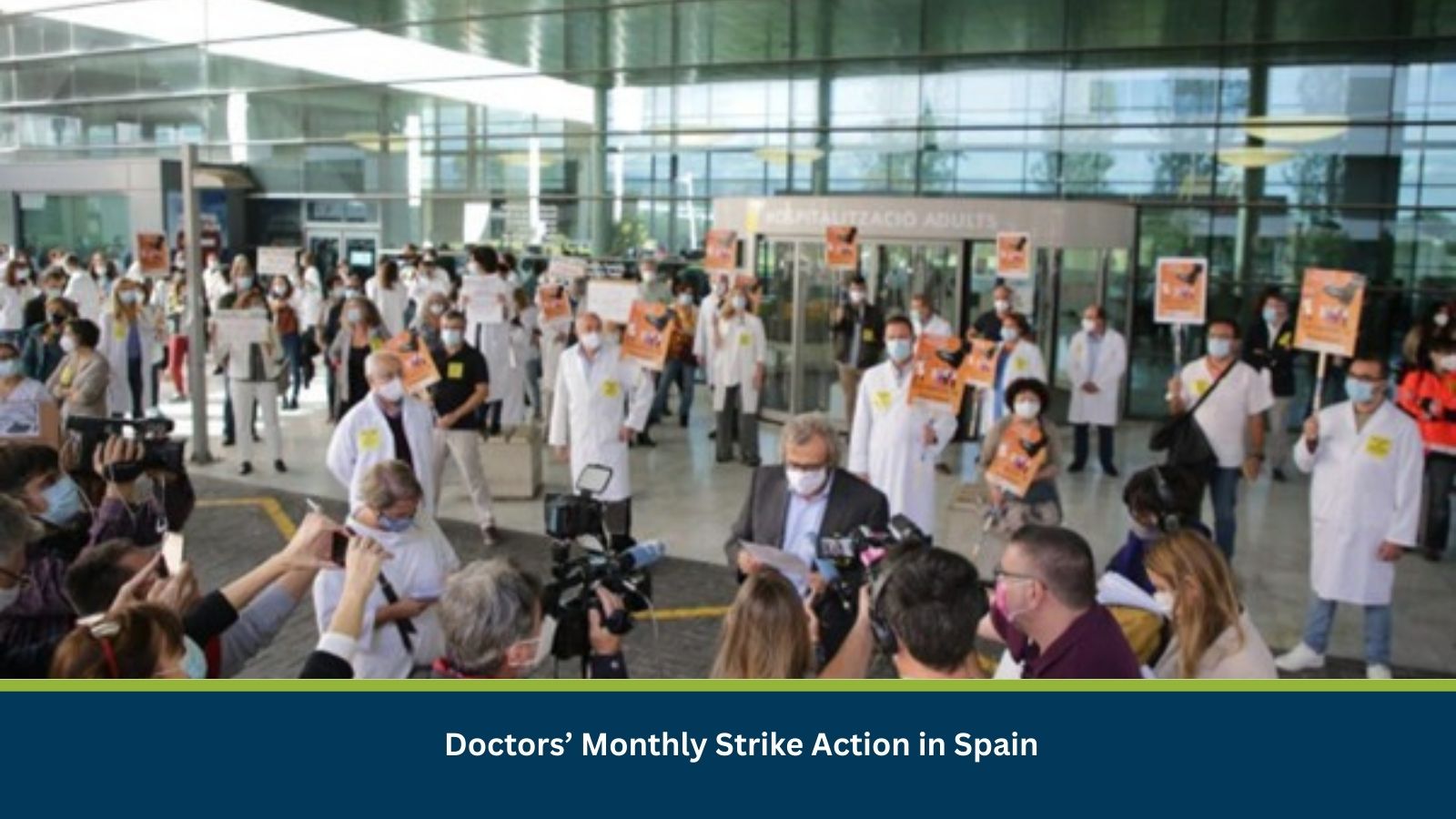
Executive Summary for the Monthly Doctors’ Strike in Spain
Medical unions have commenced scheduled monthly strikes beginning 16 February, demanding a dedicated statutory framework for physicians. Based on prior multi-day and regional stoppages, actions are likely to recur over the next two to four months, with potential escalation if negotiations stall. Emergency and critical care services are operating under minimum service mandates; however, elective surgeries and outpatient consultations face cancellations and delays. Disruption is moderate, with limited infrastructure damage but sustained operational healthcare strain.
- Event Date: 16 February
- Location: León; Balearic Islands; Palma de Mallorca; Madrid, Spain
- Risk Category: Civil Disturbance
- Severity Level: 3 / 5
- Confidence Score: 78 %
What is Risk Analysis in the Context of Civil Disturbance Events
Civil disturbance risk analysis evaluates disruptions arising from organized labour actions, protests and public demonstrations. In the healthcare sector, strikes can significantly affect public services, business continuity and public safety. In Spain, repeated doctors’ strikes during 2025–2026 demonstrate sustained mobilization capacity and a pattern of rolling industrial action. Such events typically maintain legally mandated minimum services but create measurable disruption to elective healthcare, outpatient appointments and administrative systems.
Known Hotspots and Sensitive Areas
High Impact:
- Ministry of Health corridor (Paseo del Prado), Madrid
- Hospital 12 de Octubre (Madrid)
- Hospital La Paz (Madrid)
- Son Espases Hospital (Palma de Mallorca)
Medium Impact:
- León provincial hospitals
- Atocha transport hub and central Madrid demonstration routes
Low Impact:
- Peripheral healthcare centres maintaining mínimos
Strike recurrence is expected monthly, typically lasting 24–72 hours, with potential escalation to longer regional stoppages if negotiations remain unresolved.
Impact on Transportation and Services
Localized traffic congestion is anticipated near hospital zones and demonstration routes, particularly during peak hours. Public transport rerouting and crowd management measures may occur near central Madrid. Healthcare services face significant outpatient cancellations, elective surgery backlogs and extended ambulance turnaround times. Digital appointment systems may experience elevated load due to rescheduling. Utilities and airport operations remain unaffected. Businesses dependent on occupational health, insurance processing and patient transport should anticipate recurring service degradation.
Recommended Actions
Immediate Actions:
- Activate Health Continuity Protocol and designate an incident lead.
- Arrange alternative medical access through private clinics or telemedicine providers.
- Adjust staffing for roles requiring on-site medical clearance.
- Issue internal communications detailing rescheduling and escalation pathways.
Strategic Measures:
- Develop contingency agreements with private healthcare providers in Madrid and affected provinces.
- Monitor Ministry of Health advisories and regional health authority updates.
- Maintain centralized logs of strike-related operational impacts for compliance and insurance purposes.
- Coordinate with local authorities and hospital administrations for real-time situational awareness.
Multidimensional Impact
Concurrent adverse weather warnings and unrelated emergency incidents may compound healthcare system strain. Increased emergency department pressure, combined with reduced elective capacity, may extend service recovery timelines following each strike cycle.
Emergency Contacts
- Emergency Services: 112
- Ministry of Health (Ministerio de Sanidad): sanidad.gob.es/en/home.htm
Final Thoughts
The doctors’ strike represents a sustained civil disturbance risk with moderate but recurring healthcare disruption. The next two to eight weeks remain critical for monitoring escalation potential and negotiation progress. Healthcare-dependent organizations should prioritize continuity planning, workforce flexibility and proactive communication.
Stay ahead of operational risks with real-time alerts, scenario modelling, and expert advisories with datasurfr’s Predict. Start your 14-day free trial of Datasurfr’s Risk Intelligence Platform today.