





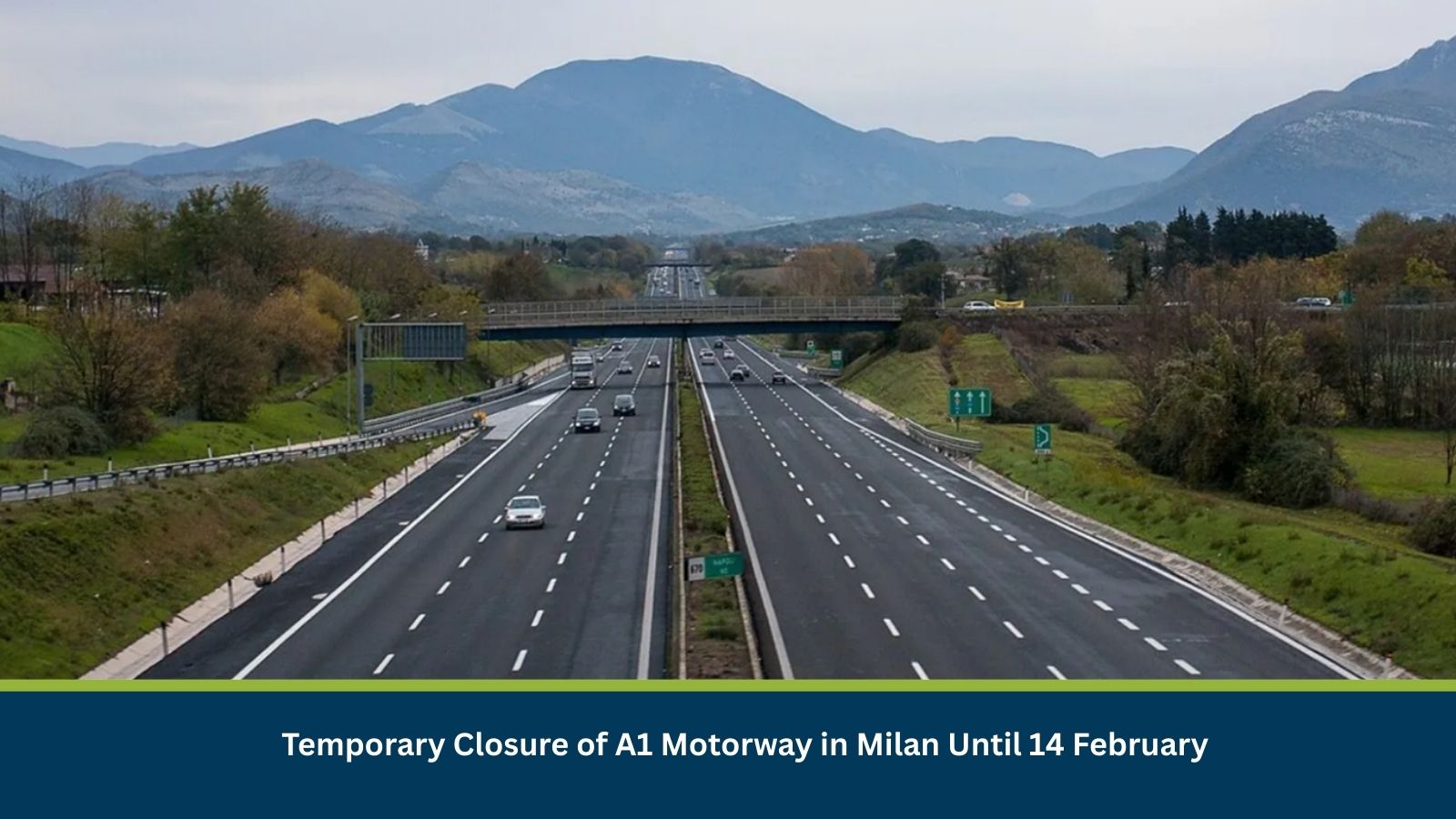
Executive Summary for the A1 Motorway Closure in Milan
Temporary overnight closures have been implemented on the A1 motorway approach to Milan and are scheduled through Saturday, 14 February. The disruption primarily affects traffic from the A22 Brennero–Modena/Reggio Emilia axis toward Milan. Impacts are expected to remain moderate and time-bound, with concentrated congestion during nighttime hours and residual morning peak delays.
- Date of Event: 11 February
- Location: Milan, Italy
- Risk Category: Travel Risks
- Severity Score: 3 / 5
- Confidence Level: 85 %
What is Risk Analysis in the Context of Travel Risks Events
Travel risk analysis evaluates disruptions affecting mobility corridors, commuter flows and logistics networks. Planned motorway closures, though controlled and pre-announced, can generate concentrated congestion, diversion pressure and supply chain delays. In Italy, recurring overnight maintenance on major autostrade such as A1, A4, A8 and A9 has historically produced temporary operational strain without systemic infrastructure failure. The current A1 closure fits this pattern of managed but commercially impactful transport disruption.
Current Updates
Authorities have confirmed nocturnal lane restrictions and temporary closures on the affected A1 stretch. Daytime reopening is anticipated, consistent with planned maintenance schedules. No major accidents, fatalities or infrastructure damage linked to the closures have been reported. Traffic advisories have been disseminated through local communication channels.
Known Hotspots and Sensitive Areas
High Impact:
- A1 Milan approach corridor from Emilia-Romagna
- Melegnano and Binasco feeder routes
- Tangenziali and inbound ring roads to Milan
Medium Impact:
- Sesto San Giovanni and Monza corridors
- Provincial SP/SS diversion roads
Low Impact:
- Areas outside primary freight and commuter routes
Historically, similar night closures in Northern Italy have generated cumulative congestion when overlapping with major public events or commuter peaks.
Impact on Transportation and Services
Freight corridors between Modena/Reggio Emilia and Milan are likely to experience extended transit times due to diversion routing. Commuters may face 15–40 minutes of additional travel time during morning peaks. Regional bus services and last-mile deliveries may incur moderate delays. No reported disruption to rail, air or utilities is associated with the closure. The primary risk remains traffic congestion and logistics inefficiency rather than infrastructure failure.
Recommended Actions
Immediate Measures:
- Activate traffic disruption response protocols and appoint an operations lead.
- Re-route non-urgent freight to alternate autostrade (A4, A8, A9) where feasible.
- Update fleet GPS systems and issue diversion guidance to drivers.
Strategic Measures:
- Consolidate shipments to reduce night transit frequency.
- Enable remote work flexibility for Milan-based staff during peak disruption windows.
- Maintain real-time monitoring of congestion trends and reopening schedules via official motorway operator updates.
Multidimensional Impact
Concurrent public gatherings or demonstrations in Milan could amplify congestion during diversion windows. While the probability of direct escalation remains low, overlapping transport stressors may extend disruption into adjacent districts.
Emergency Contacts
- Emergency Number: 112
- Official Autostrade per l’Italia Traffic Channels: autostrade.it/en/home
Final Thoughts
The A1 motorway closure represents a controlled, moderate travel risk with predictable congestion impacts through 14 February. Close monitoring of diversion routes and freight schedules will mitigate commercial disruption. Businesses operating across Northern Italy should prioritize route flexibility and contingency planning.
Stay ahead of operational risks with real-time alerts, scenario modeling, and expert advisories with datasurfr’s Predict. Start your 14-day free trial of Datasurfr’s Risk Intelligence Platform today.