





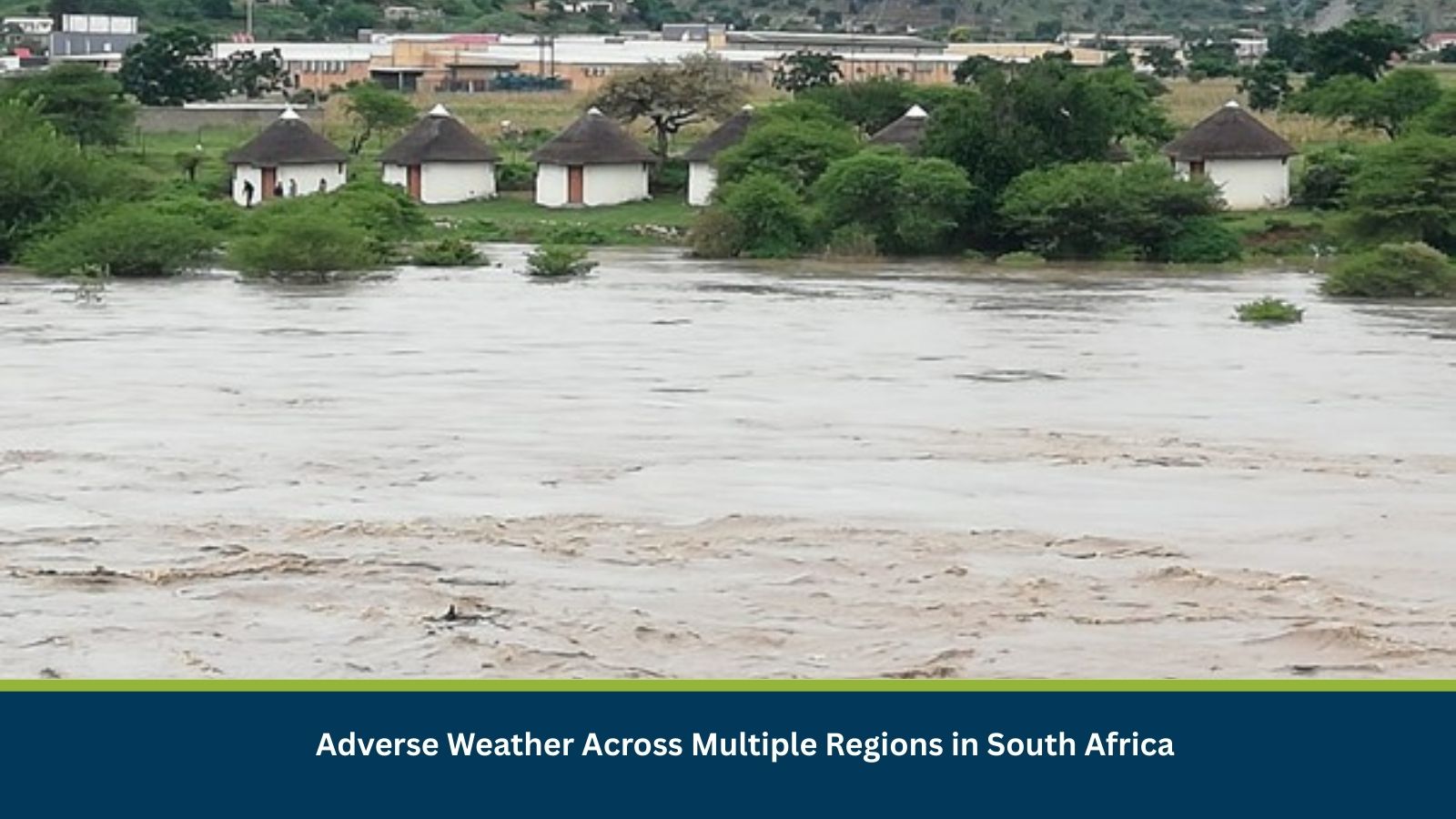
Executive Summary for the Adverse Weather in South Africa
A cold front-driven weather system is forecast to impact multiple provinces through 04 February, bringing heavy rain, hail and strong to damaging winds. The most disruptive conditions are expected within the next 48–72 hours, with residual flooding, infrastructure damage and transport disruption persisting for up to seven days. Severity is elevated due to flash flood and wind-damage risk across multiple regions, with moderate-high confidence supported by consistent forecasting and historical precedent
- Date of Event: 03 February
- Location: Mpumalanga, Highveld, Limpopo, Beaufort West, South Nama Khoi Local Municipality, Alfred Nzo District Municipality, Joe Gqabi District Municipality, Chris Hani, Enoch Mgijima Local Municipality, Inxuba Yethemba Local Municipality, South Africa
- Risk Category: Environment
- Severity Score: 4 / 5
- Confidence Level: 75 %
What is Risk Analysis in the Context of Environment Events
Environmental risk analysis assesses the impact of extreme weather and climate-driven hazards on people, assets and critical systems. In South Africa, cold fronts and associated convective storms are recurrent and historically linked to flooding, wind damage and service disruptions, particularly in the Western and Eastern Cape and adjacent inland regions. The current forecast aligns with these established patterns, warranting heightened preparedness.
Current Updates
Weather services have issued warnings for heavy showers, thunderstorms, hail and strong southerly to south-westerly winds affecting the Western Cape, Eastern Cape and extending inland into Mpumalanga, Limpopo, the Highveld and Northern Cape. Coastal municipalities have activated emergency readiness measures, road-weather advisories are in effect, and port operators are monitoring wind thresholds. Communities in low-lying areas have been advised to prepare for rapid water rise and secure exposed property.
Known Hotspots and Sensitive Areas
High Impact:
- Eastern Cape coastal districts including Alfred Nzo, Joe Gqabi and Chris Hani
- Western Cape coastal and Garden Route corridors
Medium Impact:
- Beaufort West and inland Highveld municipalities
- Northern Cape local municipalities including South Nama Khoi
Low Impact:
- Areas with robust drainage and limited exposure to coastal winds
These regions exhibit seasonal recurrence of flooding, wind damage and stormwater system overload during summer cold-front interactions.
Impact on Transportation and Services
Road transport faces significant risk from flooding and hazardous driving conditions, particularly on coastal and mountain routes. Temporary closures are likely on sections of the N2 and R62, while intercity bus services may be suspended. Airports in Cape Town and Gqeberha may experience delays due to wind and hail, and port operations could be curtailed during peak gusts. Power distribution outages and localized telecom disruptions may affect business operations and access to digital services.
Recommended Actions
Immediate Actions:
- Activate adverse weather response teams and incident logs.
- Secure exposed assets, clear drainage systems and test backup power.
- Adjust workforce mobility through remote work and flexible shifts.
Strategic Measures:
- Pre-position emergency supplies and generators in high-risk zones.
- Coordinate with local disaster management centres, emergency services and weather advisories.
- Review flood resilience and wind-hardening measures for critical facilities.
Multidimensional Impact
No unrelated concurrent events identified; however, prolonged rainfall could compound flood risk in saturated catchments and delay recovery operations.
Emergency Contacts
- National Disaster Management Centre: ndmc.gov.za/
- Emergency Services: 112
- South African Weather Service: weathersa.co.za/
Final Thoughts
The adverse weather event is expected to follow a high-impact but time-bound trajectory, with localized escalation possible in vulnerable catchments. Businesses and authorities should prioritize safety, transport resilience and asset protection.
Stay ahead of operational risks with real-time alerts, scenario modeling, and expert advisories with datasurfr’s Predict. Start your 14-day free trial of Datasurfr’s Risk Intelligence Platform today.