





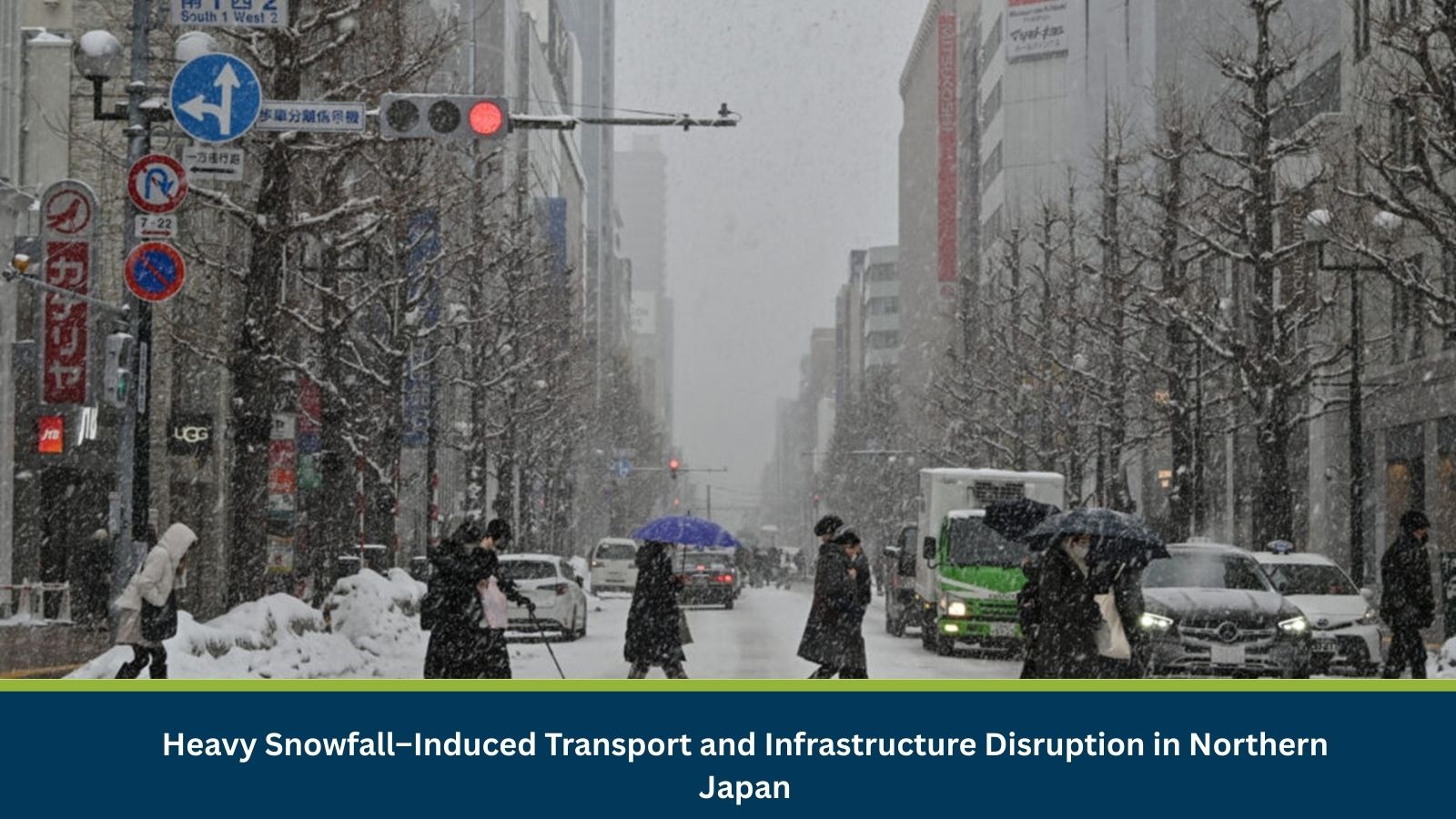
What is Risk Analysis in the Context of Natural Disasters Events
Natural disaster risk analysis assesses the operational, safety and continuity impacts arising from extreme weather, seismic activity or environmental hazards. Heavy snowfall is a recurring winter risk in northern Japan, historically disrupting transport, utilities and rural access. In the current event, accumulated snow, drifting and secondary hazards such as treefall and avalanches directly threaten mobility, supply chains and critical services.
Executive Summary
- Date of Event: 02 February
- Location: Aomori, Akita, Hokkaido, Japan
- Risk Category: Natural Disasters
- Severity Score: 4 / 5
- Confidence Level: 82 %
A significant snowfall event is impacting northern Honshu and Hokkaido, causing widespread transport disruption and emergency-service deployment. Based on recent winter precedents, the highest disruption window is expected to last 48–96 hours, with localized impacts persisting for up to seven–10 days due to snowdrifts and freeze–thaw cycles. Severity is assessed as high for travel and localized services, though region-wide catastrophic infrastructure failure remains unlikely in the absence of compounding hazards.
Current Updates
As of 02 February, authorities report heavy snowfall across Aomori and northern Akita, with emergency services responding to stranded vehicles and traffic incidents. Multiple regional rail lines are suspended or delayed, and intermittent road closures are reported on mountain passes and coastal routes. Hokkaido has recorded service adjustments in coastal areas. Isolated rural power outages and downed lines have been identified, while municipal shelters are on standby in several towns.
Known Hotspots and Sensitive Areas
High Impact:
- Mountain and rural corridors along National Routes 7 and 101
- Rail networks including Aoimori Railway and JR Ōu regional lines
Medium Impact:
- Hirosaki city and surrounding municipalities
- Coastal fishing and agricultural zones in western Aomori and northern Akita
Low Impact:
- Urban cores with priority snow clearance and stronger utility redundancy
These areas show seasonal recurrence of heavy-snow disruption, particularly affecting rural access and cold-chain agriculture.
Impact on Transportation and Services
Road transport is severely affected, with closures and hazardous driving conditions limiting access to hospitals, depots and rural communities. Regional rail and bus services face suspensions, while airports in Aomori and Akita may experience delays or cancellations. These disruptions constrain workforce mobility, delay retail replenishment and impede agricultural and dairy supply chains. Digital and communications services remain largely resilient, though localized outages are possible where power lines are damaged.
Recommended Actions
Immediate Actions:
- Suspend non-essential travel and deliveries on affected routes.
- Prioritize snow clearance and access to hospitals, shelters and supply depots.
- Implement shelter-in-place guidance for employees and residents where mobility is unsafe.
Strategic Measures:
- Pre-position generators, fuel and snow-removal assets in vulnerable communities.
- Coordinate with local authorities, emergency services and meteorological advisories for real-time updates.
- Review winter resilience plans for facilities, logistics and workforce safety.
Multidimensional Impact
A coincident seismic event or rapid thaw could exacerbate landslide risk and infrastructure damage, extend recovery timelines and increase demands on emergency services.
Emergency Contacts
- Japan Meteorological Agency: jma.go.jp/jma/indexe.html
- Emergency Services: 119
Final Thoughts
The snowfall event is expected to follow a high-impact but time-bound trajectory, with gradual normalization once clearance operations progress. Businesses and authorities should focus on short-term safety and logistics resilience while monitoring for secondary hazards. Early warning and situational awareness tools such as MitKat’s Datasurfr can support timely decision-making and preparedness during prolonged winter disruptions.
Stay ahead of operational risks with real-time alerts, scenario modeling, and expert advisories with datasurfr’s Predict. Start your 14-day free trial of Datasurfr’s Risk Intelligence Platform today.