





What is Risk Analysis in the Context of Environmental Events
Environmental risk analysis evaluates threats arising from weather-related hazards such as snowstorms, extreme cold, and coastal weather systems. In Japan, winter storms are a recurring seasonal risk, especially along the Sea of Japan coast, where heavy snowfall and strong winds frequently disrupt transport and utilities. Assessing such risks is critical due to Japan’s dense transport networks and reliance on rail and road mobility for economic continuity.
Executive Summary
- Date of Event: 21 January
- Location: Kanto-Koshin, Chugoku, Tokai, Kinki, Tohoku, Niigata, Hokuriku, Hokkaido, Japan
- Risk Category: Environment
- Severity Score: 4 / 5
- Confidence Level: 75 %
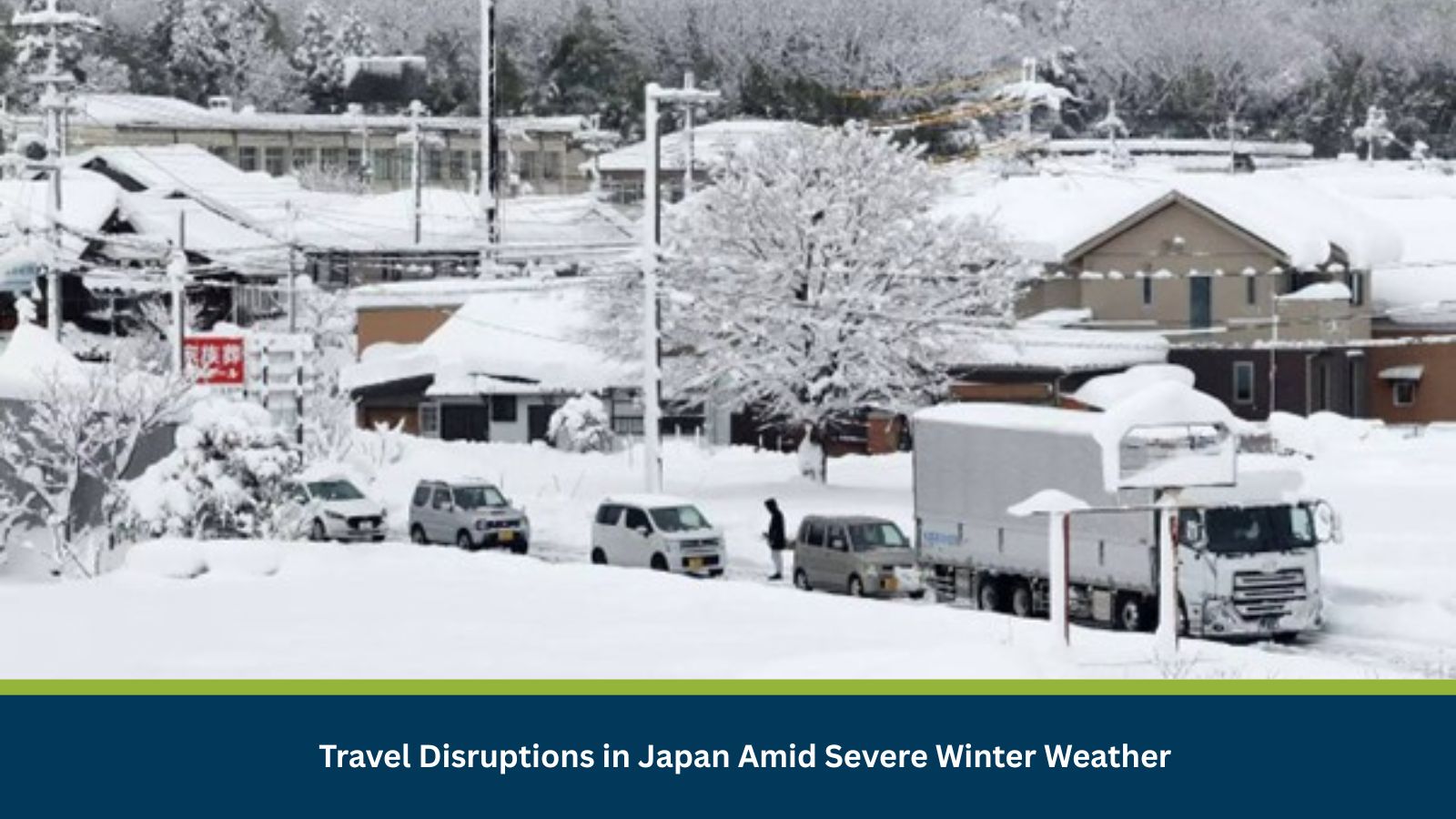
Severe winter weather affecting large parts of Japan on 21 January has resulted in significant travel disruptions. Heavy snow, strong winds, and high coastal waves are impacting road, rail, air, and ferry services, particularly in Hokuriku and northern regions. While national logistics retain some redundancy, regional mobility and commuter safety are under high stress, with impacts expected to persist for up to 72 hours and localized disruption potentially lasting longer.
Current Updates
As of 21 January, reports indicate delays and suspensions across rail services, temporary expressway closures, and flight cancellations at regional airports. Authorities have advised against non-essential travel in mountainous and coastal areas, and prefectural disaster management units remain on alert for stranded vehicles, utility strain, and further weather escalation.
Known Hotspots and Sensitive Areas
High Impact:
- Hokuriku region, including Fukui, Toyama, Ishikawa, and Niigata prefectures
- Coastal towns such as Kanazawa and Fukui City
- Mountainous corridors in Gifu and Niigata
Medium Impact:
- Tōhoku and Tokai regions with intermittent heavy snow and wind exposure
Low Impact:
- Parts of Kanto-Koshin and Kinki with indirect spillover effects
These areas experience recurrent winter disruption during January due to heavy snowfall and coastal weather patterns.
Impact on Transportation and Services
Road closures are likely on the Hokuriku Expressway, coastal Route 8, and mountain passes. Rail services on Sea of Japan-side lines face delays or suspensions, while regional airports such as Komatsu and Niigata report cancellations. Utility services may experience localized power outages from snow and ice accumulation, disrupting communications and access to facilities.
Recommended Actions
Immediate Actions:
- Restrict non-essential travel and implement remote work where feasible.
- Account for employee safety and provide alternate accommodation for stranded staff.
- Secure facilities and protect temperature-sensitive assets.
Strategic Measures:
- Monitor Japan Meteorological Agency updates and local advisories.
- Coordinate with transport operators and logistics partners for rerouting.
- Review winter storm continuity plans and supplier resilience measures.
Multidimensional Impact
Weather-related disruptions may constrain public events, community activities, and administrative operations. Short-term social and economic impacts are likely in heavily affected prefectures due to mobility restrictions.
Emergency Contacts
- Japan Meteorological Agency (JMA) Alerts: jma.go.jp/jma/indexe.html
- Police and Fire Emergency Services: 110 / 119
Final Thoughts
The current winter weather event presents a high short-term risk to regional mobility and safety in Japan, with the potential for escalation if conditions persist. Businesses and policymakers should prioritize staff safety, flexible operations, and early-warning intelligence. Preparedness and monitoring tools such as MitKat’s Datasurfr can enhance situational awareness and support timely, risk-informed decisions during severe weather events. Stay ahead of operational risks with real-time alerts, scenario modeling, and expert advisories with datasurfr’s Predict. Start your 14-day free trial of Datasurfr’s Risk Intelligence Platform today.