





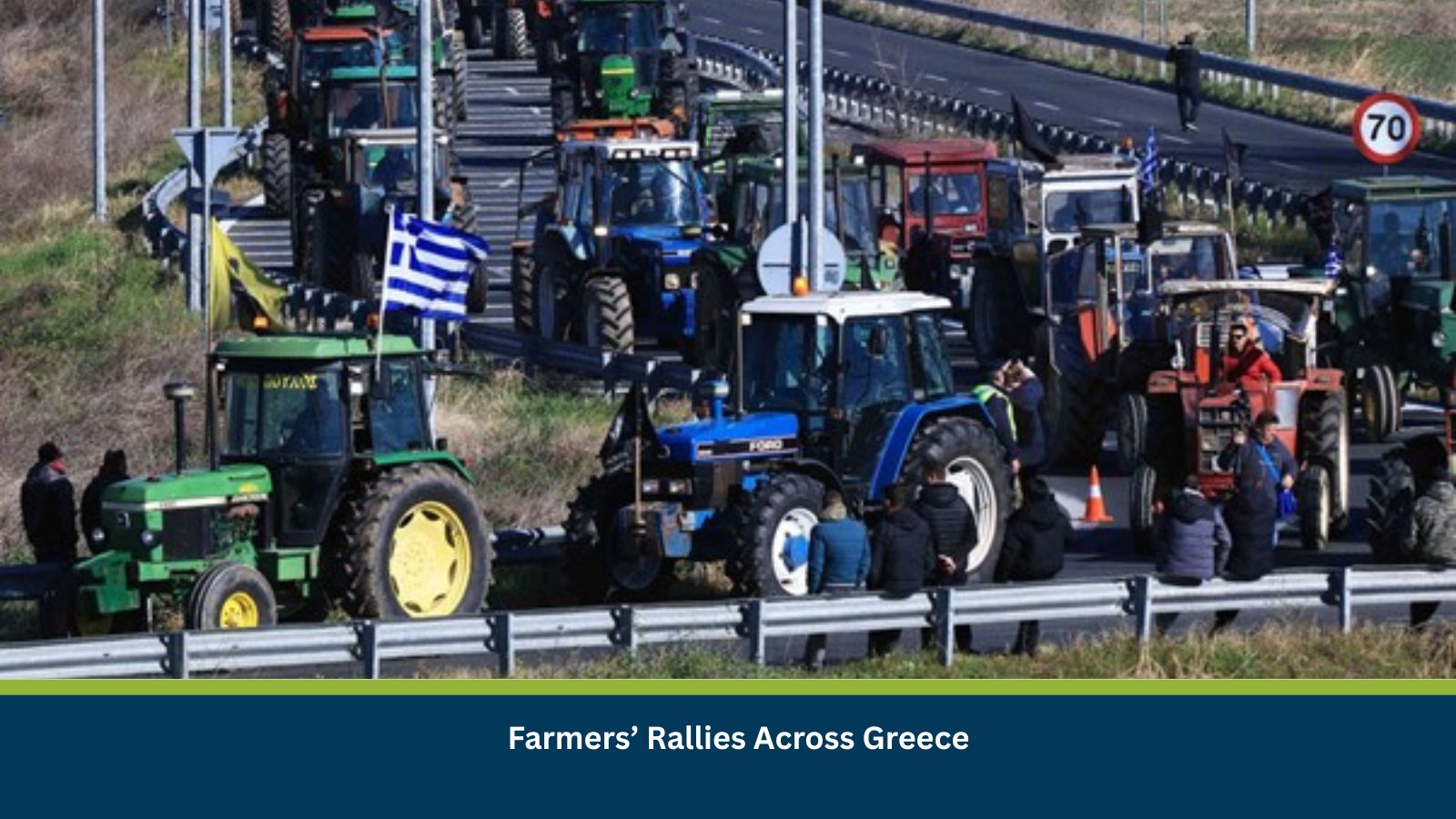
What is Risk Analysis in the Context of Civil Disturbance Events
Civil disturbance risk analysis assesses disruptions arising from protests, strikes and demonstrations that affect public order, mobility and access to critical infrastructure. In Greece, farmers’ protests have historically involved tractor blockades of highways and ports, creating recurring short-notice disruptions. Such events are relevant due to their predictable tactics, regional coordination and direct impact on transport and supply chains.
Executive Summary
- Date of Event: 17 December
- Location: Greece, including Thesprotia, Agrinio, Aigio and Patra
- Risk Category: Civil Disturbance
- Severity Score: 3 / 5
- Confidence Level: 85 %
Heavy and sustained rainfall has triggered multiple landslides across at least nine sub-districts of Sukabumi. Several roads are blocked, homes damaged and residents displaced. Given ongoing rainfall forecasts and historical recurrence, the risk of further slope failures and prolonged access disruption remains high over the next several days.
Known Hotspots and Sensitive Areas
High Impact:
- Ionian Highway (A5), particularly near Arta and Epirus.
- Ioannina–Preveza National Road and Kakavijë–Janinë corridor.
- Port of Igoumenitsa, a key Adriatic ferry hub.
Medium Impact:
- Urban centres of Agrinio, Aigio and Patra where tractor rallies are planned.
- Regional administrative and health facilities used for symbolic demonstrations.
Low Impact:
- Areas outside western Greece with limited protest coordination.
These locations show a strong recurrence pattern during agricultural protest cycles, particularly in winter months.
Impact on Transportation and Services
K Road transport will face the most disruption, with temporary highway closures and diversions affecting freight, intercity buses and commuter traffic. Port operations, especially ferry services at Igoumenitsa, may experience delays or short-term suspensions. These disruptions can cascade into delayed deliveries, reduced retail access and interruptions to agricultural and refrigerated supply chains, while digital and communications services are expected to remain largely unaffected.
Recommended Actions
Immediate Measures:
- Monitor police and transport authority advisories and avoid known choke points.
- Reroute freight using secondary roads or alternative ports where feasible.
- Implement remote work and staggered shifts for staff in affected regions.
Strategic Measures:
- Pre-stage inventory and critical supplies ahead of protest dates.
- Establish rapid communication channels with drivers, suppliers and customers.
- Coordinate with local authorities and logistics partners for real-time updates and safe parking options.
Multidimensional Impact
Sustained rallies may coincide with routine commercial activity, increasing congestion and delivery backlogs. If protests persist beyond one day, cumulative delays could affect fresh-produce markets and export schedules, though no unrelated parallel events are identified.
Emergency Contacts
- Emergency Services: 112
- Hellenic Police: 1033
Final Thoughts
The 17 December farmers’ rallies represent a moderate civil disturbance risk with high confidence of transport disruption but low probability of severe violence. Businesses should focus on mobility planning, alternate routing and proactive communication. Continuous monitoring and early-warning intelligence tools such as MitKat’s Datasurfr can help organizations anticipate escalation and maintain operational resilience during protest-driven disruptions. Stay ahead of operational risks with real-time alerts, scenario modeling, and expert advisories with datasurfr’s Predict. Start your 14-day free trial of Datasurfr’s Risk Intelligence Platform today.