





What is Risk Analysis in the Context of Civil Disturbance Events
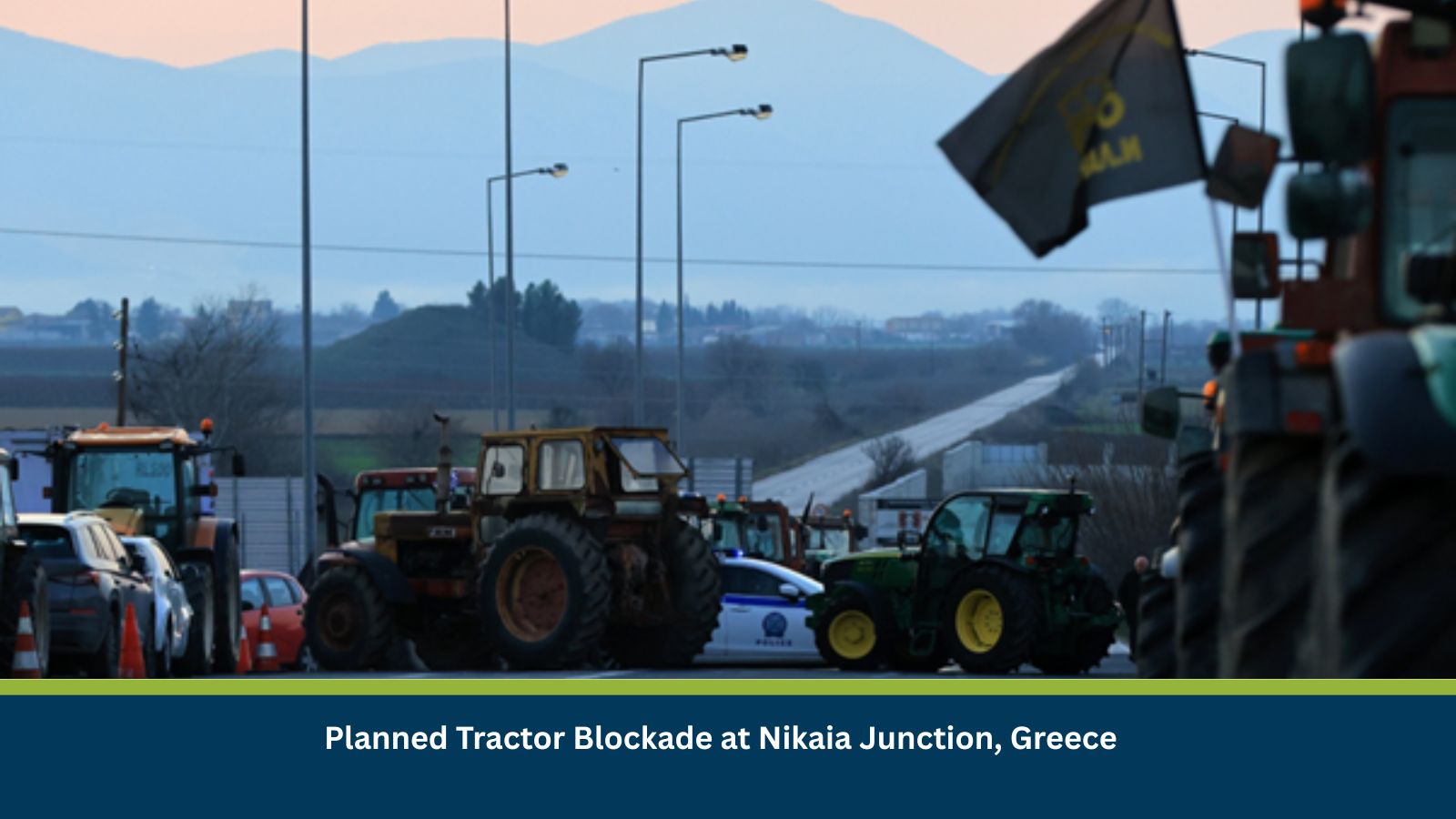
Civil disturbance risk analysis assesses the likelihood and impact of demonstrations, blockades, or public mobilisations that can affect safety, mobility, and continuity. In Greece, farmer protests are a recurring socio-economic pressure phenomenon, historically involving road occupations and tractor blockades to increase political visibility. These events can constrain freight flow, impede emergency services, and affect commercial operations near strategic transport nodes. The current planned action in Nikaia aligns with established protest patterns observed in 2024–2025 across the Athens–Lamia corridor and other regional junctions.
Executive Summary
- Date of Event: 30 November
- Location: Nikaia junction, Athens–Thessaloniki national highway, Greece
- Risk Category: Civil Disturbance
- Severity Score: 3 / 5
- Confidence Level: 78 %
Local agricultural groups plan to block the Nikaia junction using tractors on 30 November. Similar actions typically last six to twenty-four hours with low probability of escalation into multi-day blockades. Expected impacts include traffic gridlock, freight diversion, and delays in the Piraeus–Athens corridor. The blockade is likely symbolic-to-tactical and primarily aimed at visibility, with moderate operational consequences for businesses and commuters.
Known Hotspots and Sensitive Areas
High Impact:
- Nikaia junction (Athens–Thessaloniki national road): Primary obstruction and core congestion node.
- Piraeus port access routes (Poseidonos Avenue, Petrou Ralli): Sensitive due to freight and maritime logistics.
Medium Impact:
- Western Athens feeder roads (Korydallos, Iroon Polytechniou): Likely congestion spillover.
- Nearby hospitals and emergency corridors in Piraeus: Delays expected during peak blockage periods.
Low Impact:
- Peripheral residential streets around Nikaia with intermittent traffic overflow.
Seasonal patterns show that winter protests often coincide with adverse weather, worsening road congestion and emergency routing delays.
Impact on Transportation and Services
Severe traffic delays are likely at the Nikaia junction with diversions onto secondary city routes. Bus, taxi, and last-mile delivery operations may face extended travel times. Freight flows to and from Piraeus port could be disrupted, affecting time-sensitive cargo. Businesses may experience reduced customer access and missed service windows. Communication systems remain operational; however, load on digital updates may increase as commuters track real-time routes.
Recommended Actions
Immediate Measures:
- Advise staff commuting through Nikaia to work from home or use pre-identified alternate routes.
- Activate an internal commute bulletin with real-time mapping and ETAs.
- Deploy company transport (vans/taxis) for critical roles and maintain fuel readiness.
- Reroute time-sensitive freight and secure high-value inventory at alternate depots within six to twelve hours.
Strategic Measures:
- Create a rolling 24-hour incident log to guide operational decisions.
- Establish liaison with local police for clearance updates and potential emergency-movement permissions.
- Embed predictive planning and disruption monitoring using platforms such as MitKat’s Datasurfr.
Multidimensional Impact
Concurrent heavy rain, metro or tram stoppages, or unrelated emergencies may amplify congestion and delay emergency services. Increased dependence on road transport during severe weather elevates collision risk and prolongs logistics cycles.
Emergency Contacts
- Greek Police: 100
- Fire Service: 199
- National Emergency Centre: 166
Final Thoughts
The blockade is likely short-lived with contained impacts; however, spillover congestion and weather-related stressors could heighten operational risk. Organisations should prioritise travel flexibility, early staff communication, and freight rerouting. Continuous monitoring through tools like Datasurfr will support rapid response and scenario planning for similar civil disturbance events. Stay ahead of operational risks with real-time alerts, scenario modeling, and expert advisories with datasurfr’s Predict. Start your 14-day free trial of Datasurfr’s Risk Intelligence Platform today.