





What is Risk Analysis in the Context of Travel Risk Events
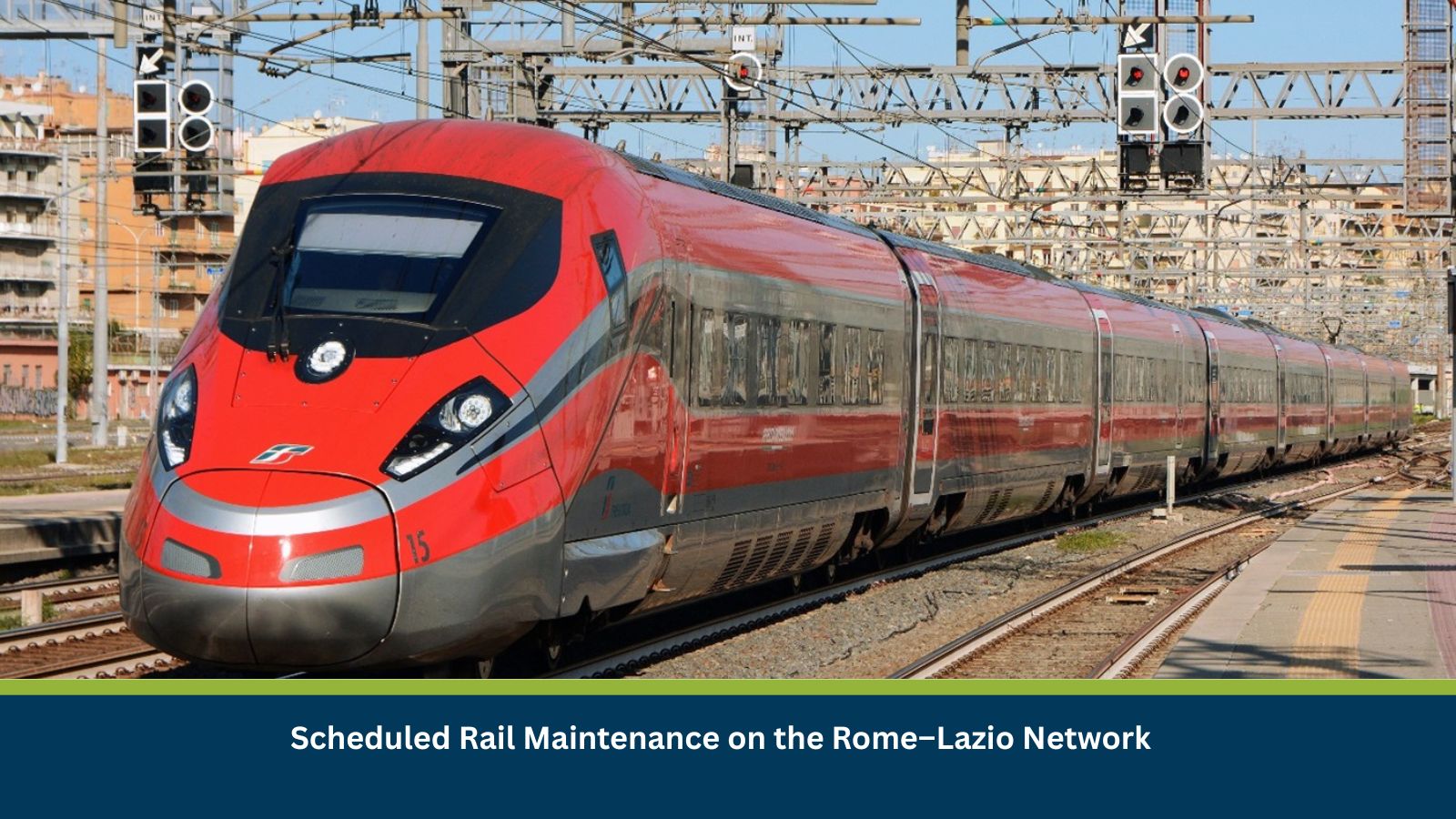
Travel risk analysis evaluates how disruptions to transport infrastructure affect mobility, access, supply chains and service continuity. For rail systems, scheduled engineering works, strikes or adverse weather can create significant cascading effects across road networks, logistics schedules and urban operations. In Italy, multi-week rail works, particularly in Rome and Lazio, are common during November–December, often accompanied by timetable changes, partial suspensions and replacement bus services. Analysing such disruptions helps organisations anticipate delays, secure alternate transport, protect employee safety and maintain uninterrupted operations during infrastructure interventions.
Executive Summary
- Date of Event: 23 November
- Location: Rome–Lazio (Civitavecchia, Velletri, Albano, Viterbo, Florence, Fiumicino, Orte)
- Risk Category: Travel Risks
- Severity Score: 3 / 5
- Confidence Level: 85 %
Scheduled maintenance from 23 November to 13 December is expected to create a twenty-one-day disruption window, with peak impact on weekends and nights. Past Rome rail engineering cycles demonstrate similar patterns: route suspensions, replacement buses and delays of twenty to ninety minutes. Business operations may face commuter challenges, higher road congestion and knock-on effects on rail-linked logistics. Confidence in the forecast is high given consistent precedents and formal operator notices.
Current Updates
Regional announcements confirm timetable modifications, partial suspensions and replacement bus operations on affected segments. Roma Termini, Roma Tiburtina and Roma Ostiense remain the principal nodes for altered traffic flows. Metro B/B1 corridors may see temporary adjustments. No emergency incidents reported.
Known Hotspots and Sensitive Areas
High Impact: Roma Termini (Piazza dei Cinquecento), Roma Tiburtina (Viale Masini), Roma Ostiense forecourt; interchange corridors where replacement buses operate.
Medium Impact: Velletri, Albano, Civitavecchia and Viterbo routes experiencing timetable shifts and increased crowding; surrounding retail and heritage districts near Termini.
Low Impact: Peripheral Lazio stations with minimal interchange dependency.
November–December works frequently cluster across Rome, with weekend intensification and increased crowding at major hubs.
Impact on Transportation and Services
Expect recurrent timetable reductions, partial line suspensions and heavy reliance on replacement buses causing longer travel times and road congestion. Peak-hour crowding may delay staff movement and restrict access to central facilities. Logistics depending on rail-adjacent time windows will face rerouting and increased costs.
Recommended Actions
• Activate a dedicated disruption SOP for 23 November–13 December with a named incident lead and cross-functional team.
• Enable staggered shifts or remote work for non-critical staff; arrange shuttle services, taxis or hotel stays for early/late shifts.
• Increase security patrols and monitor CCTV during reduced staffing hours; pre-stage inventory buffers at Lazio-adjacent warehouses.
• Communicate adjusted timelines to customers seven days and twenty-four hours before impact; publish daily updates via email/SMS.
• Reroute rail-dependent deliveries to road carriers and establish dispatch hubs near major road arteries.
Multidimensional Impact
Concurrent strike actions (28 November, 12–13 December) or severe weather may amplify delays and overwhelm replacement bus capacity, generating multi-modal congestion across Rome.
Emergency Contacts
• Trenitalia Customer Service: 00 39 892 021
• Rome Municipal Police (Polizia Locale): +39 06 67691
• National Emergency Number: 112
Final Thoughts
Disruption is expected to remain moderate but predictable. Organisations should emphasise early planning, robust alternative routing and staff-centric mobility arrangements. Proactive monitoring tools such as MitKat’s Datasurfr support rapid decision-making and continuity during multi-week infrastructure works. Stay ahead of operational risks with real-time alerts, scenario modeling, and expert advisories with datasurfr’s Predict. Start your 14-day free trial of Datasurfr’s Risk Intelligence Platform today.