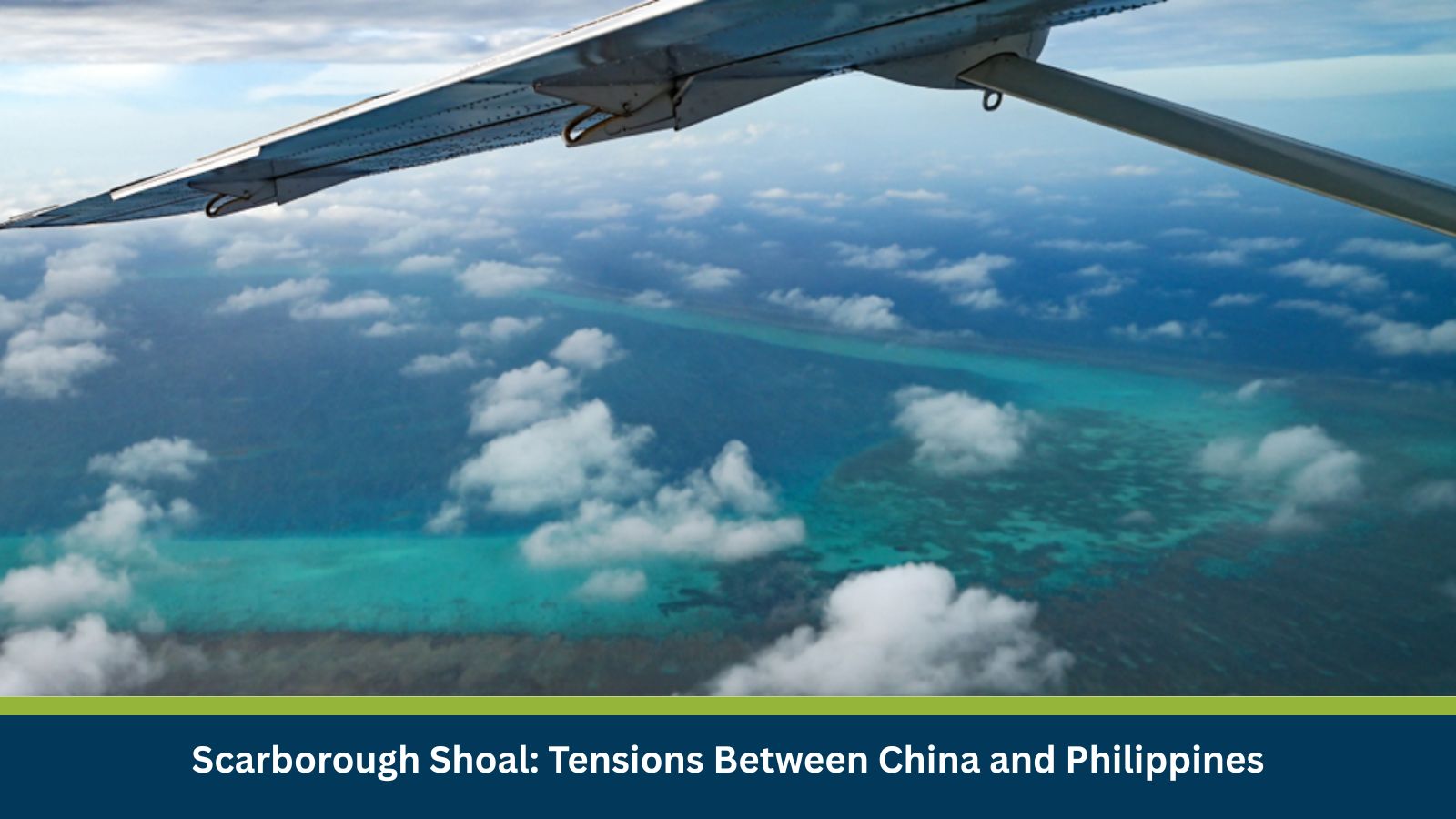
This incident follows China’s announcement earlier this month to designate part of Scarborough Shoal, which it calls Huangyan Island, as a nature reserve. The move, according to Chinese state media, is intended to protect the coral reef ecosystem and to signal a shift toward long-term maritime governance. The Philippines strongly opposed the plan, calling it “patently illegal” and citing violations of the United Nations Convention on the Law of the Sea (UNCLOS) as well as the 2016 arbitral ruling that invalidated China’s “nine-dash line” claims. The US also expressed support for Manila’s opposition. US Secretary of State Marco Rubio characterized the move as part of a broader Chinese strategy of coercion in the South China Sea.
Experts remain skeptical about the environmental motivations behind the reserve. Scholars of environmental and marine science note that Chinese harvesting of giant clams, banned last year, has already caused extensive damage to the shoal. Analysts, including Bec Strating of La Trobe University, describe the nature reserve as largely a territorial assertion, terming it “the weaponization of environmental concerns.” Greg Poling of the Center for Strategic and International Studies added that it falls into a pattern of China establishing administrative justifications for areas it already controls militarily.
Scarborough Shoal has long been a point of contention. Both the Philippines and China claim the territory, though China has effectively controlled it since 2012. Philippine ships continue to approach the shoal to assert the country’s claim, and confrontations have increased in recent years. In August, two Chinese ships collided while intercepting a Philippine vessel near the area, highlighting the risk of incidents escalating further.
The legal framework adds another layer to the dispute. In 2016, the International Court of Justice ruling under the UNCLOS invalidated China’s “nine-dash line” claims over the majority of the South China Sea, including Scarborough Shoal. China has refused to recognize the ruling, maintaining its claim, while the Philippines and the international community continue to reference it as the legal basis for their rights.
The shoal has immense strategic and economic significance. It lies in a busy maritime corridor, carries vital fisheries, and sits within a resource-rich zone. Any clashes in the area pose immediate risks to regional security and commercial operations. While China has been criticized for island-building in the South China Sea, experts note that similar construction is unlikely at Scarborough Shoal, which is close to China’s shores and less strategically valuable than the distant Spratly Islands.
The Scarborough Shoal dispute underscores the intersection of environmental protection, territorial claims, and maritime security. China claims almost the entire South China Sea, overlapping the exclusive economic zones of Brunei, Indonesia, Malaysia, the Philippines, and Vietnam. Unresolved disputes have festered for years over ownership of various islands and features. As tensions simmer, both diplomatic and legal channels will remain critical to managing one of the South China Sea’s most contested and closely watched maritime regions.