


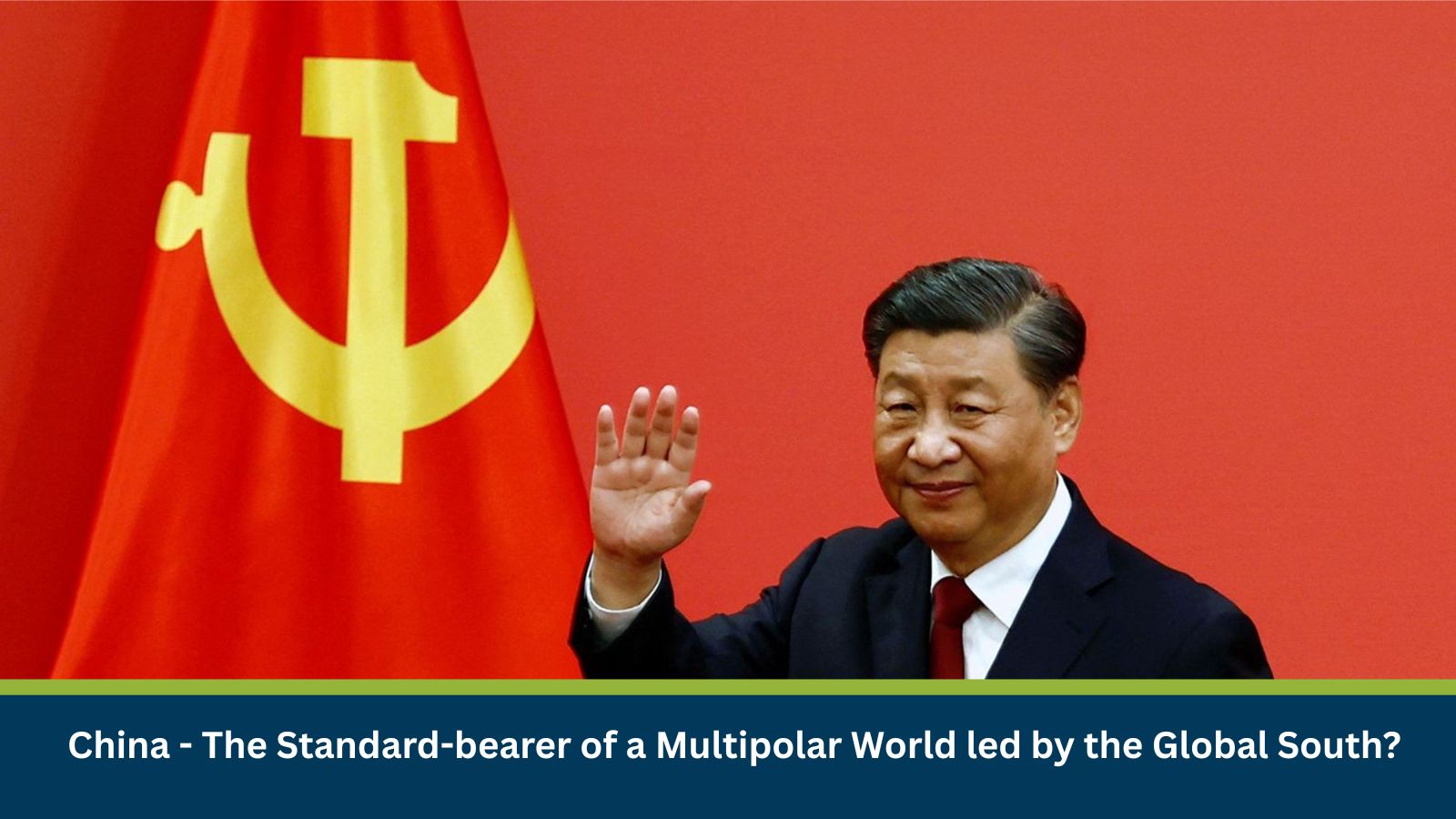
Last week saw Chinese President Xi Jinping laying down his vision for a new world order. Hosting the SCO Summit in the north-eastern port city of Tianjin, “he called on Eurasian leaders, including Narendra Modi and Russia’s Vladimir Putin, to join China in leveraging their economic influence to challenge the West,” says FT.
The SCO members include China, Russia, India, Iran, Pakistan, Belarus, Kazakhstan, Kyrgyzstan, Tajikistan, and Uzbekistan; together they have rich reserves of global energy and include 40% of the world’s population. There are 16 dialogue partners and observers, including Cambodia, Egypt, Saudi Arabia, UAE, Bahrain, Kuwait, Qatar, and Turkiye, among others.
While the guest countries have national rivalries and vast differences in political systems, the hosts firmly signalled China as the indispensable convener in Eurasia, capable of seating rivals at the same table and translating great power competition into managed interdependence.
The SCO summit was followed two days later by an impressive military parade in Beijing to celebrate China’s 80th anniversary of the Second World War victory over Japan. Xi was joined by Putin, and Kim Jon Un of North Korea, apart from leaders from nearly two dozen countries, including 11 of China’s 14 land neighbours. Representative of Turkiye and two Russia-friendly European leaders – Aleksandar Vicic of Serbia, Robert Fico of Slovakia, were also present, so was Iranian President Masoud Pezeshkian.
China used the occasion to showcase its military hardware and AI prowess, including long-range missiles, submarine drones, humanoid robots and advanced counter-drone systems.
Putin praised the China-Russia partnership as a stabilizing force for the world. In an interview with Xinhua, he said they were “united in our vision of building a just, multipolar world order.”
Trump wrote in a message to Xi, “Please give my warmest regards to Vladimir Putin, and Kim Jong Un, as you conspire against the United States of America.”
The leaders who gather in China do not agree on everything. India, currently reeling under Trump tariffs, has a border dispute as well as a trade and trust deficit with China. Many members have problems with others. But they all see it as an opportunity to challenge Western dominance. Neither China nor India would like to enter a direct confrontation with the West, but both would be happy to see the West (12% of the global population) share more power with the rest (88%).
China’s (resource importer and commodities exporter) and Russia’s (resource exporter) interests are aligned, whether on the economy or decreasing the Western influence in general. For India, Russia has been a trusted partner providing much of the energy security and defence hardware. The relationships were in a state of “managed decline” in the post-Soviet era, but Russia’s growing dependence on China necessitated India maintaining its own relations with Russia to prevent it from getting too close to China.
After troubled relations with China, which sank to lows following a border conflict in 2020, India and China have tried to reset their relations since Oct 2024 meeting between Xi and Modi in Kazan, Russia. The momentum slowed in the wake of a four-day India-Pak conflict in May 2025 (due to China’s diplomatic and intel support and military hardware to Pakistan), but the Trump tariffs provided an urgency in India to look for fresh markets and sources of capital; China, too, saw an opening here to engage India, which is slightly on the backfoot.
The China-India reset gained fresh momentum over the last month with a flurry of high-level diplomatic visits culminating in the Xi-Modi meet in Tianjin. The uptick in relations is evident with understanding reached on more robust border management (including talks of early harvest), easing of visas and travel restrictions. Indian pilgrims are already heading to Hindu and Buddhist pilgrimage sites in Tibet, and there is talk of easing FDI restrictions.
There may be important lessons for Europe, as Putin used the occasion to reaffirm friendship with powerful nations – China and India (the main oil buyers), as well as North Korea (which has provided troops to Russia) and Iran. Putin tried to demonstrate that even though Russia has been isolated from the Western world, it still has partners and allies, which are economically strong countries, and that Russia will be able to sustain its war efforts despite Western isolation and support to Ukraine.
The post-World War 2 international order may be at risk of unraveling, warns CNN. Europe may have to rethink its security as the US may no longer be the reliable ally it has always turned to. Its industries are being hollowed out by the Chinese, services by the Americans and far-right nationalism is gaining ground as economic woes mount.
Ukraine and European allies do not want to dismiss India and China. They are aware that (in the absence of tougher actions from Trump), if anyone can put real pressure on Putin to end the war, it is China, and to a lesser extent, India.
North Korea, which provides soldiers to Russia and Iran, which provided Shahed drones, are on Russia’s side. Sanctioned and isolated by the West, they have little to lose. Tehran may be aware that an alliance with Russia has its limits, as Putin did not come to its assistance when it was attacked by Israel and the US.
Tianjin and Beijing were rich in symbolism, by a group of countries that are not best friends but have common strategic interests and appear stronger together as a force to be reckoned with.
CNN, quoting analysts, says, “As much as Putin’s chumminess with Xi and Modi might have sparked some discomfort in many European capitals, the group was brought together by a combination of need, economic pragmatism and opportunity… it is a very functional relationship – an alliance of interests rather than an alliance of countries.”
Trump’s tariffs and pronouncements may have given a new lease of life to non-Western organizations like SCO and BRICS, even as they weakens organizations like G-7, AUKUS and QUAD. Caught between Trump and Putin, Europeans are waking to a new reality.
Disclaimer: The article has reference to open sources, including CNN, FT, Xinhua and CSSPR.