





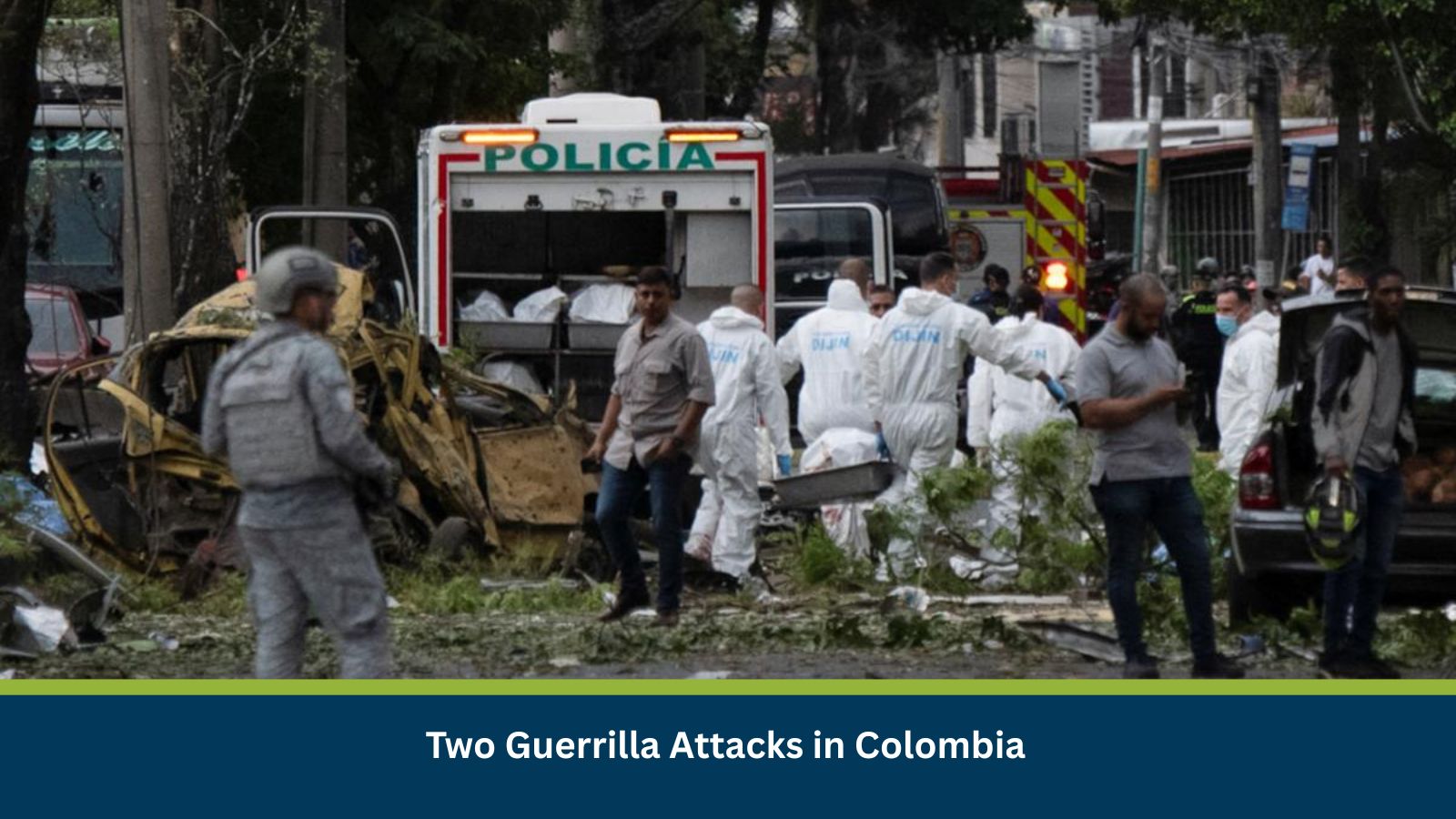
Two separate guerrilla attacks have been reported from Cali and Amalfi municipality in Colombia; both attacks have been attributed to FARC dissident groups.
The explosive attack on a military base in Cali and the downing of a police helicopter in Antioquia, both attributed to Revolutionary Armed Forces of Colombia (FARC) dissidents, have heightened the nation’s instability.
The attack in Cali shows that some members of dissident factions of FARC are seeking to go on the offensive against the state.
The Mayor of Cali has imposed a state of emergency.
Colombian President Gustavo Petro’s first reaction was to label the Cali attack as a “terrorist reaction” that would indicate that the group responsible had been affected by a military offensive he had ordered several months ago.
Colombia experienced severe waves of terrorism in cities in early 1990s, during drug lord Pablo Escobar’s war against the state, and at the start of this century, when FARC surrounded major cities in their failed attempt to seize power.
After the 2016 Peace Agreement that disarmed FARC – the largest and most significant guerrilla group – the threat of urban terrorism receded significantly, with the conflict mostly confined to areas with ELN presence, a few FARC dissidents, and drug related groups. A notable exception was a car bomb explosion by ELN in Bogotá’s military school in Jan 2023 had left 23 dead and over 100 injured.
Experts say that the situation in Colombia is not as bad as it was in 1989 or 2000, but “security” remains the primary concern for most Colombians.
Disclaimer: The article has references to open sources including Reuters, Firstpost and El Pais.