





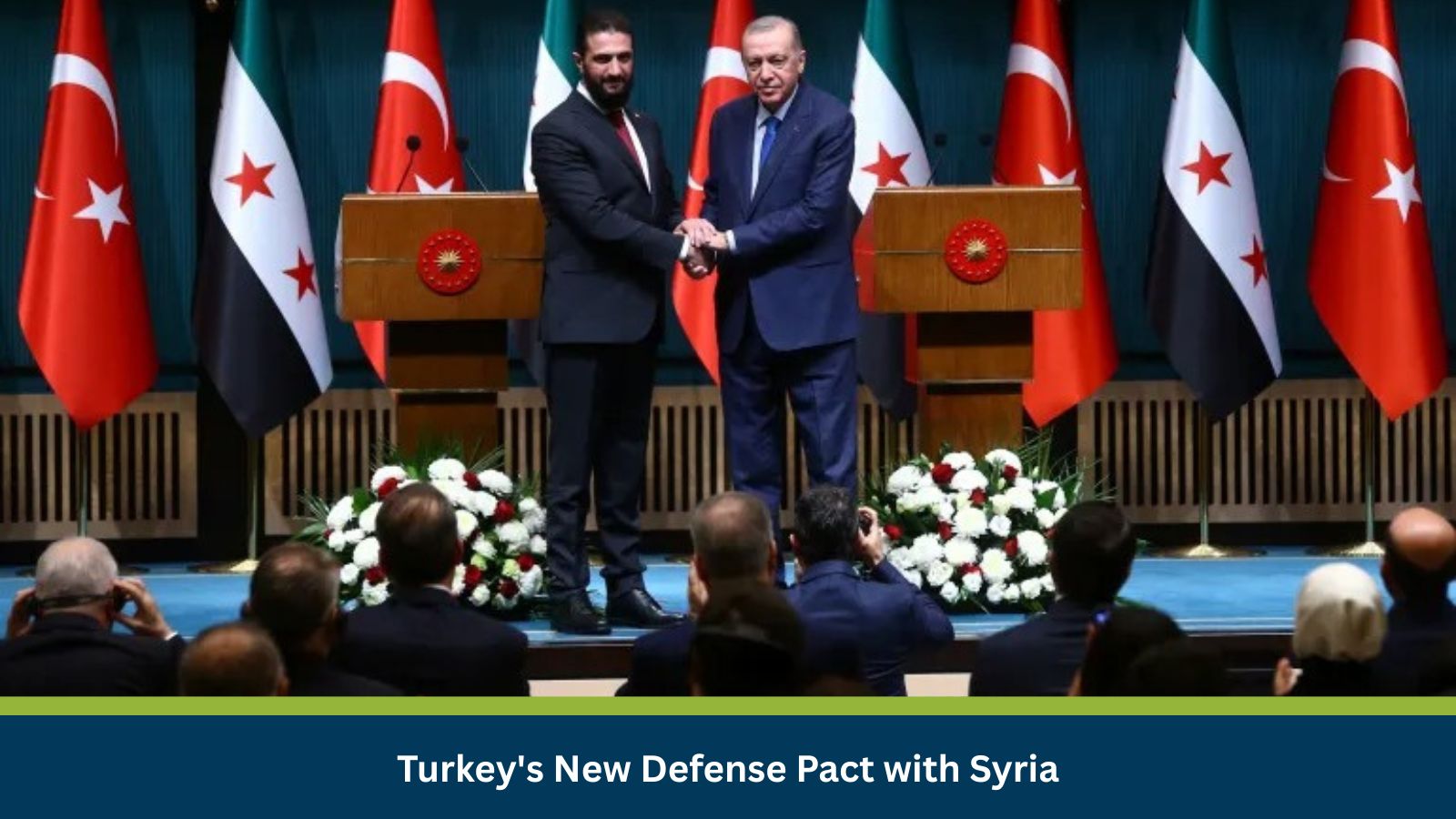
The Middle East is a region of shifting alliances, and the military cooperation accord signed between Turkey and Syria on August 14, 2025, represents a significant development in the regional power balance. The defence accord aims to bolster Syrian security by having Turkey provide weapon systems, logistical support, and military training to Syrian army.
This historic pact is a strategic shift and a stunning reversal in the relationship between the two nations, which had been adversaries for over a decade. Signed with the new Syrian government under President Al-Sharaa following the fall of the Assad regime in December 2024, the agreement is a proactive move by Turkey to address its security concerns regarding the U.S.-backed, Kurdish-led Syrian Democratic Forces (SDF).
From Adversaries to Allies: A Rapid Geopolitical Reversal
The new defense pact marks a stunning reversal in the relationship between Turkey and Syria. For over a decade, Turkey was a staunch adversary of the Syrian regime, supporting opposition forces and advocating for the removal of President Bashar al-Assad. This strained relationship was defined by Turkey’s condemnation of Assad’s crackdown on protests in 2011, which evolved into a clear stance against the Syrian government and a major role in structuring the opposition. The fall of the Assad regime in December 2024 created an opportunity for Turkey to play a central role in Syria’s transition. The new accord signed signals a pivot for Turkey.
According to sources, the pact will see Turkey provide weapon systems, logistical support, and even military training to Syria’s army. This is not a simple diplomatic gesture; it is a profound strategic shift. The primary catalyst for this rapprochement is Turkey’s growing impatience with the lack of implementation of a March deal to integrate the U.S.-backed, Kurdish-led Syrian Democratic Forces (SDF) into the Syrian state. March deal was signed on 10 March 2025 in Cairo between SDF and Syrian Government. The deal provides for integration of SDF controlled civilian and military institutions in northeast Syria to be integrated with the state. Ankara views the SDF as a terrorist organization, an extension of the outlawed Kurdistan Workers’ Party (PKK), which waged an insurgency in Turkey for decades. Turkey has repeatedly warned of military action if its security concerns are not addressed. It views March Deal, as a way to address its security concerns and potential threats originating from areas controlled by the SDF in Northern Syria. The new accord effectively aligns Ankara and Damascus, reshaping the regional balance of power.
The new defense pact introduces a significant layer of geopolitical complexity. While the U.S. and European nations have lifted broad economic sanctions on Syria following the fall of the Assad regime and the establishment of a new government under President Al-Sharaa, this new military alignment could be viewed with skepticism. The comprehensive sanctions were a tool of pressure against the former regime, and their removal was a signal of support for the new government’s path to stability. However, the nature of the defense pact could lead to new evaluations of this policy and a shift in how Western powers view the future of a U.S.-backed, Kurdish-led autonomous administration in Northern Syria. The potential for a wider confrontation involving multiple regional actors elevates geopolitical risk and makes the geopolitical analysis more critical than ever.