





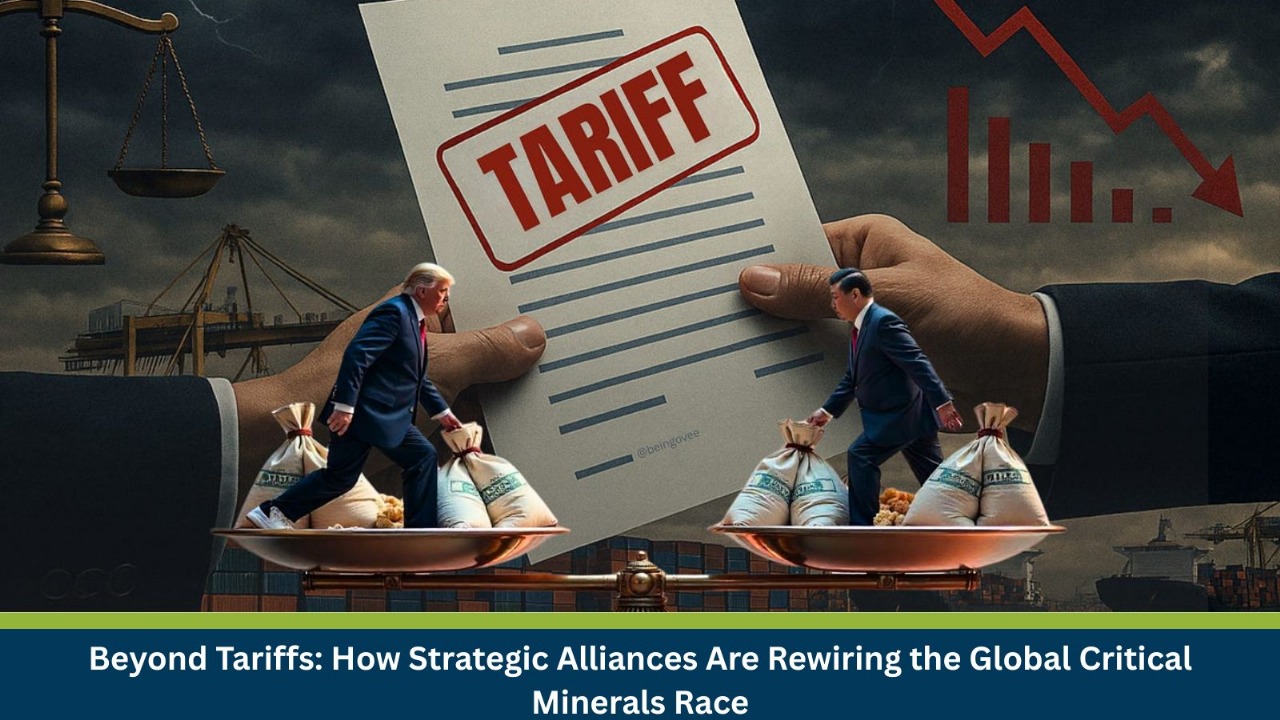
The global clean energy transition is a race, and the finish line is paved with critical minerals. From lithium-ion batteries and solar panels to advanced semiconductors and defense systems, these minerals are the bedrock of the 21st-century economy. For decades, the global supply chain for these essential resources has been overwhelmingly concentrated in one country: China. However, a new geopolitical dynamic is emerging, driven by a collective realization that supply chain vulnerabilities pose an existential threat to economic stability and national security. This shift, led by initiatives like the Quad Critical Minerals Initiative (QCMI), is not merely about sourcing new mines; it’s about fundamentally rewiring supply chains through strategic alliances and investment-backed cooperation. For business leaders, supply chain managers, and data professionals, understanding this pivot is crucial to navigating the next decade of global trade.
1. The Quad’s Strategic Pivot: From Intent to Industrial Strategy
The QCMI, announced by Australia, India, Japan, and the United States, represents a decisive move to counter China’s dominance in the critical minerals sector. The initiative is a strategic alliance designed to secure shared supply chains and lead the next industrial era. Each member brings a unique strength to the table: Australia as a major mining powerhouse; Japan and the U.S. as leading technology and finance hubs; and India as a rapidly growing market and potential processing hub. While all four nations share a vulnerability to China in minerals like rare earth elements, graphite, and lithium, the QCMI’s success hinges on its ability to move beyond a statement of intent. The path forward involves standardizing policies, establishing a joint investment platform to provide patient capital for strategic projects, and fostering a tech and innovation network to address R&D gaps. This multi-pronged approach is the blueprint for creating a resilient, diversified, and sustainable supply chain ecosystem.
2. India’s Ambition: The Bridge Between Raw Materials and Processing Power
India’s role in this new landscape is particularly significant. As a country with a high dependence on imports for key critical minerals and a nascent domestic processing industry, India faces unique challenges. However, it is also poised to become a vital node in the new supply chains. With a massive domestic market for clean energy technologies and a push for policy reforms, India has the potential to become a processing hub, linking raw material producers like Australia with end-users in Japan and the U.S. Its integration into the QCMI and other partnerships, such as the Mineral Security Partnership (MSP), is a strategic imperative. For businesses looking to diversify their supply chains, India offers a compelling proposition: a high-growth market, a skilled workforce, and a government increasingly committed to strengthening its upstream and midstream mineral capabilities. The key is for policymakers to move beyond end-product incentives and invest in the entire value chain, from exploration and mining to processing and recycling.
3. The Rise of Processing Hubs and New Geopolitical Alliances
The new trade diplomacy is no longer just about where minerals are mined, but where they are processed. The U.S. and its allies are actively working to build independent rare earth processing hubs to circumvent China’s near-monopoly on this crucial stage of the value chain. As a recent analysis from the Center for Strategic and International Studies (CSIS) highlights, simply diversifying sources of mined ore is insufficient if that ore is still sent to China for refining. This has spurred a global effort to establish centralized processing facilities that can leverage economies of scale and consolidate key resources. Similarly, the European Union (EU) is actively pursuing cooperation on critical minerals with ASEAN nations, recognizing that new alliances are essential to secure their own clean energy transition. This new geo-economic era demands that business leaders re-evaluate their risk models and build supply chains around geopolitical strategy as much as operational efficiency.
Strategic Takeaways for Business and Data Professionals
For supply chain managers and data professionals, the message is clear: the critical minerals landscape is no longer static. Supply chain decisions must account for a complex web of strategic alliances, political risk, and capital flows. To stay competitive, companies must:
Map Exposure: Use data to map critical mineral exposure across all major trade corridors and anticipate shifts caused by new bilateral or multilateral agreements.
Diversify Strategically: Move beyond simple country-of-origin diversification and build resilient, regionalized supply chains that hedge against geopolitical shocks.
Invest in Data Intelligence: Leverage business intelligence platforms like Datasurfr to monitor policy developments, track investment flows, and identify emerging supply chain partners.
Conclusion
The global critical minerals race is at an inflection point. The clean energy transition has made secure supply chains a strategic imperative, and the geopolitical response, particularly through the Quad, is rewriting the rules of engagement. This new era of strategic alliances and investment-backed cooperation demands a forward-looking approach from business leaders. By embracing data-driven insights and proactively aligning with the new geopolitical realities, companies can move from being passive consumers of critical minerals to active architects of resilient and sustainable supply chains. The future of global trade is being shaped by those who understand that in this race, security and strategy are just as vital as supply and demand.