





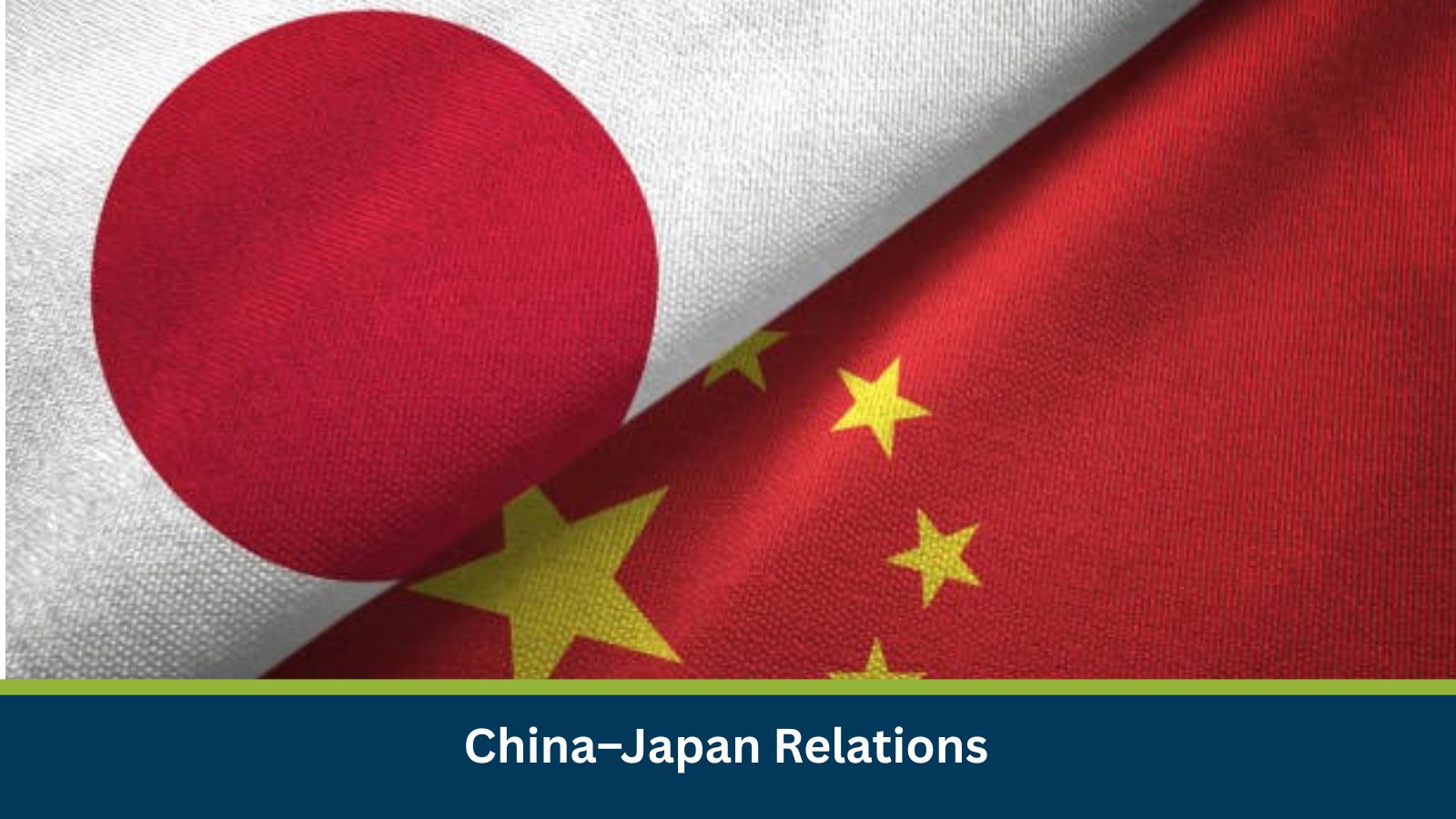
China and Japan are the two of the largest and among the most consequential economies in Asia-Pacific region. China-Japan relationship stands at a strategic crossroad defined by a complex duality: deep security mistrust and huge economic interdependence. China’s increasing assertiveness in the Pacific and Trump tariffs have added a new dimension to the relationship between the world’s second and third largest economies.
Some recent events have the potential to add new strains to the relationship. On July 16, a Chinese court sentenced Japanese executive Hiroshi Nishiyama to 3.5 years for alleged espionage; it drew strong diplomatic protest from Tokyo. The incident has raised concerns among Japanese citizens and businesses operating in China. China is very unhappy at Japan’s portrayal of it as the “greatest strategic challenge” in its defence strategy.
The Strategic Challenge
Japan’s newly released Defence White Paper describes China as the country’s “greatest strategic challenge.” Defence Minister Gen Nakatani warned of a severely deteriorating security environment, pointing to China’s intensified military activities including violation of maritime boundary as well as airspace near disputed islands in the East China Sea and broader assertiveness in the region. The document flags China’s growing alignment with Russia, including joint military exercises near Japanese waters. It calls North Korea’s nuclear progress an “imminent threat”. Japan has upped its defence budget in view of the emerging threat environment.
China has rejected the “China threat” narrative. Chinese spokesperson criticised Japan for inflaming tensions, interfering in internal matters such as Taiwan, and moving away from its post-war pacifist commitments. Beijing warned that Japan’s military buildup and shifting defense posture risk destabilising the Asia-Pacific.
The Economic Link
Despite the underlying tension and mistrust, economic cooperation is a major stabilising force. China is Japan’s largest trading partner. Bilateral trade exceeded $310 billion in 2024, driven by Japan’s exports of machinery, semiconductors, and chemicals, and China’s exports of electronics, rare earths, and industrial components. These trade flows are deeply embedded in Japan’s supply chains in automobiles and consumer electronics. While Japanese firms are gradually diversifying into South-east Asia and India, dependence on Chinese supply chains is still significant. Trump tariffs have added a new complexity to these relationships, wherein countries are looking to develop trade ties with alternative partners to offset the setback from U.S. policies.
Beijing has recently signalled interest in resuming trilateral FTA talks with Japan and South Korea, pointing toward a more pragmatic economic engagement despite political frictions.
Businesses must Manage Risks and Strengthen Resilience
China-Japan relations have implications for the region and wider world. Japanese leaders have so far done a good job of managing the complex security and economic aspects of their relationship with China. Business leaders must remain cognizant of the risks and opportunities arising from major geopolitical events. Business leadership in politically turbulent times demands a sophisticated and pragmatic approach benefitting from economic linkages while ensuring resilience to businesses and supply chains hedging adequately against adverse geopolitical events and volatility.